Political restraint in focus: Farooq, Kharge remarks reignite debate on leaders' speech
Synopsis
Two senior Indian politicians — National Conference chief Farooq Abdullah and Congress President Mallikarjun Kharge — have sparked separate controversies within days of each other, one over remarks suggesting Pakistan 'protects' Kashmiris, the other with a pointed personal comment about PM Modi. Together, they have put the quality and responsibility of political speech sharply back in focus.
Key Takeaways
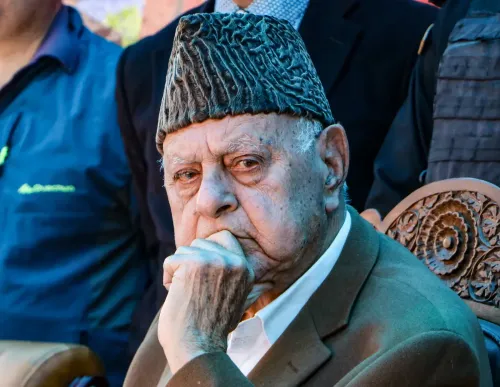
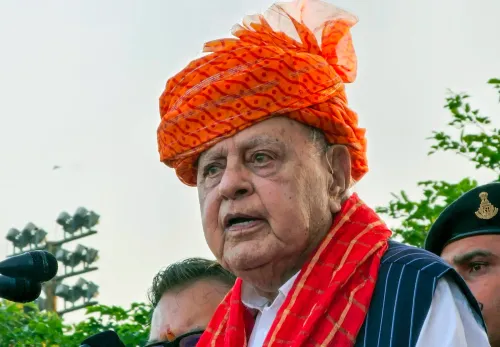
Farooq Abdullah reportedly claimed Pakistan was 'protecting' the people of Jammu and Kashmir by raising the Kashmir issue at international forums, drawing sharp criticism.
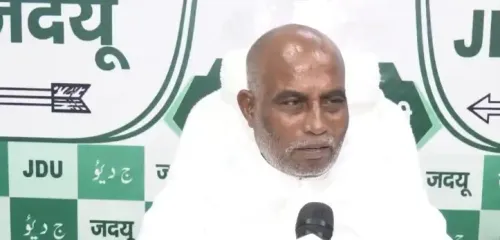
Congress President Mallikarjun Kharge made a controversial remark — 'Modi ka baap bhi jayega' — at a public event in Patna , widely condemned as unparliamentary.
Both incidents have reignited debate over the responsibility of senior leaders to exercise restraint in public speech, particularly on matters of national security and foreign relations .
Critics argue that protests in Pakistan-occupied Kashmir (PoK) seeking basic amenities directly contradict Abdullah's reported framing of Pakistani 'protection'.
Observers warn that declining standards of political discourse risk sending a troubling message to younger generations about acceptable civic behaviour.
Senior Indian politicians are once again under scrutiny for public statements that critics argue have fallen short of the dignity expected of leaders in high constitutional and party positions. Remarks by National Conference chief Farooq Abdullah and Indian National Congress President Mallikarjun Kharge — made within days of each other — have reignited a wider conversation about the standard of political discourse in India and the responsibility that comes with public leadership.
Farooq Abdullah's Pakistan Remarks
Farooq Abdullah reportedly claimed on Saturday that Pakistan was 'protecting' the people of Jammu and Kashmir by repeatedly raising the Kashmir issue at international forums. The veteran leader also questioned whether 'Kashmiris could expect justice from Delhi', according to reports. The remarks have drawn sharp criticism, with opponents arguing they contradict ground realities in the region.
Critics point out that Pakistan has for decades been linked to terrorist activities in Jammu and Kashmir and elsewhere in India. The claim of Pakistani 'protection' is further undermined, observers argue, by the widespread protests building in Pakistan-occupied Kashmir (PoK), where residents have reportedly been raising voices against oppression, exploitation, and the denial of basic amenities. Notably, voices from within PoK seeking growth and services directly challenge the narrative Abdullah reportedly invoked.
Kharge's 'Modi ka baap bhi jayega' Remark
Congress President Mallikarjun Kharge sparked a separate political firestorm during a public event in Patna, when he reportedly responded to an audience member's assertion that Prime Minister Narendra Modi 'would not go anywhere' by saying, 'Modi ka baap bhi jayega' — loosely translated as 'even Modi's father would go.' The remark has been widely criticised across party lines as inappropriate and unbecoming of a senior national leader.
The backlash was swift, with political opponents demanding an apology and describing the comment as indecent and unparliamentary. The episode drew attention precisely because Kharge holds the highest elected position within the Congress party, a role that carries expectations of measured, dignified public communication. The episode illustrates how a moment of emotional or impulsive expression can overshadow decades of political standing.
The Broader Stakes: Why Leaders' Words Carry Extra Weight
Political leaders are not ordinary citizens; their words are instantly amplified through television, social media, newspapers, and public platforms. When senior figures speak impulsively — particularly on matters touching national security, foreign relations, or social harmony — the consequences can extend well beyond the original context. Statements perceived as sympathetic to hostile nations, or those that undermine national sentiment, can sow confusion domestically and offer traction to critics abroad.
Constructive criticism of government policy is a legitimate and essential democratic right. However, analysts and observers argue there is a meaningful distinction between policy critique and statements that may be interpreted as diminishing national interests. This distinction, they contend, must be actively maintained by leaders who command national audiences.
Declining Standards and the Generational Impact
The increasing use of abusive, personal, or derogatory language in Indian politics has, by many accounts, lowered the standard of public discourse over time. Political rivalry, critics argue, is too frequently degenerating into personal hostility. This trend carries a generational dimension: young citizens who look to prominent leaders as role models may internalise the message that aggression and disrespect are acceptable modes of public engagement.
History offers a counterpoint. Several of the world's most respected statesmen are remembered not only for their words, but for their deliberate restraint — for choosing, at critical moments, to remain silent or measured. Emotional discipline, the capacity to pause before reacting, is widely regarded as a core attribute of effective and responsible leadership.
What This Moment Demands
Both episodes serve as reminders that in a democracy as large and diverse as India, the language of its leaders shapes not only political narratives but also civic culture. The call is not for the elimination of robust debate — disagreement is the lifeblood of democratic life — but for a standard of speech that upholds institutional dignity, national interest, and civil respect. As public scrutiny of these remarks continues, the question before political India is whether its leaders will choose to pause, reflect, and consider the broader consequences of their words before speaking.
Point of View
And its diplomatic utility for India's adversaries is real. Kharge's quip, meanwhile, illustrates that even experienced parliamentary operators can let competitive heat override institutional decorum. The deeper problem is structural: India's political culture has gradually normalised personal attacks as legitimate debate, with no enforceable accountability beyond the court of public opinion. Until party leaderships make internal consequences for such lapses credible, the appeals for restraint will remain performative.
NationPress
26 Oct 2026
Frequently Asked Questions
What did Farooq Abdullah say about Pakistan and Kashmir?
Farooq Abdullah reportedly claimed on Saturday that Pakistan was 'protecting' the people of Jammu and Kashmir by repeatedly raising the Kashmir issue at international forums. He also questioned whether Kashmiris could expect justice from Delhi, remarks that drew widespread criticism as contradicting India's position on Pakistan's role in the region.
What was the controversy over Mallikarjun Kharge's remark about PM Modi?
Congress President Mallikarjun Kharge sparked controversy at a public event in Patna when he responded to a claim that PM Modi 'would not go anywhere' by saying 'Modi ka baap bhi jayega' — meaning 'even Modi's father would go.' The remark was widely condemned across political circles as inappropriate and unparliamentary for a leader of his stature.
Why does the language used by political leaders matter so much?
Senior political leaders command large public audiences and their words are instantly amplified across television, social media, and print. Statements on sensitive issues like national security or foreign relations can cause domestic confusion and provide traction to critics abroad, making the standard of political speech a matter of national consequence.
What is the situation in Pakistan-occupied Kashmir (PoK) that contradicts Abdullah's remarks?
Widespread protests have reportedly been building in Pakistan-occupied Kashmir, with residents raising voices against oppression, exploitation, and the denial of basic amenities. Observers argue this directly contradicts any narrative of Pakistan 'protecting' Kashmiris.
What is the broader concern about declining political discourse in India?
Analysts and commentators argue that the increasing use of personal, abusive, or inflammatory language in Indian politics lowers the standard of public debate and sets a poor example for younger generations. The concern is that political rivalry is degenerating into personal hostility, with long-term implications for civic culture and democratic participation.