Anantnag Police Capture Five Drug Traffickers, Seize Substantial Narcotics

Synopsis
In a significant anti-drug operation, police in Anantnag district have arrested five alleged drug peddlers and confiscated a large quantity of narcotics. This crackdown underscores ongoing efforts to combat drug trafficking and its links to terrorism funding.
Key Takeaways
Five drug peddlers arrested in Anantnag district.
Substantial quantities of narcotics seized during police operations.
Police actions are part of a broader anti-drug initiative .
Arrests linked to efforts against terrorism funding .
Ongoing investigations into drug-related activities.
Srinagar, April 10 (NationPress) Authorities in Anantnag district of Jammu and Kashmir announced on Friday the apprehension of five individuals involved in drug trafficking, from whom a variety of narcotic substances were confiscated.
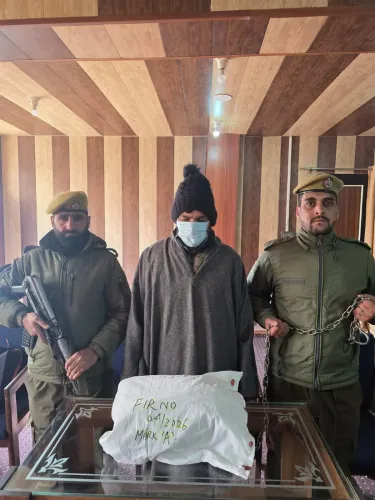
A statement from the police elaborated that a comprehensive anti-drug initiative was undertaken in Anantnag, resulting in the capture of five alleged drug peddlers and the recovery of a substantial amount of narcotics during several operations.
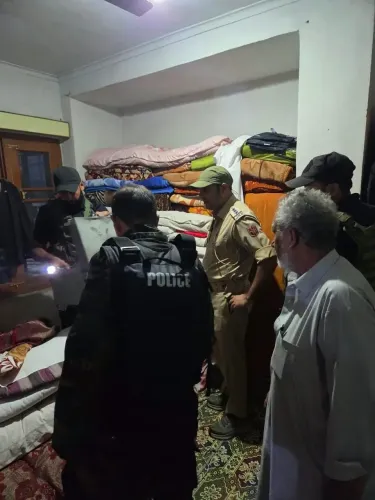
Following precise intelligence, law enforcement conducted a raid at the home of Fayaz Ahmad Dar, son of Mohd Jabbar Dar, located in Naina Gund Baba Khalil, Sangam, after securing a court-issued search warrant.
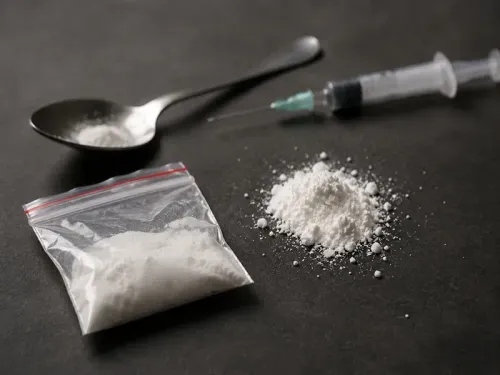
During the operation, authorities seized 3 kg 99 grams of a charas-like powder. Fayaz Ahmad Dar and his son, Arbaz Ahmad Dar, were taken into custody at the scene, according to police officials.
A case has been registered under FIR No. 82/2026, invoking sections 8/20, 29 of the NDPS Act at the Bijbehara Police Station, and an investigation is currently in progress.
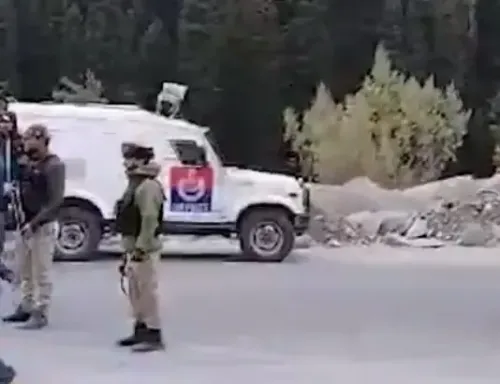
In a separate operation, a police unit from the Sangam post, while conducting checks at Naibasti Marhama, stopped a vehicle (JK13J-0803).
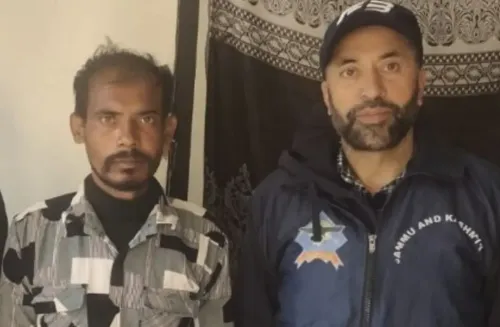
Inside, two men, Shahzada Suvaid and Waris-ul-Islam, both from Batagund Tral, were discovered with 488 grams of a charas-like substance. They were arrested, and FIR No. 83/2026 has been filed under sections 8/20, 29 of the NDPS Act.
Additionally, during a routine check at the Anantnag bypass near the overhead Danter bridge, police apprehended Sajad Ahmad Shah, a local resident of Hakhoora Badazgaam.
A search yielded seven sticks of charas weighing 106 grams and 88 grams of powder. A case has been registered against him at the Anantnag Police Station under relevant NDPS Act sections.
The Jammu and Kashmir Police, alongside security forces, have been intensifying their efforts to combat drug smuggling and trafficking throughout the region.
It is suspected that the financial gains from these illegal operations, along with hawala money networks, ultimately support terrorism within the territory.
Point of View
The arrests in Anantnag reflect a proactive stance by law enforcement in tackling the pressing issue of drug trafficking, which poses a dual threat of substance abuse and terrorism funding. The ongoing efforts by the Jammu and Kashmir Police are commendable and essential for restoring peace and security in the region.
NationPress
15 Oct 2026
Frequently Asked Questions
What substances were seized by the police?
The police seized various narcotic substances, including 3 kg 99 grams of charas powder and other charas-like materials during the operations.
How many people were arrested?
Five individuals were arrested in connection with drug trafficking during the recent police operations.
What actions are being taken against the arrested individuals?
Cases have been registered against the arrested individuals under various sections of the NDPS Act, and investigations are ongoing.
What is the significance of these arrests?
These arrests are part of a broader initiative to combat drug trafficking, which is believed to fund terrorism in the region.
How is the police addressing drug-related crimes?
The Jammu and Kashmir Police are conducting extensive anti-drug operations and collaborating with security forces to counter drug smuggling.