Bihar hooch tragedy: 4 get life term over 12 deaths in 2023

Synopsis
More than three years after spurious liquor killed 12 people in East Champaran's Dhavai village, a Bihar excise court has handed four men life terms and ₹5 lakh fines each. It is a rare maximum-penalty outcome under the state's prohibition law, and police are presenting it as a warning to the illicit liquor trade.
Key Takeaways
A special Excise Court in East Champaran sentenced four men to life imprisonment on 26 November 2026 .
The case concerns a 15 April 2023 hooch tragedy in Dhavai village that killed 12 people and left one person blind.
Each convict was fined ₹5 lakh under Section 34 of the Bihar Prohibition and Excise Act, with one extra year in jail for non-payment.
The convicts are Ajay Kumar Yadav , Rajesh Sahni , Naval Kishore Yadav alias Gabbar Yadav and Lalan Yadav .
They were found guilty on 21 November 2026 , and sentencing followed five days later.
A special Excise Court in Bihar's East Champaran district has sentenced four people to life imprisonment over a 2023 hooch tragedy that killed 12 people in the Harsiddhi police station area. The First Special Judge of Excise Court No. 1 pronounced the sentence on 26 November 2026. The court had found the four men guilty on 21 November 2026, more than three years after the incident.
Key Developments in the Case
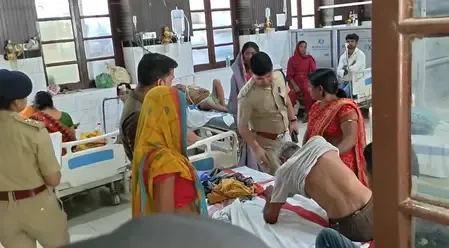
The convictions relate to the consumption and distribution of poisonous liquor in Dhavai village on 15 April 2023. According to the prosecution, 12 people died after drinking the spurious liquor, and another person lost his eyesight.
The convicts have been identified as Ajay Kumar Yadav of Dipahu village under Kotwa police station, Rajesh Sahni of Sohel Chhapra, Naval Kishore Yadav alias Gabbar Yadav of Jaysinghpur, and Lalan Yadav of Dipahu village. Sahni and Naval Kishore Yadav fall under Turkauliya police station. All four are residents of East Champaran district.
Sentences Handed Down by the Court
The court imposed separate punishments under several provisions. The heaviest was a sentence of life imprisonment with rigorous imprisonment under Section 34 of the Bihar Prohibition and Excise Act, along with a fine of ₹5 lakh on each convict.
According to the court's order, each convict also received five years of imprisonment and a fine under Section 30(a) of the Act. Each was further sentenced to 10 years of imprisonment and a fine under Sections 33 and 36.
Under Section 304/34 of the Indian Penal Code, the four were given 10-year prison terms. The court ruled that any convict who fails to pay the fine will serve an additional one year in prison. Time already spent in judicial custody during the trial will be counted towards their sentences.
How the Case Was Built
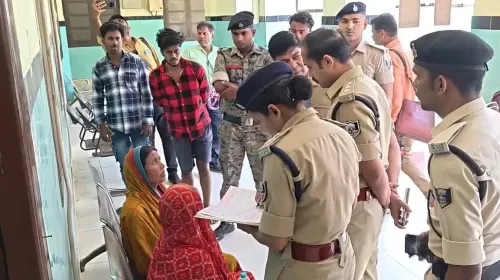
The case was registered at Harsiddhi police station as Case No. 249/23 on 15 April 2023, the same day as the deaths. The FIR invoked Sections 30(a), 34, 36 and 41 of the Bihar Prohibition and Excise Act. It also cited Sections 304, 308, 328, 201 and 34 of the IPC. The trial was conducted under Case No. 1598/23.
The investigation was led by Police Inspector Jai Prakash of the Bihar Prohibition Unit, Patna. Special Public Prosecutor Anil Kumar Singh argued the case for the prosecution.
Notably, the offence took place before July 2024, when the Bharatiya Nyaya Sanhita replaced the IPC. As a result, the IPC provisions continued to govern the trial.
What the Police Said
East Champaran in-charge Superintendent of Police Mohibullah Ansari said the conviction was secured through an effective investigation and strong evidence presented before the court. He said police would continue strict action against those violating prohibition laws. He added that no one involved in the illegal liquor trade would be spared.
The Larger Prohibition Context
Bihar has enforced total prohibition since April 2016. However, deaths linked to illicit and spurious liquor have continued to surface in several districts. Critics argue that these incidents point to a thriving underground supply chain despite the ban.
Life sentences under the state's excise law remain relatively uncommon. This verdict is therefore likely to be cited by authorities as evidence that the law's toughest provisions can be enforced in court. Attention now turns to whether the convicts appeal before a higher court, and whether similar pending hooch-death trials in the state reach comparable outcomes.
Point of View
But it is also a reminder of how slowly accountability moves in Bihar's prohibition regime. Those convicted here are local suppliers and distributors. The verdict does not explain where the poisonous liquor was manufactured or how a supply network operates freely in a dry state. Exemplary sentences send a signal, but unless investigations climb up the chain, the next hooch tragedy is a question of when, not if. Prohibition's credibility rests on dismantling supply networks, not just punishing their last link.
NationPress
26 Nov 2026
Frequently Asked Questions
What sentence did the East Champaran court give in the 2023 hooch tragedy case?
The special Excise Court sentenced four men to life imprisonment with rigorous imprisonment and a fine of ₹5 lakh each under Section 34 of the Bihar Prohibition and Excise Act. They also received additional terms under other sections of the Act and the IPC.
How many people died in the Harsiddhi hooch tragedy?
According to the prosecution, 12 people died after consuming spurious liquor in Dhavai village under Harsiddhi police station on 15 April 2023. Another person lost his eyesight.
Who are the four convicts in the Bihar spurious liquor case?
The convicts are Ajay Kumar Yadav and Lalan Yadav of Dipahu village, Rajesh Sahni of Sohel Chhapra, and Naval Kishore Yadav alias Gabbar Yadav of Jaysinghpur. All four are from East Champaran district.
When were the accused convicted and sentenced?
The four were found guilty on 21 November 2026 and sentenced on 26 November 2026. This concluded a trial that began after the April 2023 incident.
What happens if the convicts do not pay the fine?
The court directed that failure to pay the fine will result in an additional one year of imprisonment. Time already spent in judicial custody will be adjusted against their sentences.