Rahul Gandhi Raises Concerns Over Government's CCTV Surveillance Response
Synopsis
In a critical Facebook post, Rahul Gandhi accuses the Union government of concealing the truth about foreign surveillance through Chinese CCTV cameras, jeopardizing citizen security. He questions the government's transparency and demands accountability regarding cybersecurity measures.
Key Takeaways
Rahul Gandhi's allegations highlight concerns about foreign surveillance.
The government has acknowledged cybersecurity risks.
507 CCTV camera models are certified for compliance.
652 mobile applications have been blocked for security reasons.
Transparency in government operations is essential for citizen safety.
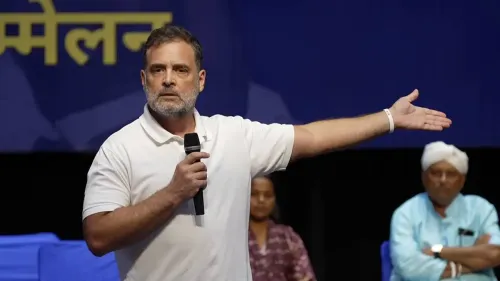
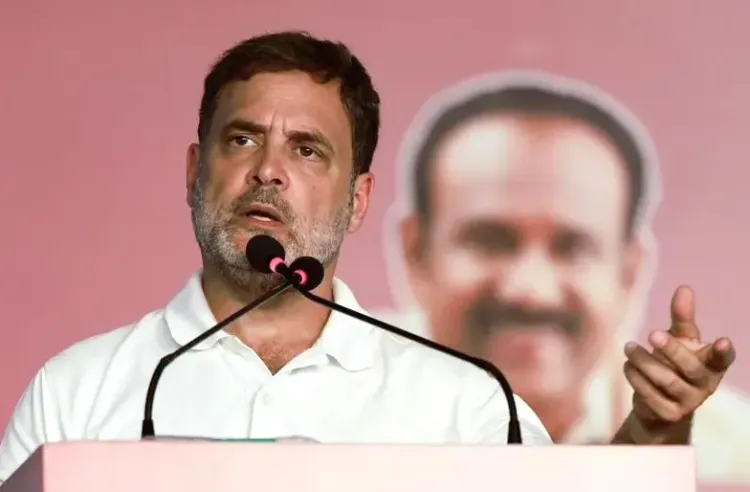
New Delhi, April 4 (NationPress) The Leader of the Opposition in the Lok Sabha, Rahul Gandhi, expressed his discontent on Saturday, accusing the Union government of concealing the reality of foreign surveillance such as China-made CCTV cameras, masking its shortcomings, and endangering the security of every citizen.
In a post on Facebook, the Congress leader stated: “Recently, the government prohibited the public usage of Chinese CCTV cameras. However, these cameras remain operational within government facilities. Furthermore, banned Chinese applications are resurfacing under different names, while foreign AI platforms handle sensitive data. The government has no comments on this.”
He mentioned that he had queried the Ministry of Electronics and IT in Parliament, but their response was lengthy and failed to address his core inquiries.
Gandhi shared a copy of his question alongside the reply from Minister of State for Electronics and Information Technology, Jitin Prasada.
He criticized the ministry’s response for lacking specific data, answers, or even the names of any platforms.
He highlighted that it did not specify the origins of these cameras, the quantity certified as secure, which foreign AI platforms handle government data, or which banned apps continue to operate under new identities.
“Even five years after acknowledging the risks posed by 10 lakh Chinese cameras in use, the government has not clarified whether the surveillance cameras monitoring us are secure,” he remarked, asserting, “This is a calculated strategy to keep India uninformed.”
Gandhi concluded his Facebook message by stating: “By obscuring the reality of foreign surveillance and hiding its failures, the PM Modi administration is jeopardizing every citizen’s safety.”
In response to the Lower House, the Ministry acknowledged the cybersecurity risks associated with digital technologies and noted that “over the past 12 years, significant efforts have been made to bolster India’s digital framework.”
Prasada detailed the measures taken to safeguard India’s telecom networks, emphasizing that in 2021, the government “took decisive actions to enforce the National Security Directive on Trusted Sources”, ensuring that “only trusted sources are utilized in the nation’s telecom networks”.
He also elaborated on enhancing the legal framework for network security and data protection.
“The government has enacted the Telecommunication Act, 2023, which includes comprehensive security provisions for telecommunication networks and the Digital Personal Data Protection Act, 2022, providing a legal framework to safeguard personal data,” stated the minister’s written response.
It was also mentioned that major reforms have been initiated to strengthen the security of CCTV systems, including documenting the origins of critical components and testing against vulnerabilities that could facilitate unauthorized remote access, with only accredited labs authorized to conduct these assessments.
“Currently, 507 models of CCTV cameras are certified for compliance with Essential Requirements,” it stated, adding, “Government departments are prohibited from purchasing CCTV equipment that does not meet these standards.”
Additionally, the statement indicated that 652 mobile applications have been blocked due to data security concerns and other infractions, in accordance with the relevant regulations.
The ministry also discussed various additional measures implemented to improve the cybersecurity framework, including the establishment of the National Cyber Coordination Centre (NCCC) by India’s national cybersecurity agency CERT-In to identify and respond to cybersecurity threats.
Point of View
The dialogue surrounding cybersecurity and foreign surveillance is crucial. Rahul Gandhi's allegations highlight the need for transparency and accountability in government operations, especially concerning citizen safety and data protection.
NationPress
15 Oct 2026
Frequently Asked Questions
What did Rahul Gandhi accuse the government of?
Rahul Gandhi accused the government of concealing the truth about foreign surveillance and putting citizen security at risk.
What specific surveillance technology was mentioned?
Chinese-made CCTV cameras were specifically mentioned as a concern.
How did the government respond to these allegations?
The government acknowledged cybersecurity risks and outlined measures taken to enhance the security of telecom networks and data protection.
What actions has the government taken regarding CCTV cameras?
The government has certified 507 models of CCTV cameras for compliance with essential security requirements and restricted departments from purchasing non-compliant equipment.
How many mobile applications have been blocked?
652 mobile applications have been blocked due to data security concerns.