Geopolitical Tensions Reshape Global Energy Dynamics: Insights from Indo-Pacific Roundtable
Synopsis
Experts at a recent roundtable in New Delhi highlighted how escalating geopolitical tensions are reshaping the global energy landscape. With critical supply routes under threat, the implications for trade and energy markets are profound.
Key Takeaways
Geopolitical tensions are reshaping energy markets.
The Strait of Hormuz is critical for global oil supply.
Countries' interdependence is increasingly being weaponized.
India is actively engaging diplomatically to secure energy routes.
Recent US-Iran conflicts have significant market repercussions.
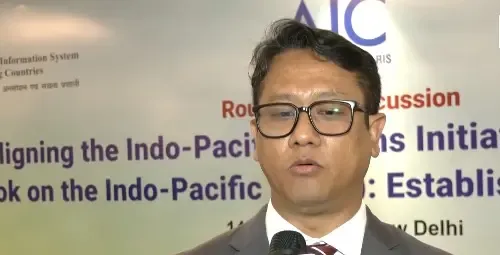
New Delhi, March 14 (NationPress) The global energy sector is increasingly being shaped by geopolitical factors, leading to uncertainties in supply chains, trade routes, and energy markets, experts conveyed during a roundtable on the Indo-Pacific held in the capital. Senior Research Fellow at the Centre for Geopolitics and Strategic Studies at the Chintan Research Foundation, Monish Tourangbam, noted that countries' interdependence is being strategically manipulated.
"Indeed, we have encountered numerous challenges. Interdependence has been, in many ways, weaponized. This is evident in the tariffs imposed by the US. Moreover, energy demand and supply are increasingly influenced by geopolitical dynamics. For example, the relationship between the US and India concerning Russian energy is a clear illustration of this interconnectedness," Tourangbam explained to IANS.
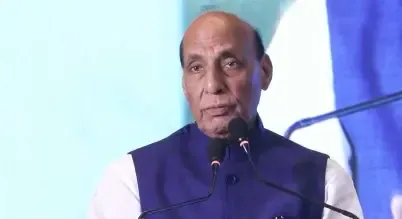
Sanjay Pulipaka, Chairperson of the Hyderabad-based Politeia Research Foundation, emphasized the precarious nature of global energy routes, pointing out that the Strait of Hormuz has become a pivotal area in the ongoing geopolitical crisis impacting energy supplies.
"I would like to start by congratulating the Research and Information System for Developing Countries for hosting this insightful roundtable on the Indo-Pacific. We have discussed numerous intriguing topics here. A significant issue we must monitor is the situation at the Strait of Hormuz. Today, this strait has become a critical bottleneck for energy flows. The Indian government is making every effort to facilitate the smooth transportation of energy from this vital route," Pulipaka stated to IANS.
These comments arise amid heightened global market pressures stemming from escalating tensions between the US and Iran, which erupted into open conflict in late February.
The situation worsened following joint US and Israeli military actions against Iranian targets that reportedly commenced on February 28, resulting in the death of Iran's Supreme Leader Ayatollah Ali Khamenei.
This conflict has significantly disrupted global oil markets, causing one of the most severe supply shocks in recent history.
A critical factor is the Strait of Hormuz, a vital maritime route through which approximately 20% of the world's daily oil supply and a similar portion of liquefied natural gas typically transit.
Simultaneously, production and exports from several regional oil producers, including Saudi Arabia, the United Arab Emirates, Iraq, and Kuwait, have been hindered by precautionary shutdowns or decreased output.
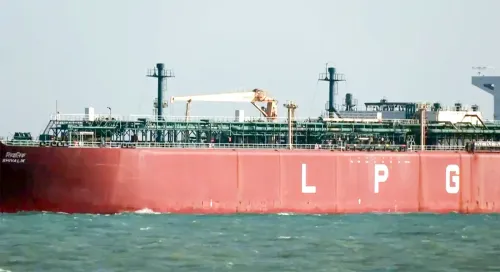
In the midst of these disruptions, Iran has granted safe passage to Indian-flagged ships through the Strait of Hormuz, despite broader global shipping restrictions, with an LPG tanker heading to India successfully navigating the strait on Friday.
This development follows a series of high-level diplomatic discussions between India and Iran, including communications between External Affairs Minister S. Jaishankar and Iranian Foreign Minister Abbas Araghchi.
Additionally, Prime Minister Narendra Modi spoke with Iranian President Masoud Pezeshkian on Thursday to assess the rapidly changing circumstances in the West Asia region.
Point of View
Signaling a critical moment for global energy security.
NationPress
22 Sept 2026
Frequently Asked Questions
How are geopolitical tensions affecting energy supply?
Geopolitical tensions are causing uncertainties in supply chains and trade routes, leading to disruptions in energy markets globally.
What role does the Strait of Hormuz play in global energy?
The Strait of Hormuz is a crucial maritime route for global oil supply, with approximately 20% of the world's oil passing through it.
What recent events have escalated tensions between the US and Iran?
Tensions escalated following joint US and Israeli military actions against Iranian targets, resulting in significant geopolitical implications.
How is India managing its energy needs amidst these tensions?
India has engaged in high-level diplomatic discussions with Iran to ensure the safe passage of its energy shipments through the Strait of Hormuz.
What is the significance of interdependence among countries in energy trade?
Interdependence is being strategically used by nations, which can lead to vulnerabilities and weaponization of energy supply chains.