Green energy projects get 4-month extension amid West Asia crisis delays
Synopsis
With West Asia formally classified as a war zone for contract purposes, India's MNRE has unlocked a four-month Force Majeure lifeline for renewable energy developers facing supply chain disruptions — a relief that echoes Covid-era extensions and signals how geopolitical shocks are now a structural risk in India's clean energy buildout.
Key Takeaways
MNRE issued an advisory on 21 August 2026 allowing up to four months' extension for renewable energy projects delayed by the West Asia crisis.
The relief is grounded in a Department of Expenditure order dated 29 April 2026 that classified the West Asia situation as 'war' under Force Majeure provisions.
Projects eligible are those with scheduled commissioning or supply dates falling on or after 28 February 2026 .
Authorised agencies include SECI , NTPC , NHPC , SJVN , and state or UT energy departments.
Extensions apply to both the Scheduled Commissioning Date (SCD) and the Scheduled Commencement of Supply Date (SCSD) .
The advisory clarifies that existing PPA Force Majeure clauses — not a new blanket waiver — are the operative mechanism.
The Ministry of New and Renewable Energy (MNRE) on 21 August 2026 issued an advisory directing state governments and power sector public sector undertakings (PSUs) to grant up to four months' extension to renewable energy projects whose timelines have been disrupted by the ongoing West Asia crisis, invoking Force Majeure provisions under existing power purchase agreements. The relief covers projects whose scheduled supply or commissioning dates fall on or after 28 February 2026.
The Legal Basis for the Extension
The advisory draws its authority from an order dated 29 April 2026 issued by the Department of Expenditure, Ministry of Finance, which officially classified the West Asia situation as equivalent to 'war' for the purposes of Force Majeure clauses in contracts. Most Power Purchase Agreements (PPAs) already include 'war' as a recognised Force Majeure event, making this classification the critical enabling step for project developers to seek relief without renegotiating individual contracts.
The extension applies to both the Scheduled Commencement of Supply Date (SCSD) and the Scheduled Commissioning Date (SCD), covering the full spectrum of project milestones where delays can attract penalties or trigger contract breaches.
Who Can Grant the Extension
Renewable Energy Implementing Agencies (REIAs) — including the Solar Energy Corporation of India (SECI), NTPC, NHPC, and SJVN — are authorised to process and approve extension requests from affected developers. Power, energy, and renewable energy departments of state and union territory governments are similarly empowered. Agencies are required to follow the contractual procedure specified in the relevant PPA while processing each request.
Why the Advisory Was Issued
MNRE received multiple representations from renewable power developers citing supply chain disruptions and logistical delays linked to the West Asia conflict. Developers had also pointed to a separate advisory issued by the Ministry of Housing and Urban Affairs (MoHUA) on 31 July 2026 to real estate regulatory authorities, which provided a comparable four-month extension for registered real estate projects. Developers argued that similar relief should apply to the renewable energy sector.
After examining the matter, MNRE clarified that the Standard Bidding Guidelines for procurement of renewable power — covering solar, wind, hybrid, and Firm and Dispatchable Renewable Energy (FDRE) — issued under Section 63 of the Electricity Act, 2003, already mandate that PPAs contain Force Majeure provisions aligned with industry standards. The advisory, therefore, directs agencies to apply these existing provisions rather than create a new blanket waiver.
Scope and Implications for the Sector
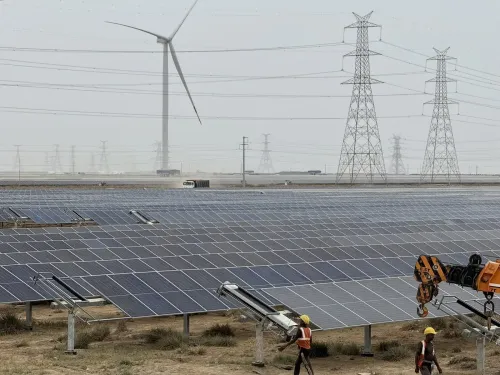
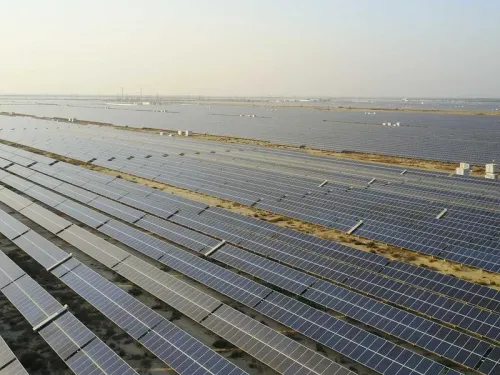
India's renewable energy pipeline is among the largest in the world, with hundreds of gigawatts under various stages of development. Supply disruptions originating in West Asia — a critical transit and manufacturing corridor for solar panels, inverters, and related components — have reportedly pushed commissioning timelines across multiple projects. This is not the first time geopolitical events have triggered Force Majeure relief for the sector; the Covid-19 pandemic prompted similar extensions in 2020 and 2021.
The extension is expected to provide breathing room to developers facing penalty clauses, while ensuring that India's renewable energy capacity addition targets are not permanently set back by a conflict outside their control. Agencies will now assess individual project requests against the 29 April 2026 Finance Ministry order to determine eligibility.
Point of View
Yet project contracts are still priced and bid as though geopolitical risk is negligible. Granting Force Majeure relief is the right call, but it sidesteps the harder question of why developers and procuring agencies have not built geopolitical risk buffers into bid timelines and pricing. With India targeting 500 GW of non-fossil capacity by 2030, recurring extensions — whether for Covid, conflict, or the next shock — will compound into a systemic capacity shortfall if the underlying supply chain concentration is not addressed.
NationPress
9 Oct 2026
Frequently Asked Questions
What extension has MNRE granted to renewable energy projects?
MNRE has advised implementing agencies to grant up to four months' extension to renewable energy projects whose scheduled commissioning or supply dates fall on or after 28 February 2026, citing disruptions caused by the West Asia crisis under Force Majeure provisions in their PPAs.
Why is the West Asia crisis considered a Force Majeure event for Indian energy projects?
The Department of Expenditure, Ministry of Finance, in its order dated 29 April 2026, officially classified the West Asia situation as equivalent to 'war' — a category already listed as a Force Majeure event in most Power Purchase Agreements. This classification allows developers to invoke contractual relief without renegotiating individual agreements.
Which agencies can approve the extension?
Renewable Energy Implementing Agencies including SECI, NTPC, NHPC, and SJVN, as well as state and union territory government energy departments, are authorised to process and approve extension requests following the contractual procedure in the relevant PPA.
Which projects are eligible for the four-month extension?
Projects whose Scheduled Commissioning Date or Scheduled Commencement of Supply Date — including any previously granted extensions — fall on or after 28 February 2026 are eligible. The advisory covers solar, wind, hybrid, and Firm and Dispatchable Renewable Energy (FDRE) projects.
How does this compare to past relief measures for renewable energy projects?
This mirrors extensions granted during the Covid-19 pandemic in 2020 and 2021, when similar Force Majeure relief was provided to developers facing supply chain disruptions. The current advisory follows the same contractual mechanism but is triggered by a geopolitical conflict rather than a health emergency.