GST Council clears annual return for 16.85 lakh small businesses from 2027
Synopsis
The GST Council has approved a landmark compliance relief for over 16.85 lakh small B2C businesses — one annual return instead of monthly or quarterly filings, with taxes still paid every quarter. Effective April 2027, it is the most significant simplification for the micro-enterprise segment since GST's launch, targeting a group that contributes less than 1% of total GST revenue but represents a vast share of India's informal retail economy.
Key Takeaways
The GST Council on 8 October 2026 approved in principle an annual return filing scheme for businesses with turnover up to ₹5 crore .
An estimated 16.85 lakh small B2C taxpayers — 99% of whom earn below ₹5 crore annually — stand to benefit.
Eligible businesses will file one GST return per year while continuing to pay taxes on a quarterly basis.
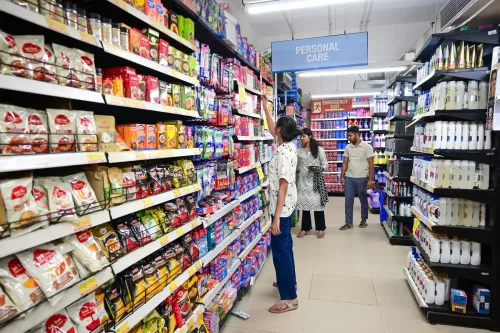
The scheme will be optional and covers retail shops, salons, small restaurants, and similar consumer-facing businesses.
Legislative amendments and the operational framework will be finalised at the next GST Council meeting .
Reforms are slated to take effect from 1 April 2027 .
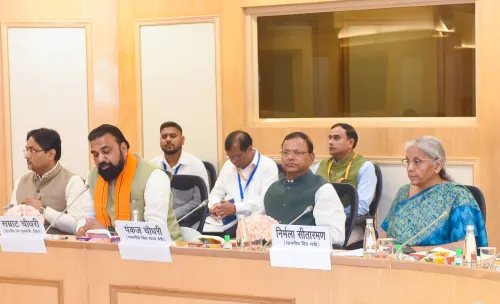
More than 16.85 lakh small businesses that sell exclusively to retail consumers could soon file just one GST return a year, after the GST Council on Thursday, 8 October 2026 approved in principle a simplified compliance scheme for taxpayers with annual turnover of up to ₹5 crore. The decision, taken at the 57th GST Council meeting chaired by Finance Minister Nirmala Sitharaman in New Delhi, is set to take effect from 1 April 2027.
What the Scheme Proposes
Under the proposed framework, eligible businesses — including neighbourhood retail shops, salons, small restaurants, and eateries — would pay GST every quarter but file a consolidated return only once a year. The scheme will be offered as an optional arrangement, giving qualifying taxpayers the choice to remain on their existing filing cycle if preferred.
At present, most GST taxpayers are required to file monthly returns. Businesses with turnover up to ₹5 crore have been permitted to file quarterly returns since 2021, but they still pay taxes monthly. The new proposal goes further by cutting annual return filings to one while retaining quarterly tax payments.
Who Stands to Benefit
According to government estimates, out of 1.05 crore active GST taxpayers, approximately 16.85 lakh report supplies only to end consumers. Of these, nearly 16.66 lakh — or 99 per cent — have annual turnover below ₹5 crore. Despite their large numbers, these businesses collectively account for less than 1 per cent of the overall GST tax liability.
Because their customers are individual consumers who do not claim input tax credit, the returns filed by such sellers have minimal bearing on the broader GST credit chain — a key rationale behind classifying them as suitable candidates for a simplified compliance regime.
Legislative Steps Ahead
Officials confirmed that the detailed operational framework and the legislative amendments required to implement the scheme will be placed before the Council at its next meeting. The reforms are formally slated to take effect from 1 April 2027, giving businesses and administrators time to prepare for the transition.
Broader Context
The move continues a pattern of incremental GST simplification since the tax's rollout in 2017. The quarterly return option introduced in 2021 already reduced the compliance burden for small filers; this latest proposal represents the most significant reduction in filing frequency yet for the B2C segment. Notably, the segment targeted — businesses selling only to consumers — was always the least integrated into the input tax credit ecosystem, making a compliance overhaul relatively low-risk for revenue authorities. The Council's step signals a broader recognition that compliance costs for micro and small enterprises can suppress formalisation, and that easing those costs may expand the taxpayer base over time.
Point of View
Or simply makes it easier for already-compliant small businesses to stay compliant at lower cost. The real prize would be bringing the vast number of unregistered micro-enterprises into the GST net, and a simplified filing regime could serve as that on-ramp. The test will come in 2027: whether registrations in the below-₹5-crore segment rise after the scheme goes live.
NationPress
8 Oct 2026
Frequently Asked Questions
What did the GST Council decide for small businesses on 8 October 2026?
The GST Council approved in principle a scheme allowing small businesses with annual turnover up to ₹5 crore that sell only to consumers to file a single GST return each year instead of monthly or quarterly returns. Taxes will still be paid on a quarterly basis. The scheme is expected to benefit around 16.85 lakh taxpayers and will take effect from 1 April 2027.
Who is eligible for the new annual GST return scheme?
Businesses with annual turnover of up to ₹5 crore that supply goods or services exclusively to end consumers — such as retail shops, salons, small restaurants and eateries — are eligible. The scheme is optional, so qualifying taxpayers can choose to remain on their existing filing cycle.
When will the annual GST return scheme come into effect?
The reforms are slated to take effect from 1 April 2027. The detailed operational framework and necessary legislative amendments will first be placed before the GST Council at its next meeting.
Why are these businesses being given simplified compliance?
The targeted businesses sell only to individual consumers who do not claim input tax credit, so their returns have minimal impact on the broader GST credit chain. Despite numbering 16.85 lakh, they account for less than 1% of total GST liability, making a simplified regime low-risk for revenue authorities while significantly reducing paperwork for small traders.
How does the new scheme differ from the existing quarterly return option?
Since 2021, businesses with turnover up to ₹5 crore could already opt for quarterly return filing, but were still required to pay taxes monthly. The new proposal retains quarterly tax payments but cuts annual return filings to just one, representing the furthest reduction in compliance frequency for this segment since GST was introduced in 2017.