Gujarat approves ₹581-crore fish scale weir dam on Banas river for 100 villages
Synopsis
Gujarat has approved a ₹581-crore fish scale stepped weir dam on the Banas river — an unusual design chosen specifically because of the river's extraordinary width. Planned with IIT Roorkee and set for completion by 2029, the structure aims to recharge groundwater for 100 villages in one of the state's most drought-prone districts, with a tourism development phase to follow.
Key Takeaways
The Gujarat government has granted in-principle approval for a ₹581-crore fish scale weir dam on the Banas river in Banaskantha district .
The dam will be 500 metres wide with seven stepped levels ; an upstream reservoir will extend 2.72 km .
100 villages — 70 in Deesa taluka and 30 in Kankrej taluka — are expected to benefit through improved groundwater recharge.
The project is being designed in collaboration with IIT Roorkee and draws water from the Dantiwada and Sipu dams .
Construction is targeted for completion by 2029 , with a tourism development phase planned thereafter.
The Gujarat government has granted in-principle approval for a ₹581-crore fish scale weir dam on the Banas river, near Mahadeviya village in Deesa taluka of Banaskantha district, a project designed to strengthen groundwater recharge and extend its benefits to 100 villages across Deesa and Kankrej talukas. The announcement marks a significant step in the state's water management drive under Chief Minister Bhupendra Patel, targeting drought-prone parts of north Gujarat.
Project Structure and Design
The proposed dam will span 500 metres in width and incorporate seven stepped levels, engineered to trap and store excess river flow. The reservoir created upstream is expected to extend approximately 2.72 km. A 4,795-metre-long embankment will be constructed along the northern bank to support the structure.
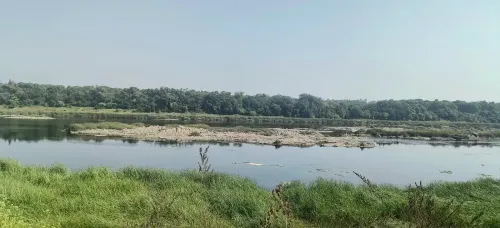
The state government had initially evaluated the option of building check dams at multiple points along the same stretch. However, given the considerable width of the Banas riverbed, officials opted instead for the fish scale stepped weir design, which is better suited to high-volume water retention across a broad channel.
IIT Roorkee Partnership and Water Sources
The project is being planned in collaboration with IIT Roorkee, which brings expertise in dam design and construction. Water stored through the structure will include controlled releases from the Dantiwada and Sipu dams, helping to maximise utilisation of available upstream reserves. The state government has assigned the preparation of the final project design as the immediate next step, after which construction will proceed. Completion is targeted by 2029.
How 100 Villages Stand to Benefit
According to the state government, the stored water will replenish groundwater across a region with considerable recharge potential. Of the 100 villages set to benefit, 70 fall within Deesa taluka and 30 within Kankrej taluka. Banaskantha district is historically susceptible to drought, and improved groundwater levels are expected to ease dependence on erratic monsoon cycles for agriculture and drinking water.
Tourism Development in Phase Two
Beyond its primary water management function, the project envisages a second phase focused on tourism development in the surrounding area. Various initiatives are planned to position the dam site as a local tourism destination once the core construction work is complete.
The project underscores the Gujarat government's broader push to deploy engineered water storage solutions in stress-prone districts, with Banaskantha emerging as a focal point for such interventions. Further design details are expected once IIT Roorkee finalises its technical recommendations.
Point of View
Which should provide more reliable inflows than monsoon-dependent schemes. The 2029 deadline is tight given that the final design is yet to be completed. If the groundwater recharge targets are met, the model could be replicated across other drought-prone districts in Gujarat — but that case will only be made with credible post-construction monitoring data.
NationPress
3 Nov 2026
Frequently Asked Questions
What is the fish scale weir dam approved by the Gujarat government?
It is a ₹581-crore stepped weir dam proposed on the Banas river near Mahadeviya village in Deesa taluka, Banaskantha district. The structure features seven stepped levels across a 500-metre width to store excess river water and recharge groundwater for 100 surrounding villages.
Why was a fish scale weir chosen instead of check dams?
The Gujarat government initially considered check dams at multiple locations along the Banas river stretch. However, the considerable width of the Banas riverbed made a fish scale stepped weir more suitable for effective water storage at scale.
Which villages will benefit from the Banas river dam project?
A total of 100 villages are expected to benefit — 70 in Deesa taluka and 30 in Kankrej taluka. The stored water will help replenish groundwater in an area with significant recharge potential in drought-prone Banaskantha district.
When will the Banas river weir dam be completed?
The state government has targeted project completion by 2029. The final design is currently being prepared in collaboration with IIT Roorkee, after which construction will begin.
Is there a tourism component to the project?
Yes. A second phase of the project envisions tourism development around the dam site. Various initiatives are planned to develop the area as a local tourism destination after the primary dam construction is complete.