Gujarat CM Bhupendra Patel honours Gandhi at Porbandar, links Swachh Bharat to Swaraj vision
Synopsis
On Gandhi Jayanti 2026, Gujarat CM Bhupendra Patel stood at Kirti Mandir in Porbandar — Gandhi's birthplace — and made the case that Swachh Bharat and Atmanirbhar Bharat are not just government schemes but living extensions of Gandhian Swaraj. The framing is deliberate: connecting present-day policy to the Mahatma's moral legacy ahead of India's 2047 development targets.
Key Takeaways
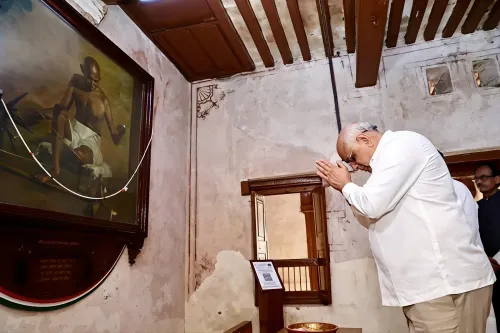
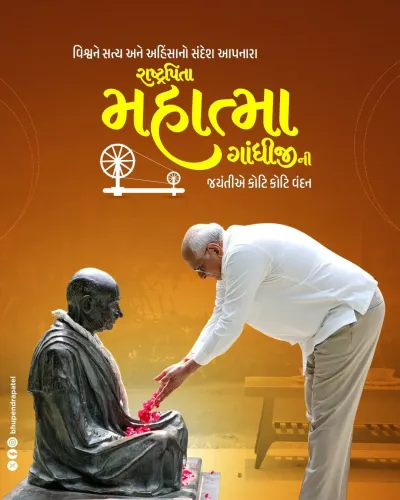
Gujarat CM Bhupendra Patel paid floral tributes to Mahatma Gandhi at Kirti Mandir, Porbandar on 2 October 2026 — Gandhi Jayanti.
Patel linked the Swachh Bharat Mission to Gandhi's vision of cleanliness, crediting mass citizen participation through 'Swachhagrahis' .
He described Atmanirbhar Bharat as a modern adaptation of Gandhi's concept of Swaraj .
PM Modi's principle of 'Sauno Saath, Sauno Vikas, Sauno Vishwas and Sauno Prayas' was cited as reflecting Gandhian welfare priorities.
Forest Minister Arjun Modhwadia called for dialogue in global conflict zones and urged citizens to embrace cleanliness as a daily practice.
Both leaders called on citizens to work towards a Viksit Bharat by 2047 in line with Gandhian ideals.
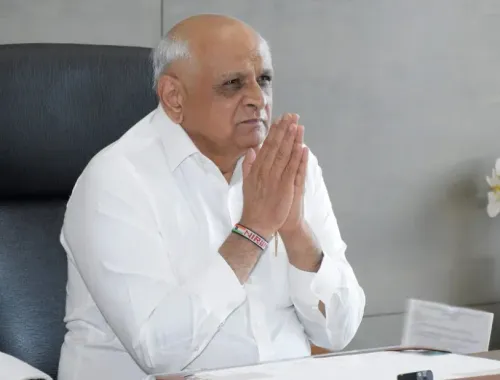
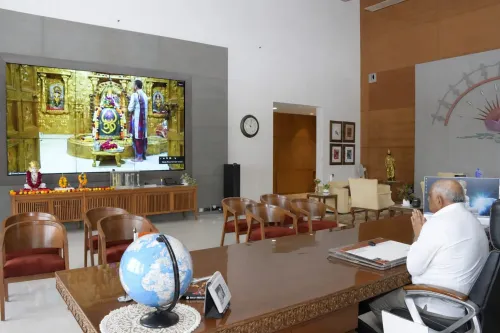
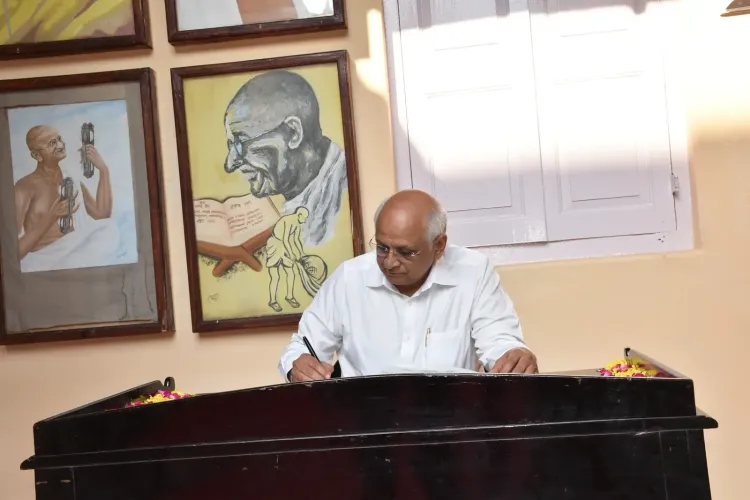
Gujarat Chief Minister Bhupendra Patel on 2 October 2026 paid floral tributes to Mahatma Gandhi at Kirti Mandir in Porbandar, Gandhi's birthplace, on the occasion of Gandhi Jayanti. Addressing a prayer meeting, Patel said Gandhi's ideals of cleanliness and Swaraj had been carried forward as mass movements through the Swachh Bharat Mission and the vision of Atmanirbhar Bharat.
Key Remarks at Kirti Mandir
Speaking at the prayer gathering, Chief Minister Patel said Gandhi's message of truth, non-violence, Sarvodaya, and universal brotherhood remained deeply relevant and called upon citizens to reflect these ideals in public life. 'Prayer nourishes the soul, inspires self-reflection, humility and compassion, and strengthens the resolve to follow the right path,' he said. He added that prayer brings people together beyond individual interests and faiths, promoting mutual respect, empathy, harmony, peace, and national unity.
Patel said India's strength lay in the unity of its diverse faiths and traditions, with the principle of 'Sarva Dharma Sambhava' serving as a foundation for equal respect and national cohesion.
Gandhi's Vision Linked to Modern Governance
The Chief Minister drew a direct line between Gandhi's concept of Swaraj and Prime Minister Narendra Modi's vision of Atmanirbhar Bharat, describing the latter as an adaptation of Gandhian self-reliance to contemporary national development. He also connected the Swachh Bharat Mission to Gandhi's long-held emphasis on cleanliness, noting that the initiative had mobilised citizens across age groups as volunteers and 'Swachhagrahis'.
Patel further referenced efforts to revive khadi among younger generations through the messaging of 'Khadi for Nation, Khadi for Fashion', framing it as a continuation of Gandhi's economic philosophy. He cited Prime Minister Modi's guiding principle of 'Sauno Saath, Sauno Vikas, Sauno Vishwas and Sauno Prayas' as reflecting Gandhi's emphasis on the welfare of the poor and last-mile communities.
India's Global Role and Vasudhaiva Kutumbakam
Chief Minister Patel said India, in keeping with Gandhi's ideals of non-violence and universal brotherhood, followed the spirit of 'Vasudhaiva Kutumbakam' — the world as one family. He said the country continued to play a constructive role in promoting dialogue, partnership, and human-centric global cooperation.
He also recalled the freedom movement, noting that India had achieved independence from British rule under Gandhi's leadership through the principles of truth and non-violence. He called upon citizens to work towards building a Viksit Bharat by 2047, with focus on self-reliance, welfare of the poor, cleanliness, and environmental conservation.
Forest Minister and Other Speakers
Gujarat Forest and Environment Minister Arjun Modhwadia said Gandhi had transformed human lives through simple yet powerful efforts, and that his message of truth and non-violence remained universally relevant. Referring to ongoing conflicts in various parts of the world, Modhwadia said dialogue was essential to resolving disputes and reducing human suffering.
Modhwadia also noted that Porbandar's identity as Gandhi's birthplace was a matter of national and global pride, and urged citizens to make cleanliness a part of their daily lives. 'Keeping our homes, streets and country clean and following Gandhiji's ideals is the true tribute to him,' he said.
Senior officials, civic representatives, office-bearers, school students, and citizens attended the event. As India marks another Gandhi Jayanti, the occasion serves as a renewed call to align governance, civic behaviour, and international conduct with the values Gandhi championed.
Point of View
Atmanirbhar Bharat, Khadi revival — to Gandhian symbolism, effectively blurring the line between governance messaging and commemorative ritual. While the rhetorical linkage between Swaraj and Atmanirbhar Bharat is politically coherent, critics would note that Gandhi's Swaraj was rooted in decentralised village self-governance, a framework quite distinct from centralised industrial self-reliance. The Viksit Bharat 2047 call, repeated at every such occasion, has yet to be accompanied by measurable interim milestones that citizens can track. Whether these anniversaries move policy outcomes — or remain ceremonial — depends on the specificity of follow-through.
NationPress
2 Oct 2026
Frequently Asked Questions
Why did Gujarat CM Bhupendra Patel visit Porbandar on 2 October 2026?
Chief Minister Bhupendra Patel visited Porbandar to pay floral tributes to Mahatma Gandhi at Kirti Mandir on Gandhi Jayanti, Gandhi's birth anniversary. He addressed a prayer meeting and spoke about the relevance of Gandhian ideals to contemporary governance and society.
How did CM Patel connect Swachh Bharat Mission to Mahatma Gandhi's ideals?
Patel said Gandhi's vision of cleanliness had been translated into a mass movement through the Swachh Bharat Mission, with citizens across age groups participating as volunteers and 'Swachhagrahis'. He described the initiative as a direct continuation of Gandhi's lifelong emphasis on sanitation and public hygiene.
What is the link drawn between Atmanirbhar Bharat and Gandhi's concept of Swaraj?
Chief Minister Patel described Atmanirbhar Bharat as a modern adaptation of Gandhi's idea of Swaraj — self-rule and self-reliance — applied to India's current development context. He argued that the vision of economic self-sufficiency today reflects the same spirit Gandhi championed during the independence movement.
What did Gujarat Forest Minister Arjun Modhwadia say at the event?
Modhwadia said Gandhi had transformed human lives through simple efforts and that his message of truth and non-violence remained globally relevant. He called for dialogue to resolve international conflicts and urged citizens to make cleanliness a daily habit as a true tribute to Gandhi.
What is the Viksit Bharat 2047 goal mentioned at the Gandhi Jayanti event?
Viksit Bharat 2047 is India's stated development goal of becoming a fully developed nation by the centenary of its independence. CM Patel called upon citizens to work towards this vision with a focus on self-reliance, welfare of the poor, cleanliness, and environmental conservation — all framed as continuations of Gandhian values.