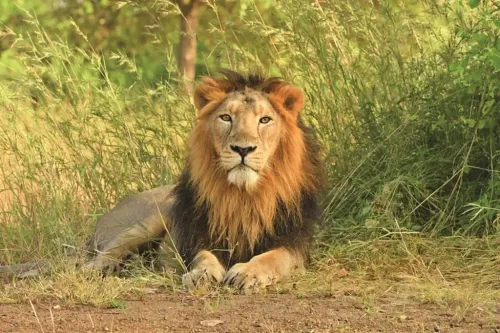
Gujarat coastal Asiatic lions eat 70% wild prey, study finds
Synopsis
A peer-reviewed study has upended a core assumption about Asiatic lions in Gujarat: coastal lions get 70% of their biomass from wild prey — led by nilgai — not livestock. With the population at a record 891 and over 100 lions now in coastal habitats, the findings reshape the conservation calculus and suggest lions may actually be helping farmers by controlling crop-raiding animals.
Key Takeaways
A study in Conservation journal found wild prey accounts for 70 per cent of biomass consumed by coastal Asiatic lions in Gujarat .
Researchers analysed 160 scat samples from Junagadh , Gir Somnath , Amreli , Bhavnagar , and Porbandar during March–April 2024 .
Blue bull (nilgai) was the primary prey, contributing over 51 per cent of total biomass consumed.
Gujarat's Asiatic lion population has reached 891 per the 16th Lion Population Estimation (2025) ; coastal habitats support more than 100 lions.
Feral cattle — abandoned non-productive livestock — account for much of the domestic prey component, not actively herded stock.
The study concludes that conserving wild prey populations is essential for long-term lion survival outside protected forests.
A new peer-reviewed study published in the international journal Conservation has found that Asiatic lions inhabiting Gujarat's coastal districts depend primarily on wild prey — not domestic livestock — overturning a widely held assumption that the species expanded beyond the Gir forests in search of cattle. The research, based on scat samples collected across five coastal districts in March–April 2024, found that wild prey accounts for 70 per cent of the biomass consumed by coastal lions.
What the Research Found
Researchers analysed 160 lion scat samples from the coastal districts of Junagadh, Gir Somnath, Amreli, Bhavnagar, and Porbandar. The study — titled Dietary Pattern of Asiatic Lions in the Coastal Ecosystem of Saurashtra, Gujarat, India — was authored by Mohan Ram, Aradhana Sahu, Nityanand Srivastava, Kritagnya Vadar, Rohit Chaudhary, and Lahar Jhala.
According to Mohan Ram, Conservator of Forests, Junagadh Circle, and a co-author of the study, wild prey accounted for 64 per cent of the lions' diet by frequency and 70 per cent by biomass consumed, while domestic animals contributed 31 per cent and 30 per cent respectively. The blue bull (nilgai) emerged as the primary prey species, contributing over 51 per cent of total biomass consumed. Wild pigs ranked second among wild prey, while cattle represented the largest domestic prey component.
A Finding That Contradicted the Hypothesis
The researchers acknowledged that the results ran counter to their original expectation. They had hypothesised that lions in human-dominated coastal landscapes — where wild prey might be scarcer — would lean more heavily on livestock. Instead, healthy nilgai and wild pig populations along Gujarat's coastline appear to be sustaining the lions largely on natural prey.
Notably, the study found that much of the cattle consumed is believed to be feral animals — non-productive livestock abandoned in parts of Saurashtra — which are abundant and lack the anti-predator behaviour of protected stock, making them easier targets. This distinction is significant: it suggests actual predation pressure on farmers' livestock may be lower than previously assumed.
Expanding Lion Population and Coastal Habitats
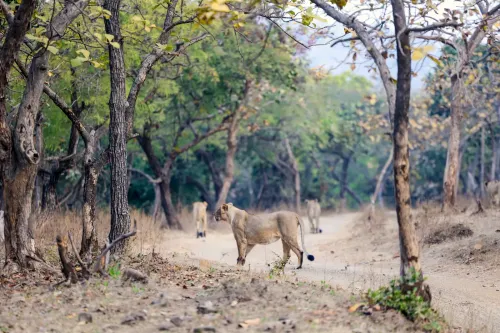
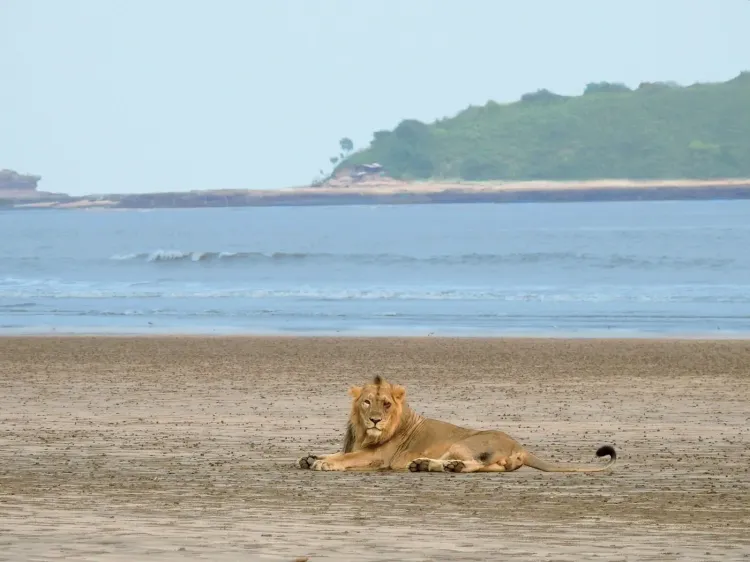
The findings arrive as Gujarat's Asiatic lion population has reached 891, according to the 16th Lion Population Estimation conducted in 2025. The state's coastal ecosystem now supports three satellite lion populations — along the south-western coast, south-eastern coast, and Bhavnagar coast — collectively estimated to harbour more than 100 Asiatic lions. This reflects the species' continued range expansion well beyond the Gir Protected Area.
The study underscored that coastal lions display a relatively specialised diet centred on nilgai and wild pigs, suggesting that prey abundance and habitat quality are the primary drivers of their feeding behaviour — not opportunistic livestock raiding.
What the Government Said
Forests and Environment Minister Arjun Modhwadia said the findings demonstrated an unexpected agricultural benefit. 'The research study indicates that the lion population outside the Gir forests is benefiting farmers by preying on blue bulls (nilgai) and wild pigs, both of which cause damage to crops. By naturally controlling their populations, lions are helping reduce crop losses,' he said.
Modhwadia also referenced Project Lion, launched by Prime Minister Narendra Modi on the 74th Independence Day as a flagship conservation initiative, and credited Chief Minister Bhupendra Patel with sustained wildlife conservation efforts in the state.
Minister of State for Forests and Environment Pravin Mali said the study carried global relevance. 'Gujarat's successful conservation model — where lions have expanded into multi-use landscapes while continuing to rely primarily on natural prey — offers valuable lessons for large carnivore conservation programmes across the world,' he said.
Conservation Implications
The study stressed that protecting wild prey populations will be essential for the long-term survival of Asiatic lions outside protected forests. A robust nilgai and wild pig base not only sustains the lions but, according to the research, may also reduce human-lion conflict by lowering the incentive for livestock predation. This positions wild prey conservation as a dual-benefit strategy — for both the lions and the farming communities sharing these landscapes.
With Gujarat's lion count at a record high and coastal habitats proving ecologically viable, the focus now shifts to whether prey-base management and habitat connectivity can be sustained as the population continues to grow.
Point of View
But what it implies about conflict: if coastal lions are sustaining themselves primarily on nilgai and wild pigs — animals that damage crops — then the species is functioning as a natural pest-control mechanism, not a threat to livelihoods. That reframes the human-lion conflict narrative entirely. Yet the 31 per cent livestock component (by diet frequency) should not be dismissed; the distinction between feral and protected cattle matters enormously to farmers who have lost animals. The real policy test is whether Gujarat can institutionalise prey-base monitoring as a conservation metric, rather than treating lion headcount alone as the measure of success.
NationPress
16 Oct 2026
Frequently Asked Questions
What did the study on Gujarat's coastal Asiatic lions find?
The study, published in the journal Conservation, found that wild prey accounts for 70 per cent of the biomass consumed by Asiatic lions in Gujarat's coastal districts, contradicting the belief that the species expanded beyond the Gir forests primarily to prey on livestock. The blue bull (nilgai) alone contributed over 51 per cent of total biomass consumed.
How was the research conducted?
Researchers analysed 160 lion scat samples collected from the coastal districts of Junagadh, Gir Somnath, Amreli, Bhavnagar, and Porbandar during March and April 2024. The study was authored by Mohan Ram, Aradhana Sahu, Nityanand Srivastava, Kritagnya Vadar, Rohit Chaudhary, and Lahar Jhala.
What is the current Asiatic lion population in Gujarat?
Gujarat's Asiatic lion population has reached 891, according to the 16th Lion Population Estimation conducted in 2025. Of these, more than 100 lions are now estimated to inhabit three coastal satellite populations along the south-western coast, south-eastern coast, and Bhavnagar coast.
Why do coastal lions consume some cattle if wild prey is abundant?
The study notes that much of the cattle consumed is believed to be feral animals — non-productive livestock that are commonly abandoned in parts of Saurashtra. These animals are abundant, lack anti-predator behaviour, and are easier targets than protected livestock, making them an incidental rather than primary food source.
What are the conservation implications of the findings?
The study concludes that conserving wild prey populations — particularly nilgai and wild pigs — is essential for the long-term survival of Asiatic lions outside protected forests. It also suggests that lions preying on crop-raiding animals may indirectly benefit farmers, potentially reducing human-lion conflict in coastal Saurashtra.