Gujarat court awards life imprisonment to three in cow slaughter case, fines ₹2 lakh each

Synopsis
A Gujarat sessions court has sentenced three men to rigorous life imprisonment — the maximum under state law — for cow slaughter in Kalol, after 277 kg of beef was seized in a 2024 police raid. The verdict is one of the first to apply the life-term ceiling of Gujarat's Animal Preservation Act after a full trial, and the judge cited Sanskrit texts and the Vedas in the ruling.
Key Takeaways
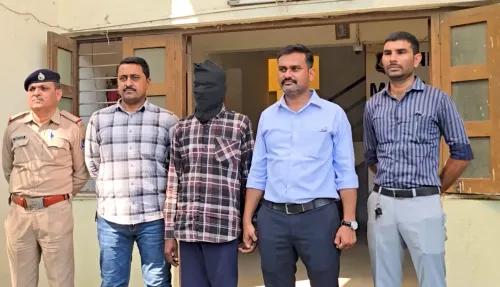
Kalol Sessions Court sentenced Wasim Qureshi , Mahmad Rafiq Qureshi , and Asfaq Bahelim to rigorous life imprisonment on 27 October 2026 .
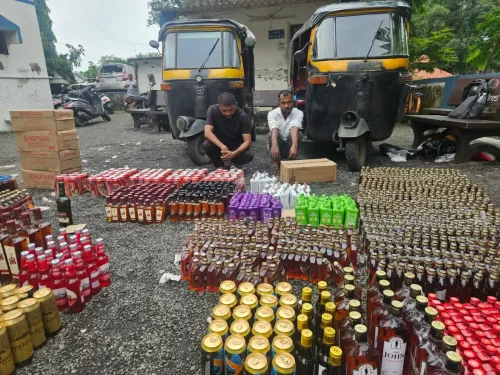
277 kg of beef worth ₹55,000 was seized during a police raid on 22 August 2024 in Jamla village, Kalol .
Each convict was also fined ₹2 lakh by Additional Sessions Judge B R Rajput .
The three were convicted under the Gujarat Animal Preservation (Amendment) Act and the Prevention of Cruelty to Animals Act .
Of six persons originally arrested, only three were found guilty after trial.
The court invoked ancient Sanskrit texts and the Vedas while explaining its rationale for the sentence.
A sessions court in Kalol, Gujarat on 27 October 2026 sentenced three men to rigorous life imprisonment for cow slaughter and attempting to sell the meat, after 277 kg of beef worth ₹55,000 was seized during a police raid in August 2024. The court also imposed a fine of ₹2 lakh on each convict — one of the stiffest sentences handed down under Gujarat's animal preservation laws in recent years.
The Convicts and the Charges
Additional Sessions Judge B R Rajput found Wasim Qureshi of Juhapura, Mahmad Rafiq Qureshi of Behrampura, and Asfaq Bahelim of Fatehwadi guilty under the Gujarat Animal Preservation (Amendment) Act and the Prevention of Cruelty to Animals Act. Three of the six persons originally arrested in the case were convicted after trial; charges against the remaining three were not established to the court's satisfaction.
How the Case Unfolded
According to Additional Public Prosecutor Jignesh Joshi, police on 22 August 2024 raided the house of Lalabhai Senma in Jamla village and seized 277 kg of beef, valued at ₹55,000, from the three men. Weapons allegedly used for cow slaughter and a vehicle used to transport the meat were also recovered at the scene. Investigators concluded that the accused had planned to sell the meat to a person identified as Ghulam Moin Qureshi.
What the Court Said
While pronouncing the sentence, Judge Rajput invoked ancient Sanskrit texts and the Vedas to underline what the court described as the cultural and religious significance of cow protection. 'The cow is considered the mother of the universe. It is useful for human life and society. Protecting cows is an act associated with religion and compassion. Wherever cow slaughter takes place, legal action should be taken. If the guilt of the accused is established by the evidence, appropriate punishment should be awarded to them,' the court observed.
The judgment further noted that the convicts had slaughtered the animal despite being fully aware of its cultural significance, and that failure to impose the prescribed punishment could, in the court's view, threaten the existence of cows.
Broader Legal Context
Gujarat's Animal Preservation (Amendment) Act prescribes life imprisonment as the maximum penalty for cow slaughter, making it among the most stringent such statutes in India. The law was last significantly amended in 2017, raising the maximum sentence from seven years to life. This verdict is among the earlier instances where the maximum penalty has actually been applied following a full trial, signalling that courts may be prepared to enforce the law's upper limit. Nationally, at least a dozen Indian states have similar preservation laws, though sentencing severity varies considerably.
What Happens Next
The convicts retain the right to appeal before the Gujarat High Court. No timeline for an appeal has been reported. The case involving the remaining three originally arrested individuals is not immediately clear from available records.
Point of View
If ever, been imposed after a full contested trial since the 2017 amendment raised the maximum penalty. The judge's citation of Sanskrit texts and the Vedas in the sentencing rationale is also unusual and will likely draw scrutiny in any appeal before the Gujarat High Court, where the constitutional limits of invoking religious texts in judicial reasoning may be tested. Critics of similar laws argue that life imprisonment for slaughter offences is disproportionate and has a chilling effect on communities whose livelihoods depend on the meat trade. Supporters counter that the law's deterrent effect requires courts to enforce the upper limit. How the High Court responds to an inevitable appeal will be the real legal marker here.
NationPress
27 Oct 2026
Frequently Asked Questions
What happened in the Kalol cow slaughter case?
A sessions court in Kalol, Gujarat sentenced three men — Wasim Qureshi, Mahmad Rafiq Qureshi, and Asfaq Bahelim — to rigorous life imprisonment for cow slaughter and attempting to sell the meat. The verdict followed a police raid in August 2024 in which 277 kg of beef worth ₹55,000 was seized.
Under which law were the accused convicted?
The three men were convicted under the Gujarat Animal Preservation (Amendment) Act and the Prevention of Cruelty to Animals Act. Gujarat's preservation law, last amended in 2017, prescribes life imprisonment as the maximum penalty for cow slaughter.
What fine did the court impose?
Additional Sessions Judge B R Rajput imposed a fine of ₹2 lakh on each of the three convicts, in addition to the sentence of rigorous life imprisonment.
Why did the court cite Sanskrit texts in the judgment?
Judge Rajput referred to ancient Sanskrit texts and the Vedas to underline what the court described as the cultural and religious significance of cow protection in Indian society. The court observed that wherever cow slaughter takes place, legal action should be taken.
Can the convicts appeal the sentence?
Yes, the convicts retain the right to appeal before the Gujarat High Court, though no timeline for such an appeal has been reported. Legal observers expect the appeal to test, among other things, the use of religious texts as justification in a judicial ruling.