Gujarat GCC Policy 2025-30: Single portal, two-year investment window unveiled
Synopsis
Gujarat has moved from policy announcement to operational reality — Operational Guidelines 1.0 for the GCC Policy 2025-30 now give companies a single digital portal, a defined two-year investment window, and strict claim deadlines. It is a deliberate play to out-process rival states in the race for high-value global technology centres.
Key Takeaways
The Gujarat government has issued Operational Guidelines 1.0 for its GCC Policy 2025-30 , effective 3 October .
All incentive applications, claim processing, and payments will be routed through a single Integrated Incentive Management Portal .
A 'Month of Eligibility' concept determines when incentive calculations begin, based on the latest of three qualifying dates.
Eligible GFCI investment for new GCCs must be made within two years of commencement of commercial operations; expansion investment within two years of the expansion application.
Land costs are excluded from CAPEX support; delayed claims attract pro-rata deductions.
GCCs must demonstrate they serve only their parent or group company to qualify for recognition and incentives.
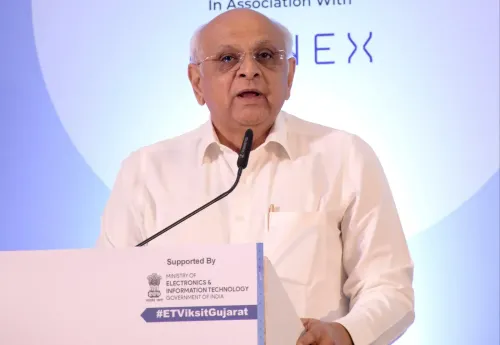
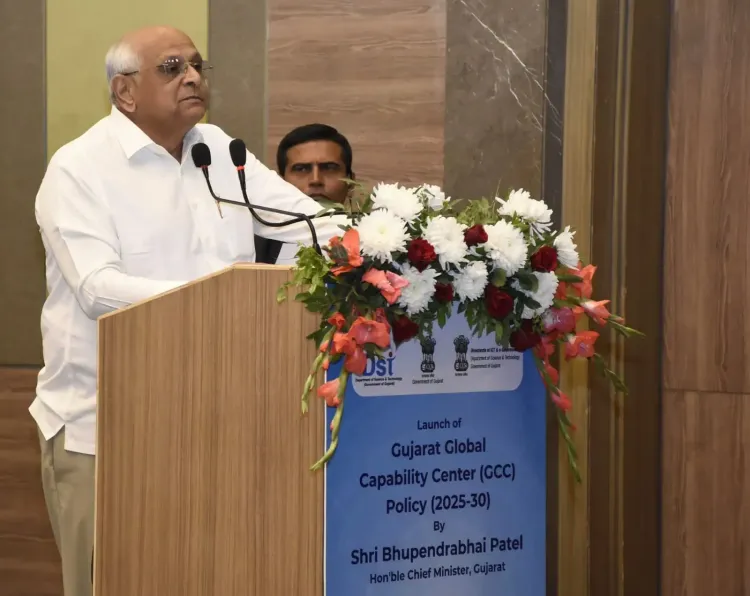
The Gujarat government, under Chief Minister Bhupendra Patel, has operationalised a unified digital platform for applying, verifying, and receiving incentives under its Global Capability Centre (GCC) Policy 2025-30, while establishing clear eligibility criteria and timelines for companies setting up or expanding GCCs in the state. The move, formalised through Operational Guidelines 1.0 issued on 3 October, marks a significant administrative step in Gujarat's push to attract high-value technology operations.
Single Portal for All Incentive Processes
All incentive-related activity — from application submission to claim processing and final payment — will now flow through the Integrated Incentive Management Portal, developed by the Directorate of ICT and e-Governance. The portal will also handle applications related to skill development courses and serve as a centralised information hub for the GCC policy. This consolidation is designed to reduce procedural friction and bring transparency to the disbursement process.
The guidelines introduce a key concept: the 'Month of Eligibility', which determines when incentive calculations commence. It is defined as the latest among three dates — commencement of commercial operations, receipt of in-principle approval, or the date on which the eligible employee count is achieved.
Eligibility Criteria and Document Requirements
For a GCC to be formally recognised under the policy, companies must submit a defined set of documents establishing their relationship with the parent or group company. These include a board resolution, service level agreement (SLA), ownership structure, detailed project report (DPR), and GST certificate. Investment details certified by a chartered accountant (CA) are also required where applicable, and commercial operations must have commenced within the policy period.
For a new GCC, the prescribed documentation additionally covers the certificate of incorporation, GST registration, property lease or purchase documents in Gujarat, employee allocation details, and the first service invoice. Existing GCCs seeking to add new activities and employment must submit an expansion-related board resolution, SLA for the additional activities, a fresh DPR, and details of the proposed investment and headcount.
What Qualifies as CAPEX — and What Does Not
The guidelines spell out expenditure eligible for capital expenditure (CAPEX) support. Qualifying items include construction or purchase of buildings, computers, software, networking hardware, and related fixed assets. Furniture, fixtures, renovation, civil work, interior design, electrical fixtures, HVAC equipment, and plant and machinery required for GCC operations may also qualify, subject to supporting documentation.
Notably, land costs are excluded. However, stamp duty and registration fees paid for the lease, sale, or transfer of land or office space — as well as equipment purchased for a captive renewable energy plant — may be eligible. For a new GCC, eligible Gross Fixed Capital Investment (GFCI) made within two years of commencement of commercial operations can be covered. For expansion of an existing GCC, relevant investment made within two years of the expansion application is considered.
Claim Deadlines and Verification Process
The guidelines prescribe strict claim timelines. CAPEX claims must be filed financial year-wise within one year after completion of the eligible period. The first OPEX claim must cover the two quarters following the month of eligibility, with subsequent claims filed before the end of each succeeding quarter. Annual claims for special incentives and quality certification must be submitted before the end of the subsequent financial year. Delayed claims will attract a pro-rata deduction based on the number of days of delay.
Verification will be document-based, requiring records such as the certificate of incorporation, GST registration, board resolution, SLA, CA-certified DPR, employee details, first service invoice, investment invoices, and CA certificates for GFCI and annual operating expenditure. Authorities will also verify that a GCC provides services exclusively to its parent or group company. Additional documents or clarifications may be sought during scrutiny, and applicants must respond within the prescribed timeframe.
Broader Context and What Comes Next
This comes amid intensifying competition among Indian states — particularly Karnataka, Telangana, and Maharashtra — to attract GCC investments from global multinationals. Gujarat's structured, portal-driven approach signals an attempt to differentiate on process clarity and speed of disbursement. With the GCC Policy 2025-30 now backed by operational guidelines, companies evaluating Gujarat as a destination have a defined regulatory roadmap to work with. Industry observers will watch closely whether the two-year investment window and consolidated portal translate into faster on-ground approvals and measurable GCC growth in the state.
Point of View
Not document checklists. A single portal is only as good as the bureaucratic turnaround behind it; states like Telangana and Karnataka have had GCC-friendly frameworks longer and have the talent-pool advantage. The two-year investment window is a reasonable incentive design, but the pro-rata penalty on delayed claims could deter smaller global firms unfamiliar with India's compliance rhythms. Gujarat is betting that process clarity can substitute for the ecosystem depth its southern rivals already possess — a wager that deserves scrutiny.
NationPress
3 Oct 2026
Frequently Asked Questions
What is Gujarat's GCC Policy 2025-30?
It is a state government initiative to attract and expand Global Capability Centres — offshore technology and services hubs of multinational companies — in Gujarat through structured incentives covering capital and operational expenditure. The policy runs from 2025 to 2030 and is now backed by Operational Guidelines 1.0 that detail eligibility, documentation, and claim procedures.
What is the new single portal for Gujarat GCC incentives?
The Integrated Incentive Management Portal, developed by the Directorate of ICT and e-Governance, is the unified digital platform for all GCC incentive applications, claim processing, and payments under the policy. It also handles skill development course applications and serves as an information hub for the GCC policy.
What is the two-year investment window under Gujarat's GCC guidelines?
For a new GCC, eligible Gross Fixed Capital Investment made within two years of commencement of commercial operations qualifies for CAPEX support. For an existing GCC undergoing expansion, relevant investment made within two years of the expansion application is considered eligible.
What costs are excluded from CAPEX support under the Gujarat GCC policy?
Land costs are explicitly excluded from CAPEX support. However, stamp duty and registration fees for lease, sale, or transfer of land or office space, as well as equipment for a captive renewable energy plant, may be eligible subject to documentation.
What happens if a company files a GCC incentive claim late in Gujarat?
Delayed claims will be subject to a pro-rata deduction calculated on the number of days of delay. CAPEX claims must be filed financial year-wise within one year after the eligible period ends, and OPEX claims must be submitted quarterly as prescribed in the guidelines.