Did Gujarat issue 'Soil Health Cards' to 2.19 crore farmers?

Synopsis
Gujarat's recent distribution of Soil Health Cards to 2.19 crore farmers marks a pivotal step in sustainable agriculture. This initiative, which offers scientific insights into soil management, aims to enhance crop productivity and farmer incomes, continuing a legacy that dates back to 2003–04.
Key Takeaways
2.19 crore farmers in Gujarat have received Soil Health Cards.
The initiative promotes scientific soil management .
Soil Health Cards provide insights on 12 soil parameters .
Farmers receive recommendations based on laboratory analysis .
Gujarat's program has expanded nationally since 2015–16 .
Gandhinagar, Feb 17 (NationPress) In a significant move to bolster sustainable agriculture, Gujarat has distributed Soil Health Cards to 2.19 crore farmers through the Soil Health Card (SHC) initiative. This program is designed to enhance scientific soil management and boost crop productivity.
The initiative was launched in 2003–04 when Prime Minister Narendra Modi was the Chief Minister of Gujarat, making the state the first in India to adopt a systematic soil testing and advisory scheme for farmers.
This program was later expanded across the country in 2015–16. Under the leadership of Chief Minister Bhupendra Patel, the scheme has been sustained with the aim of improving farmers’ incomes and preserving soil health.
The Soil Health Card provides farmers with insights on 12 soil parameters: Nitrogen (N), Phosphorus (P), Potassium (K), pH, Electrical Conductivity (EC), Iron (Fe), Copper (Cu), Zinc (Zn), Organic Carbon (OC), Sulphur (S), Boron (B), and Manganese (Mn).
Farmers receive tailored recommendations based on laboratory assessments regarding the suitable type and quantity of fertilizers to apply.
As per official statistics, the initial phase of the initiative from 2003–04 to 2010–11 benefited over 43.03 lakh farmers in Gujarat. The second phase, spanning 2011–12 to 2015–16, saw 46.92 lakh farmers receiving Soil Health Cards.
In the third phase, commencing from 2016–17 under a Central government initiative, more than 1.25 crore farmers in the state have acquired these cards.
In 2024–25, a total of 6,23,844 soil samples were gathered via the SHC portal, with 6,23,295 samples analyzed. The target for testing in 2025–26 has been set at 6,25,513 samples.
Currently, 6,13,355 samples have been collected, and 4,86,142 have been analyzed, with the rest pending examination.
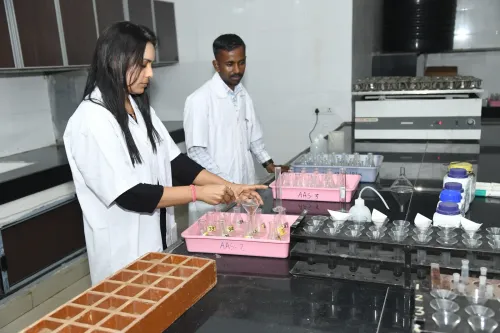
At present, 19 soil testing laboratories and one microelement testing lab operate under the Agriculture Department in Gujarat, each capable of testing between 10,000 and 11,000 samples annually. Additionally, 26 private soil testing laboratories have been established at the rural level with government support, each able to analyze approximately 3,000 soil samples each year.
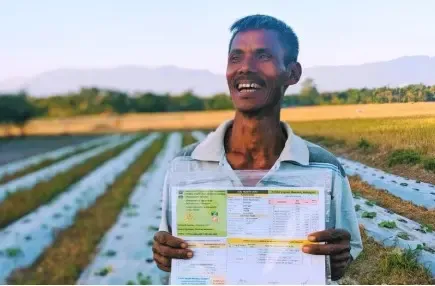
Babubhai Patel, a farmer from Dhansura in Aravalli district, remarked that the recommendations from the scheme allowed him to optimize his fertilizer usage.
"I was guided to use only the necessary quantity of fertilizers, which helped lower my input costs and enhance my crop yield," he stated.
Point of View
The ongoing efforts in Gujarat to implement Soil Health Cards reflect a significant commitment to sustainable agriculture. This initiative not only promotes efficient resource use but also stands as a model for other states, reinforcing the importance of scientific approaches in farming practices. The potential benefits for farmers' incomes and soil health are crucial for the nation's agricultural landscape.
NationPress
26 Sept 2026
Frequently Asked Questions
What are Soil Health Cards?
Soil Health Cards are documents issued to farmers that provide detailed information about soil health, including nutrient levels and recommendations for fertilizer use.
How many farmers received Soil Health Cards in Gujarat?
Gujarat has issued Soil Health Cards to 2.19 crore farmers as part of the SHC scheme.
When was the Soil Health Card scheme introduced?
The Soil Health Card scheme was introduced in 2003–04 when Narendra Modi was the Chief Minister of Gujarat.
What benefits do farmers get from Soil Health Cards?
Farmers receive tailored recommendations for fertilizer application that help optimize crop yields and reduce input costs.
How many soil testing laboratories are there in Gujarat?
Currently, there are 19 soil testing laboratories and one microelement laboratory functioning in Gujarat.