Should Non-Hindus Be Prohibited from Entering Haridwar's Har Ki Pauri?
Synopsis
In Haridwar, posters declaring Har ki Pauri as 'non-Hindu prohibited zone' have sparked controversy. The Shri Ganga Sabha claims the intention is to inform rather than exclude. With the upcoming Ardh Kumbh festival, this issue raises questions about access and rights in sacred spaces.
Key Takeaways
Posters at Har ki Pauri mark the area as restricted for non-Hindus.
Shri Ganga Sabha claims the move is to raise awareness, not to exclude.
Concerns over misinformation leading to disputes highlighted.
Demand for restrictions has increased with the upcoming Ardh Kumbh festival.
Similar restrictions exist in several temples across India.
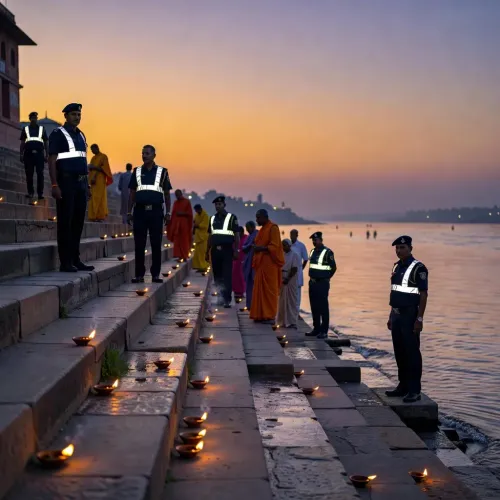
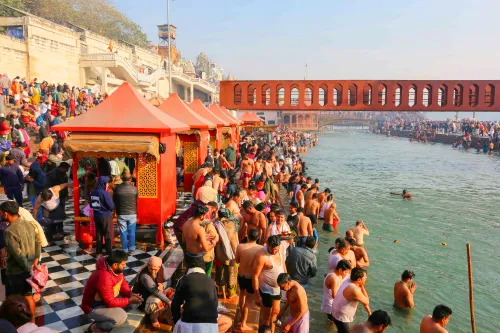
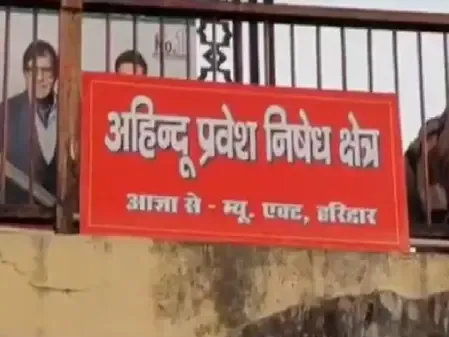
Haridwar, Jan 16 (NationPress) In response to the escalating calls for restricting access to non-Hindus at the revered Har ki Pauri, posters have emerged at this iconic spiritual destination, clearly marking the site as “restricted for non-Hindus.”
These posters, which proclaim the Har ki Pauri region as a strictly ‘Hindu zone’, are likely to intensify the ongoing debate and spark renewed discussions among various parties involved.
Displayed by the Shri Ganga Sabha, the posters state, “Non-Hindus Prohibited Entry Zone.” The organization asserts that their intention is merely to inform the public rather than harbor any negative motives.
Nitin Gautam, President of Shri Ganga Sabha, shared with IANS that “a fundamental understanding of the law is vital for everyone.” Following recent incidents, the Sabha deemed it essential to raise awareness about regulations and guidelines. To achieve this goal, informative boards have been installed at key public locations in Haridwar, aiming to enlighten locals, devotees, and tourists alike about the law and how to connect with the appropriate authorities.
Further elaborating, Nitin Gautam indicated that a few incidents in the past highlighted that misinformation was the primary cause of disputes and confusion. He emphasized that these banners aim to educate citizens about their rights and responsibilities, fostering law and order, and ensuring that peace and harmony thrive within the community.
It’s worth noting that the push to prohibit non-Hindus from entering Haridwar has been prevalent for some time, especially with the upcoming Ardh Kumbh festival on the horizon.
Previously, Nitin Gautam had referenced the existing bylaws, explaining that during British rule, under the guidance of Pandit Madan Mohan Malaviya, municipal regulations were established for Haridwar and the Ganges, suggesting that laws for Haridwar should continue to align with those original municipal bylaws.
In the past, several temples in Southern India, such as the Tirupati Balaji Temple, Guruvayur Temple, Padmanabhaswamy Temple, and Lingaraj Temple, have restricted non-Hindus from entry, while some require devotees to affirm their faith through an oath, illustrating their dedication to the deity.
Point of View
I observe that the recent emergence of posters at Har ki Pauri has brought to light critical discussions surrounding religious access and community harmony. In a culturally rich country like India, balancing tradition with inclusivity remains essential. While the intentions behind these posters may be rooted in awareness, the implications for societal cohesion are profound.
NationPress
29 Sept 2026
Frequently Asked Questions
What do the posters at Har ki Pauri state?
The posters declare the area as 'Non-Hindus Prohibited Entry Zone,' marking it as restricted for non-Hindus.
Who put up the posters?
The posters were put up by the Shri Ganga Sabha, aiming to raise awareness about laws and regulations.
What is the purpose of these banners?
The banners are intended to inform the public about their rights and duties concerning the law.
Has there been a demand to restrict non-Hindu entry in Haridwar before?
Yes, the demand to ban non-Hindus from entering Haridwar has been raised multiple times, especially with the Ardh Kumbh festival approaching.
Are there similar restrictions in other temples?
Yes, several temples in South India, such as Tirupati Balaji Temple and Guruvayur Temple, have similar restrictions for non-Hindus.