Harmilan Bains backs India's sports rise, flags unequal athlete rewards
Synopsis
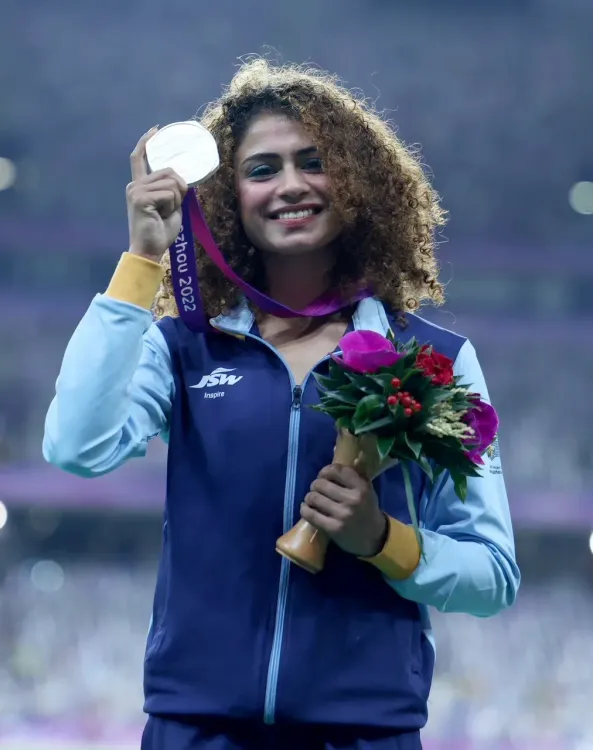
Asian Games gold medallist Harmilan Bains is celebrating India's sporting rise — and calling out its blind spots. From shrinking government job appointments to unequal cash rewards in team events, she argues the system still fails athletes who perform at the highest level but lack the visibility to benefit from it.
Key Takeaways
Harmilan Bains , winner of one gold and two silver medals at the Asian Games, says India's sports ecosystem is improving but opportunities remain unequal.
She flagged that government appointments to posts like DSP for medal-winning athletes have decreased significantly compared to earlier generations.
Bains pointed to unequal cash rewards in team events such as rowing as a source of discouragement among athletes.
She praised the Sports Authority of India (SAI) but noted that many young athletes are unaware of how to access its platforms, calling small academies critical to bridging the gap.
The 27-year-old said her immediate focus is on staying injury-free to compete in all tournaments scheduled for the current season.
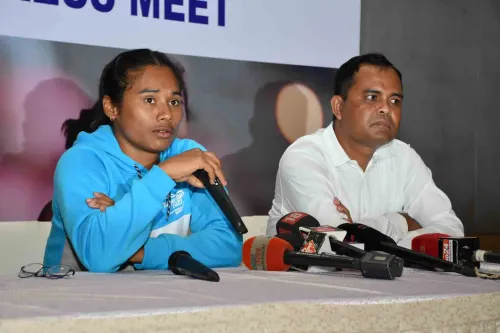
Asian Games medallist Harmilan Bains has welcomed India's rapid progress in sports but raised pointed concerns about the uneven distribution of opportunities and rewards among athletes, highlighting systemic gaps that persist even as the country's sporting ecosystem grows stronger.
A Career Shaped by Sport — and Its Inequalities
The 27-year-old middle-distance runner, who has claimed one gold and two silver medals at the Asian Games, reflected on a lifetime immersed in athletics. 'My parents introduced me to sports when I was very young. I have been pursuing it professionally for about ten years now, but if I count from the start, sports have been part of my life for nearly 22 to 24 years,' she said. Her connection to the sport, she noted, runs even deeper — her mother was competing while pregnant with her, having tried out for the Fertilizer Board and Electricity Board at the time.
Unequal Rewards for Equal Effort
Bains did not shy away from naming the contradiction at the heart of India's sporting success story. 'Some athletes find success, while others perform well and still don't get jobs at the same level,' she said. 'If we compare today's medal winners with athletes from earlier generations, the situation is not the same for everyone anymore.' She pointed specifically to rowing, noting that athletes in team events can feel discouraged when teammates who put in identical effort receive different cash rewards — a disparity that, critics argue, undermines team morale and long-term athlete retention.
Shrinking Government Appointments a Concern
Bains also flagged a structural shift in how the state recognises athletic achievement. 'Before, athletes who won medals at major events often received direct appointments to high-ranking government posts, like DSP positions. Those opportunities still exist today, but they have decreased significantly compared to before,' she observed. This comes amid a broader national conversation about whether India's sports-to-employment pipeline is keeping pace with the country's rising medal count on the international stage.
India's Progress and the Role of SAI
Despite her concerns, Bains acknowledged the tangible improvements in Indian sports infrastructure. She congratulated fellow athlete Gurindervir Singh for recent achievements, remarking that what he accomplished was 'remarkable, especially considering it was accomplished with limited facilities.' On institutional support, she praised the Sports Authority of India (SAI) as an excellent platform for young athletes, while cautioning that awareness remains a barrier. 'Children still don't know how to reach that level. Small academies are very important to bridge that gap,' she said.
Focus on Fitness, Recovery, and the Season Ahead
Looking to the months ahead, Bains said her immediate priority is staying injury-free. 'Right now, the target is to compete in all the tournaments scheduled this year. If I can stay injury-free, then hopefully everything will go well,' she said. She also stressed the growing importance of recovery and nutrition in elite sport. 'Recovery is one of the most important parts after training because it affects how well you can perform in your next session. That's why having proper food that provides protein, nutrients, and nourishes the body is crucial,' she explained. With India's athletics calendar set to intensify, Bains' voice — both as a competitor and as an advocate for fairer athlete support — is likely to grow louder.
Point of View
Which has grown accustomed to celebrating medal tallies without scrutinising what happens to athletes after the podium. The disparity in team-event rewards she describes is not a new grievance — it has surfaced repeatedly in rowing, hockey, and kabaddi — yet structural reform remains elusive. The decline in direct government appointments is partly by design, as policymakers push a private-sector model of athlete support, but that model has yet to absorb the volume of talent it was supposed to. SAI's reach is real, but Bains is right that the pipeline breaks at the grassroots: without feeder academies in Tier-2 and Tier-3 towns, the next Harmilan Bains may never find the door.
NationPress
10 Oct 2026
Frequently Asked Questions
What concerns did Harmilan Bains raise about Indian sports?
Harmilan Bains raised concerns about unequal job opportunities and cash rewards for athletes, noting that some performers do not receive employment at the same level despite comparable results. She also highlighted a decline in direct government appointments, such as DSP posts, that were previously offered to medal-winning athletes.
How many medals has Harmilan Bains won at the Asian Games?
Harmilan Bains has won three Asian Games medals in total — one gold and two silver. She is a middle-distance runner who has been competing professionally for approximately ten years.
What did Harmilan Bains say about the Sports Authority of India?
Bains praised SAI as an excellent platform for young athletes but noted that many children are unaware of how to access it. She emphasised that small local academies are critical to bridging this awareness and access gap.
Why did Harmilan Bains mention rowing athletes?
She used rowing as an example of unequal rewards within team events, pointing out that teammates who put in the same effort can receive different cash prizes. She argued this disparity discourages athletes and undermines team cohesion.
What are Harmilan Bains' goals for the upcoming season?
Bains said her primary goal is to remain injury-free and compete in all scheduled tournaments for the year. She also highlighted recovery and proper nutrition as key pillars of her preparation.