Haryana CM orders income verification via Gram Sabhas for Parivar Pehchan Patra
Synopsis
Haryana CM Nayab Singh Saini has handed Gram Sabhas the final say on family income verification under the Parivar Pehchan Patra — a direct response to rampant discrepancies that have locked thousands of families out of welfare schemes. With 77 lakh families registered and a one-month deadline imposed, this is a significant decentralisation of a process that had become a bureaucratic bottleneck.
Key Takeaways
CM Nayab Singh Saini directed that income verification under Parivar Pehchan Patra be completed through Gram Sabhas , whose decisions will be treated as final.
Existing three-member verification committees had been submitting reports with frequent income discrepancies, blocking welfare access for many families.
Pending age verification cases to be resolved via the Additional Deputy Commissioner ; all cases to be cleared within one month .
Families with agricultural income up to ₹5 lakh will not be excluded from schemes meant for households earning up to ₹1.80 lakh annually.
A joint committee of the District Social Welfare Officer and ADC will resolve Dayalu Scheme Aadhaar-linking issues.
The PPP platform has registered 77,41,912 families and 2,98,47,359 members across 23 districts of Haryana.
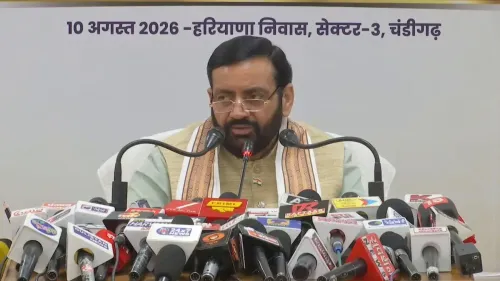
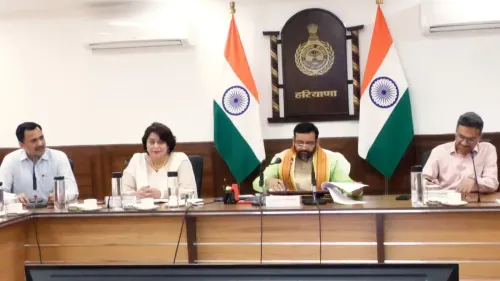
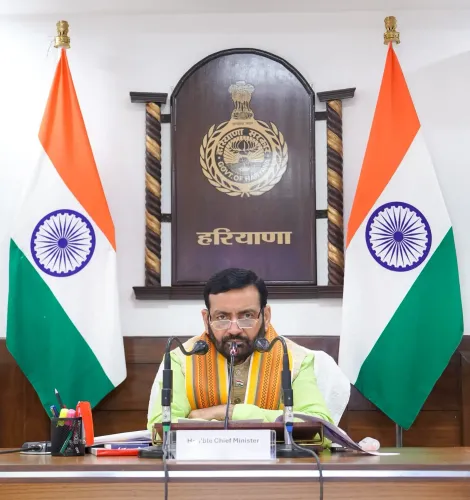
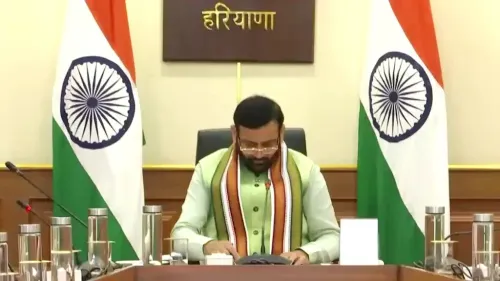
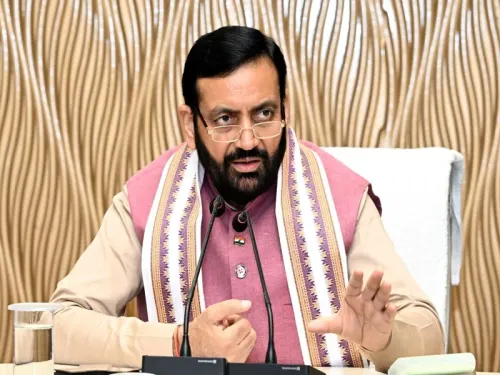
Haryana Chief Minister Nayab Singh Saini on Tuesday directed the Citizen Resources Information Department (CRID) to complete pending income verification under the Parivar Pehchan Patra (PPP) scheme through Gram Sabhas on a priority basis. The directive came during a high-level review meeting in Chandigarh with officials from CRID and the SEWA Department, aimed at resolving long-standing bottlenecks that have blocked welfare access for thousands of families.
The Core Problem: Discrepancies in Income Reporting
CRID Commissioner and Secretary J. Ganesan informed the Chief Minister that a large number of families across Haryana remain unable to access government welfare schemes due to pending income verification. An existing three-member verification committee — comprising a government employee as team leader, a local operator, and a volunteer — has been submitting reports that frequently contain income discrepancies, making it difficult to determine a family's actual earnings.
In response, CM Saini directed that income figures submitted by the team leader and local operator be placed before the Gram Sabha of the concerned village for community-level scrutiny. The decision of the Gram Sabha will be treated as final, effectively decentralising the verification process and anchoring it in local accountability.
Age Verification and Aadhaar Linking Also Addressed
The Chief Minister also tackled two related pain points. He directed that pending age verification applications be resolved through the Additional Deputy Commissioner (ADC), and clarified that a person's age could also be determined based on the age of the applicant's eldest child. All pending cases are to be cleared within one month.
On the Dayalu Scheme, CM Saini instructed officials to resolve Aadhaar-linking issues by forming a joint committee comprising the District Social Welfare Officer and the Additional Deputy Commissioner. The SEWA Department and CRID were directed to coordinate closely on this front.
Protection for Farming Families
In a significant policy clarification, CM Saini directed that no individual or family should be denied benefits under schemes meant for households with annual income up to ₹1.80 lakh solely on the grounds that they have agricultural income of up to ₹5 lakh. This addresses a long-standing grievance among rural families who were being excluded from welfare entitlements due to the way farm income was being counted.
Scale of the Parivar Pehchan Patra Platform
Commissioner Ganesan described the Parivar Pehchan Patra platform as one of the most unique family identity initiatives in the country. As of the meeting, a total of 77,41,912 families and 2,98,47,359 members across all 23 districts of Haryana have been registered on the platform. The scale underscores both the reach and the administrative complexity of ensuring that verified data translates into timely welfare delivery.
With Gram Sabhas now empowered to make binding income determinations and a one-month deadline set for pending cases, the effectiveness of this decentralised model will be closely watched across Haryana's rural districts.
Point of View
But it shifts the burden of a state administrative failure onto village-level bodies that may lack the capacity or independence to adjudicate contested income claims. The real question is why a three-member government committee — with a salaried team leader — was producing discrepancy-ridden reports in the first place. Decentralisation works when local institutions are empowered; it backfires when it becomes a way to diffuse accountability. The one-month deadline for clearing all pending cases sounds decisive, but with over 77 lakh registered families and no public figure on the backlog, the target may be optimistic without a credible monitoring mechanism.
NationPress
19 Sept 2026
Frequently Asked Questions
What is the Parivar Pehchan Patra scheme in Haryana?
Parivar Pehchan Patra (PPP) is a family identity card initiative by the Haryana government that registers households and their members to streamline access to welfare schemes. As of May 2025, it has registered over 77 lakh families and nearly 3 crore members across all 23 districts of the state.
Why are Gram Sabhas being given the authority to verify income?
Gram Sabhas have been empowered to make final income determinations because the existing verification committees were submitting reports with frequent discrepancies, preventing accurate income assessment. CM Saini directed that income figures be placed before the Gram Sabha of the concerned village, whose decision will be treated as binding.
Who is affected by the pending income verification issue?
Families across Haryana who have applied for welfare schemes but whose income has not yet been verified are affected. These households remain unable to access government benefits until their income status is confirmed under the Parivar Pehchan Patra framework.
What relief has been announced for farming families?
CM Saini clarified that families with agricultural income of up to ₹5 lakh will not be disqualified from welfare schemes designed for households earning up to ₹1.80 lakh annually. This protects rural families from being excluded on the basis of farm income alone.
What is the deadline set for resolving pending verification cases?
CM Saini has directed officials to clear all pending income and age verification cases within one month. Age verification applications are to be processed through the Additional Deputy Commissioner, with a person's age also determinable from the age of their eldest child.