Is Haryana Government Deceiving Solar Consumers? Bhupinder Singh Hooda Speaks Out
Synopsis
In a bold statement, Bhupinder Singh Hooda, former Haryana CM, accuses the state BJP government of deceiving solar energy consumers. He raises concerns over high fixed charges and proposed tariff hikes, questioning the government's commitment to promoting renewable energy. Read on to uncover the implications for Haryana's electricity users.
Key Takeaways
BJP government accused of deceiving solar consumers.
High fixed charges undermine solar investments.
Proposed tariff hikes could burden consumers further.
Efficiency improvements in the power sector are needed.
Significant increases in electricity bills reported.
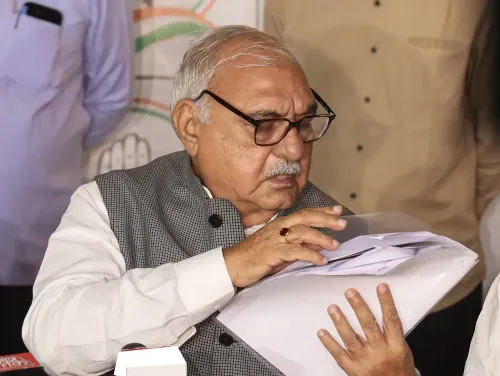
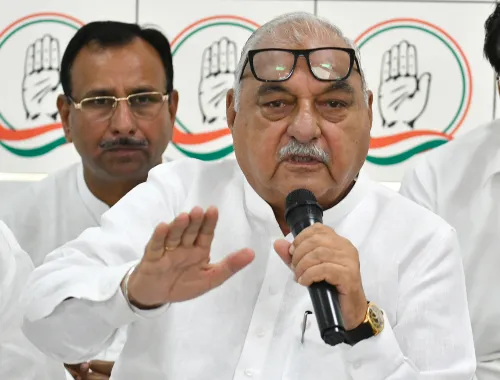
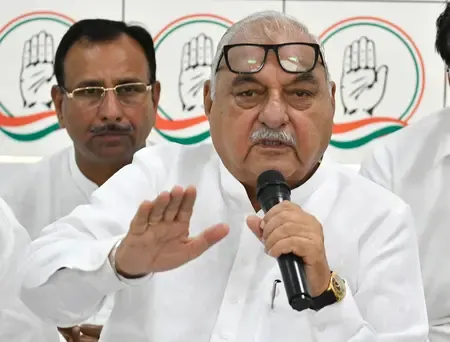
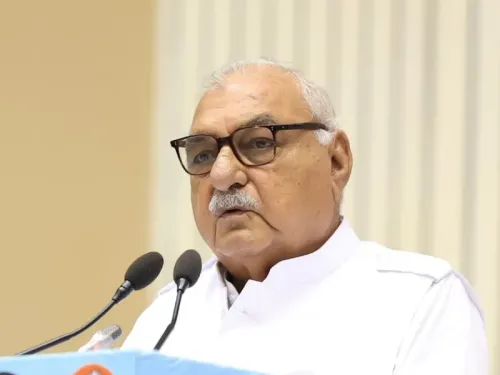
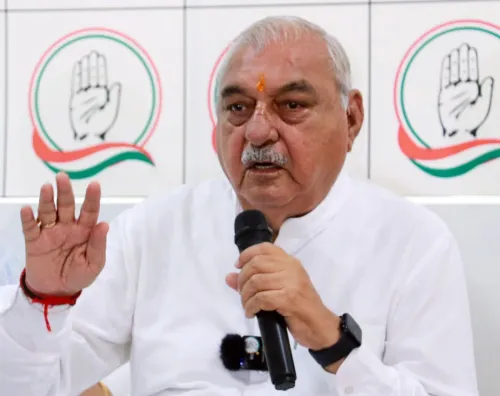
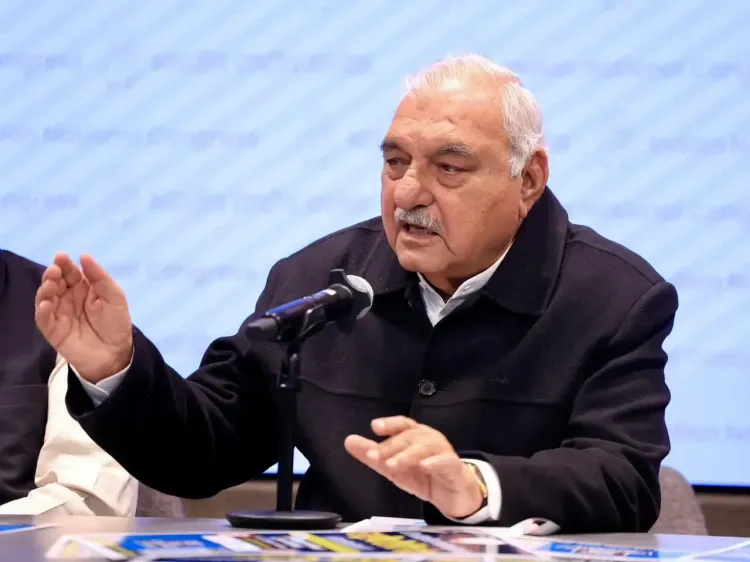
Chandigarh, February 5 (NationPress) Former Haryana Chief Minister Bhupinder Singh Hooda asserted on Thursday that the BJP-led government in Haryana is deceiving electricity users through its solar initiative. "A deceptive game has commenced under the guise of the solar scheme," he stated.
The Leader of the Opposition in the state Assembly, Hooda, emphasized that the 'Solar for Every Home' scheme is merely a facade. "While the government professes to support solar energy, it simultaneously imposes high fixed costs on consumers wishing to install solar systems," he remarked.
He pointed out that if a solar consumer's power generation falls even slightly short of their monthly consumption, they are hit with a significant fixed charge, leading to a full bill. "What advantage does the consumer gain from solar panels under such conditions?" questioned the two-time Chief Minister.
Furthermore, Hooda mentioned that the Dakshin Haryana Bijli Vitran Nigam (DHBVN) and Uttar Haryana Bijli Vitran Nigam (UHBVN) have suggested a 15 to 17 percent rise in electricity tariffs for 2026-27, which he claimed would further burden domestic, commercial, and industrial users. "The public is set to face yet another shock of inflated electricity prices," he cautioned.
He queried the government's accountability, asking why it fails to enhance efficiency or curb losses in the power sector. "Why is the power generation and distribution system established by the Congress government in Haryana not being optimally utilized?" he inquired, pointing to the public's continuous burden from the government's failures.
Touching on last year's rate changes, Hooda noted the BJP had already delivered a "significant shock" to the public by altering tariff slabs, stating, "By quadrupling electricity costs from April 2025, the government has crushed the common man."
He illustrated this by sharing that consumers who previously paid Rs 900 are now suddenly facing bills of Rs 4,000 due to a fixed charge of Rs 75 per kilowatt and major tariff slab revisions.
Point of View
Accusations of deception in energy policies raise critical questions about accountability and transparency. Bhupinder Singh Hooda's concerns reflect a broader sentiment among consumers facing unexpected financial burdens. It is essential for government authorities to address these issues proactively to maintain public trust and ensure equitable access to renewable energy.
NationPress
20 Oct 2026
Frequently Asked Questions
What are the main accusations made by Bhupinder Singh Hooda?
Hooda accuses the Haryana government of deceiving solar consumers through high fixed charges and proposed tariff hikes.
How might the proposed tariff increases affect consumers?
The proposed increases could significantly raise electricity bills for domestic, commercial, and industrial consumers, further straining their finances.
What is the significance of the 'Solar for Every Home' scheme?
The scheme is intended to promote solar energy, but Hooda argues it is undermined by expensive costs imposed on users.
What does Hooda suggest the government should do?
He calls for the government to improve efficiency in the power sector and utilize existing infrastructure more effectively.
What impact have recent changes in electricity rates had on consumers?
Consumers have experienced substantial increases in their electricity bills, with some facing charges that have quadrupled due to fixed fees and tariff adjustments.