Bombay HC allows Gokul Dairy chairman polls; 4 govt nominees' votes sealed
Synopsis
The Bombay High Court refused to halt the Gokul Dairy chairmanship vote — but ordered the four government-nominated directors' ballots sealed until November 25. The ruling turns a ₹3,000-crore cooperative election into a live constitutional test of whether a last-minute state ordinance can override the votes of 5.5 lakh dairy farmers.
Key Takeaways
The Bombay High Court on 9 November 2026 allowed the Gokul Dairy chairman election to proceed on 10 November .
Votes of 4 government-nominated expert directors will be sealed and held in court custody until the 25 November hearing.
The Maharashtra government invoked Section 73AAA of the Maharashtra Co-operative Societies Act, 1960 via ordinance to appoint the nominees after the election was cancelled twice due to lack of quorum.
The Congress -led alliance holds 13 elected seats; the Mahayuti alliance holds 12 — a quorum of 14 was required.
Rahul Gandhi , Prithviraj Chavan , and Satej Patil condemned the ordinance as an assault on cooperative democracy; CM Devendra Fadnavis defended it as a legal, technical fix.
Thousands marched at Dasra Chowk, Kolhapur in a 'Sangharsh Morcha' protest against the government's move.
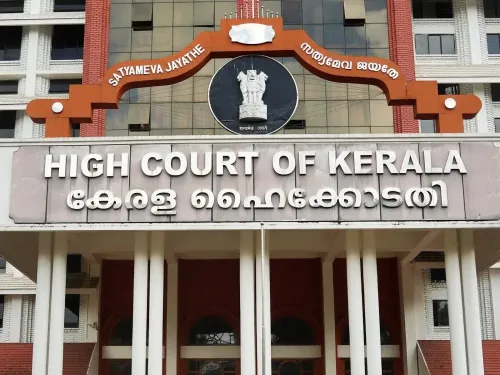
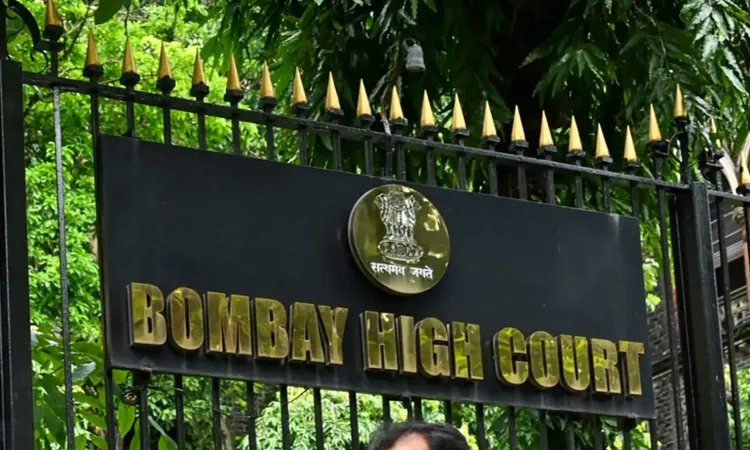
The Aurangabad bench of the Bombay High Court on Monday, 9 November 2026, cleared the path for the Kolhapur District Cooperative Milk Producers' Union (Gokul Dairy) chairman election to proceed as scheduled on Tuesday, 10 November. In a conditional ruling, the court permitted the four newly government-appointed expert directors to cast their votes — but ordered those ballots sealed and held in court custody pending the next hearing on November 25.
Background: The Quorum Crisis
The election had been cancelled twice previously due to insufficient attendance. Under Gokul Dairy's rules, a quorum of 14 members is required to conduct the chairmanship election. The Congress-led alliance had won 13 of 25 elected seats; the ruling Mahayuti alliance held 12 — leaving neither side able to independently meet the threshold.
To break the deadlock, the Maharashtra government promulgated an ordinance under Section 73AAA of the Maharashtra Co-operative Societies Act, 1960, enabling the state to nominate expert directors with voting rights on large cooperative boards — specifically those with annual turnovers exceeding ₹500 crore. Gokul Dairy, with a reported turnover of approximately ₹3,000 crore, falls squarely within that ambit.
The Four Government Nominees
The Maharashtra Dairy Development Department designated four individuals as non-political expert directors: Shivaji Dinkar Adnaik (Yavluj), a retired banking official; Dr Pravinchandra Hendre (Kolhapur), a medical and sector expert; Krishnat D Patil (Kenwade), a chartered accountant; and Adv Prashant Patole (Sangli), a legal expert. Assistant Registrar Krishna Thackeray was separately named as the official government ex-officio representative nominee.
The court also ordered complete videography of the election process to ensure transparency and prevent procedural irregularities.
What the Court Said
Senior advocates for the petitioners argued that issuing an ordinance on the eve of a scheduled cooperative election undermines the democratic framework of such institutions. Government counsels countered that the expert appointments are legally valid and aimed at enhancing administrative efficiency while protecting state interests. The High Court declined to stay the election outright but stopped short of allowing the sealed votes to influence the outcome until November 25, when it will adjudicate on the constitutional validity and legality of the ordinance itself.
Political Flashpoint
Congress legislator Satej Patil, who led the opposition alliance, publicly accused the government of overriding the democratic mandate of 5.5 lakh dairy farmers and termed the post-election rule change an 'assault on co-operative democracy.' He also questioned the selection of nominees, noting that Adv Prashant Patole belongs to neighbouring Sangli district rather than Kolhapur, and argued that non-dairy professionals should not supersede locally elected milk producers. Patil further alleged that the broader intent was to weaken local cooperatives and open the door for outside private entities to dominate regional milk markets.
Congress leader Rahul Gandhi and former Chief Minister Prithviraj Chavan condemned the move as a manipulation of electoral mandates. Chief Minister Devendra Fadnavis, however, maintained that the government's intervention was purely technical — aimed at resolving an administrative deadlock — and that the ordinance was promulgated after consulting the Advocate General of Maharashtra to ensure legal validity.
Sangharsh Morcha and Street Protests
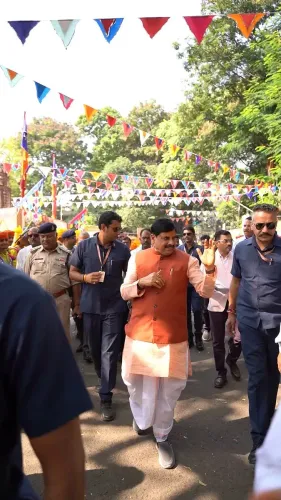
Thousands of farmers, dairy producers, and opposition leaders converged on Dasra Chowk in Kolhapur on Monday for a 'Sangharsh Morcha' (Struggle March), held against the backdrop of the Diwali festival. Protesters displayed symbolic items including traditional Kolhapuri chappals alongside creative banners and posters, reflecting the charged atmosphere in the region.
With the High Court's next hearing set for 25 November, the ultimate validity of the four sealed votes — and potentially the chairmanship outcome itself — hangs in the balance.
Point of View
But quarantine the contested votes. What it has effectively done is put a ₹3,000-crore cooperative — and the livelihoods of 5.5 lakh farmers — in legal limbo until November 25. The core question the court must answer is whether an ordinance issued on the eve of a scheduled election can legitimately alter the voting composition of an already-constituted board; if it can, it sets a precedent that any state government could exploit to tilt cooperative elections it cannot win through the ballot. Chief Minister Fadnavis's 'technical fix' argument is not implausible on its face — quorum deadlocks are real governance failures — but the timing, the selection of a nominee from outside Kolhapur district, and the breadth of the ordinance's ₹500-crore turnover threshold raise legitimate concerns about proportionality that the court will need to squarely address.
NationPress
9 Nov 2026
Frequently Asked Questions
What did the Bombay High Court rule on the Gokul Dairy election?
The Aurangabad bench of the Bombay High Court allowed the Gokul Dairy chairman election to proceed on 10 November 2026 but ordered that the ballots of the four government-nominated expert directors be sealed and kept in court custody. The court set 25 November as the next hearing date to decide on the constitutional validity of the state's ordinance.
Why did the Maharashtra government issue an ordinance for Gokul Dairy?
The election had been cancelled twice due to lack of quorum — 14 members were required, but neither the Congress-led alliance (13 seats) nor the Mahayuti alliance (12 seats) could independently meet the threshold. The government invoked Section 73AAA of the Maharashtra Co-operative Societies Act, 1960, to appoint four expert directors with voting rights, arguing it was a technical measure to resolve the administrative deadlock.
Who are the four government-nominated expert directors for Gokul Dairy?
The Maharashtra Dairy Development Department appointed Shivaji Dinkar Adnaik (retired banking official), Dr Pravinchandra Hendre (medical/sector expert), Krishnat D Patil (chartered accountant), and Adv Prashant Patole (legal expert). Assistant Registrar Krishna Thackeray was also named as the government's ex-officio representative nominee.
What is the Congress's objection to the Gokul Dairy ordinance?
Congress legislator Satej Patil and party leaders including Rahul Gandhi and former Chief Minister Prithviraj Chavan argued the ordinance overrides the democratic mandate of 5.5 lakh dairy farmers and amounts to a post-election rule change. Patil also questioned why one nominee is from Sangli rather than Kolhapur and alleged the move is intended to give the ruling alliance a majority it did not win at the ballot.
What happens if the court strikes down the ordinance on November 25?
If the Bombay High Court rules the ordinance invalid on 25 November, the four sealed votes would likely be discounted, and the election outcome would be determined solely by the 25 elected directors. Given the current 13-12 split, that could hand the chairmanship to the Congress-led alliance, subject to any further legal proceedings.