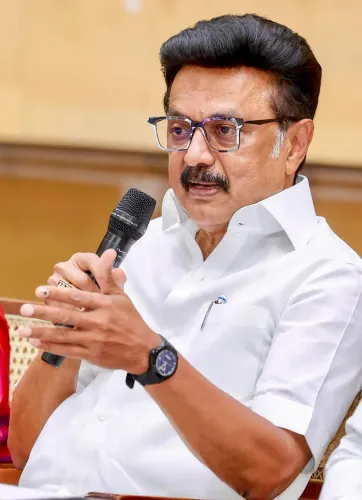
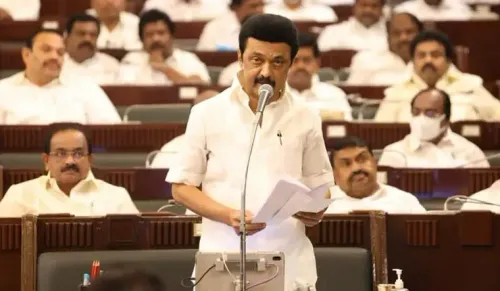
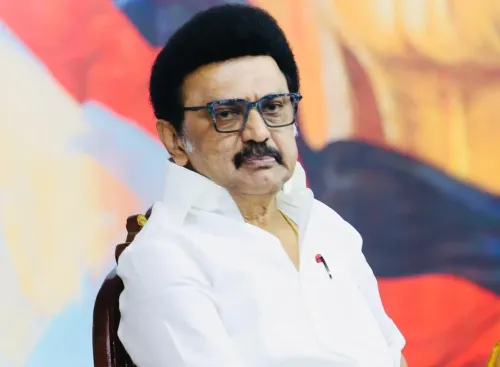
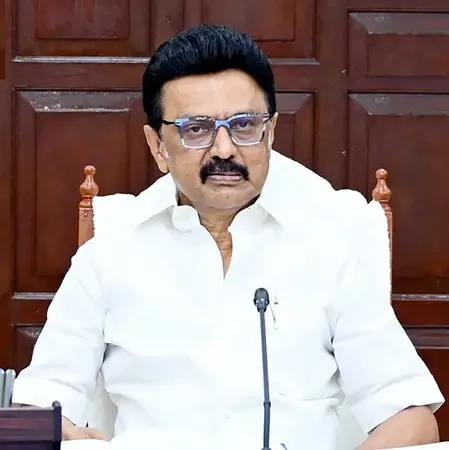
Stalin Slams TVK Govt for Disbanding State Rights Panel
Synopsis
DMK president M. K. Stalin has accused the TVK government of wrecking Tamil Nadu's federalism legacy by disbanding a distinguished three-member state-rights committee mid-mandate, drawing condemnation from across India and vowing the government will bear the shame permanently.
Key Takeaways
Stalin publicly accused the TVK government of disbanding a state-rights expert committee for 'petty politics' on 9 November 2026 .
The disbanded committee comprised Justice Kurian Joseph (retired Supreme Court judge), Ashok Vardhan Shetty (former bureaucrat), and Prof.
Naganathan (academic) — all appointed during Stalin's tenure as Chief Minister.
Stalin called the trio 'irreplaceable' and said their unfinished work cannot be completed by anyone else.
He framed Tamil Nadu's reputation as 'India's leading voice for State rights' as having been damaged by the disbandment.
Tamil Nadu's tradition of asserting state autonomy through expert panels dates to Assembly resolutions in the 1970s and 1980s .
Stalin used the hashtags #StateRights and #Federalism , signalling the argument is aimed at a national audience.
Tamil Nadu's decades-old identity as India's loudest champion of state autonomy is at the centre of a sharp political confrontation — and DMK president M. K. Stalin is placing the blame squarely on the ruling TVK government, accusing it of dismantling a distinguished expert committee for 'petty politics' on 9 November 2026.
In a bilingual post on X, Stalin declared that the TVK government had 'damaged Tamil Nadu's proud reputation as India's leading voice for State rights.' The committee in question — constituted during his tenure as Chief Minister — comprised Justice Kurian Joseph, a retired Supreme Court judge; Thiru. Ashok Vardhan Shetty, a former senior bureaucrat; and Prof. M. Naganathan, an academic expert on federalism and state powers. Stalin called the trio irreplaceable and said no fault could be found with the work they undertook.
A Committee Stalin Called Irreplaceable — Then Disbanded Midway
'No one can find fault with the remarkable work of Justice Kurian Joseph, Thiru. Ashok Vardhan Shetty and Prof. M. Naganathan,' Stalin wrote, adding that 'nor can anyone else replace them and complete the work they began.' His parting shot was unambiguous: 'இதனைப் பாதியில் கலைத்த சிறுமைதான் த.வெ.க. அரசின் மேல் காலத்துக்கும் நிலைக்கும்!' — 'The TVK government will forever bear the shame of having disbanded it midway!'
Stalin said he would 'always be proud' of having constituted such a committee, framing the disbandment not merely as a policy reversal but as a betrayal of Tamil Nadu's constitutional heritage. The hashtags #StateRights and #Federalism underscore that he intends this as a national-level argument, not just a local spat.
Tamil Nadu's Long Fight for Federalism — And Why This Committee Mattered
Tamil Nadu's tradition of asserting state autonomy stretches back to Assembly resolutions in the 1970s and 1980s, when successive governments formally challenged the Centre's expansion into state subjects such as education, agriculture, and taxation. The DMK has consistently positioned itself at the forefront of that tradition, periodically forming expert panels on Centre-state relations, fiscal federalism, and legislative powers to give the argument institutional weight.
The committee Stalin formed — led by a sitting-level jurist, a career administrator, and a subject-matter academic — followed that playbook precisely: credibility through composition. By invoking the 'eminent voices across India' condemning the disbandment, Stalin is signalling that the reversal has drawn attention beyond Tamil Nadu's borders, handing critics of the TVK government a ready-made narrative about backsliding on a cause the state once owned nationally.
What the TVK Move Signals for Tamil Nadu Politics
Parties that come to power after the DMK have historically reversed or shelved such initiatives depending on their political calculus with the Centre. The pattern is familiar. What is less familiar is the speed and visibility of the backlash — and the fact that the opposition is led by a former Chief Minister with the institutional credibility of having appointed the very experts now being defended.
The immediate question is whether the Tamil Nadu Assembly will see a formal debate on the committee's fate, and whether the TVK government will respond with a competing account of why the panel was wound up. Until it does, Stalin's framing — that a point of pride for the state was sacrificed for narrow political gain — holds the field.
Tamil Nadu built its national reputation on the federalism argument over half a century. Whether that argument now becomes the defining fault line of the state's current political cycle depends, in large part, on what happens next with the work left unfinished.
Point of View
A senior IAS veteran, an academic) give the argument unusual ballistic weight. By invoking national condemnation rather than a purely Tamil sentiment, he is attempting to elevate a state-level governance dispute into a federalism cause célèbre. The TVK government's silence will cost it; a quick, credible explanation of why the committee was disbanded is now politically urgent. The deeper stakes: whichever party credibly owns the state-rights narrative heading into the next electoral cycle holds a structural advantage in Tamil Nadu, where federalism has historically been a mobilising force above caste or personality.
NationPress
9 Nov 2026
Frequently Asked Questions
Why is M. K. Stalin criticising the TVK government over a committee?
Stalin accuses the TVK government of disbanding a state-rights expert committee he constituted as Chief Minister, arguing the move destroyed Tamil Nadu's national reputation as India's leading voice for federalism for narrow political reasons.
Who were the members of the state-rights committee Stalin formed?
The committee comprised Justice Kurian Joseph, a retired Supreme Court judge; Ashok Vardhan Shetty, a former senior bureaucrat; and Prof. M. Naganathan, an academic expert on federalism and Centre-state relations.
What is the TVK government in Tamil Nadu?
TVK refers to the party currently in power in Tamil Nadu. Stalin's post identifies it as the ruling state government that disbanded the committee he had constituted during his tenure as Chief Minister.
What is Tamil Nadu's history with the federalism and state rights debate?
Tamil Nadu has a decades-long tradition of asserting state autonomy, with formal Assembly resolutions dating to the 1970s and 1980s challenging central encroachment on subjects like education, agriculture, and taxation. Expert committees on Centre-state relations have been a recurring tool across governments.
What could happen next after Stalin's attack on the TVK government?
Political observers are watching for a formal response from the TVK government explaining the committee's disbandment and potential debates in the Tamil Nadu Assembly on Centre-state relations and the future of the committee's unfinished work.