CM Dhami Slams Congress Over Exam Cheating Nexus in Uttarakhand
Synopsis
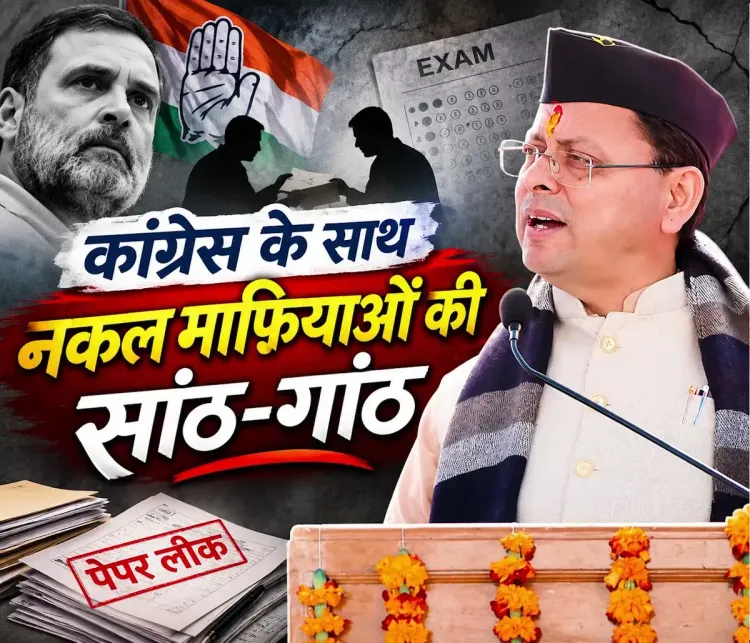
Uttarakhand CM Pushkar Singh Dhami accused Congress of running a 'parchi-kharchi' nexus with cheating mafias during its tenure, alleging that government recruitment exams were systematically rigged at the cost of the state's youth.
Key Takeaways
Pushkar Singh Dhami alleged that the Congress government in Uttarakhand colluded with cheating networks to rig public recruitment examinations.
He used the term 'parchi-kharchi' — referring to influence-peddling and bribery — to describe how government jobs were allegedly allocated under the previous regime.
Dhami said the talent, hard work, and dreams of Uttarakhand's youth were 'openly traded away' during Congress rule.
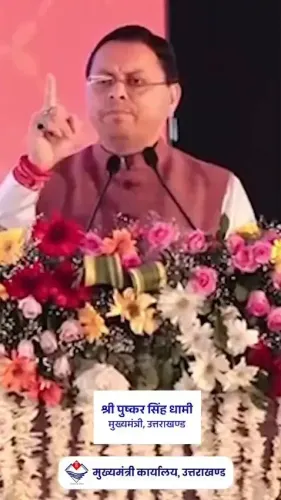
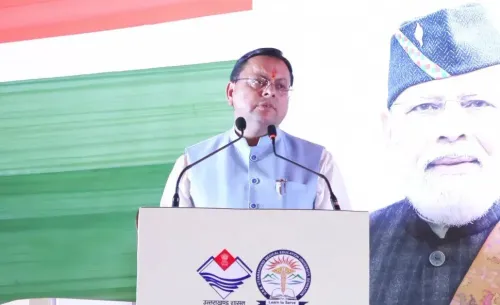
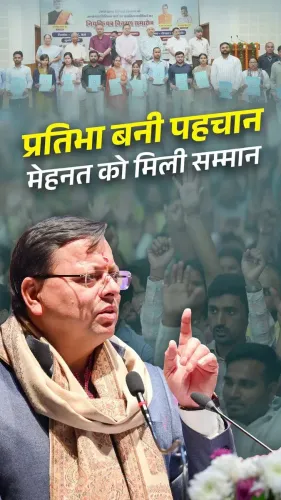
The charge was made via a post on X on 9 November 2026 and accompanied by a video.
Dhami has served as Chief Minister of Uttarakhand since 2021 ; Congress governed the state during multiple terms after its formation in 2000 .
No specific incidents or schemes were named in the post; the broader pattern of such allegations is common in state-level political discourse across India.
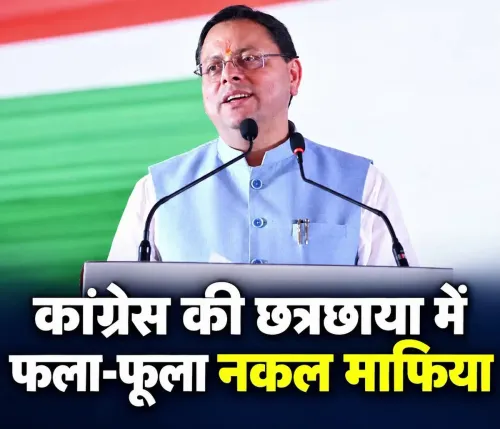
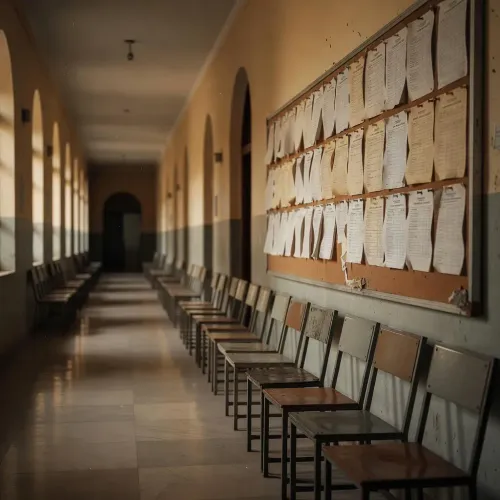
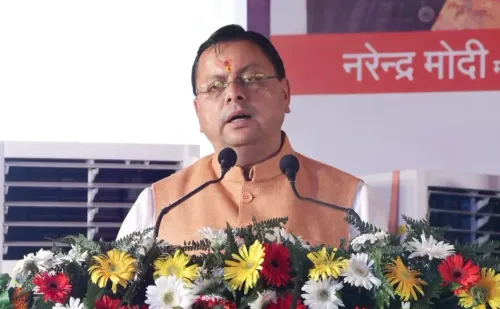
When a government openly accuses its predecessor of colluding with examination cheating networks, the charge lands far beyond political point-scoring — it strikes at the heart of every young person who ever sat in a room, sharpened a pencil, and bet their future on a fair test. Uttarakhand Chief Minister Pushkar Singh Dhami fired that charge on Monday, 9 November 2026, in a pointed post on X, alleging that the Congress regime in the state ran a system where recruitment examinations were openly rigged through cash and chits.
Dhami's post, written in Hindi, pulled no punches: 'कांग्रेस शासनकाल में नकल माफियाओं के साथ सांठगांठ कर प्रदेश के युवाओं के भविष्य से खिलवाड़ किया जाता रहा।' ('During the Congress government's tenure, a nexus with cheating mafias allowed open tampering with the futures of the state's youth.') He went further, alleging that the talent and hard work of Uttarakhand's aspirants was 'openly traded away,' and that recruitment examinations were dominated by what he called the 'parchi-kharchi' game — a shorthand for influence-peddling and bribery that every job aspirant in the Hindi belt immediately understands.
The 'Parchi-Kharchi' Accusation and What It Means
The term 'parchi-kharchi' — literally 'chit and spending' — is loaded political vocabulary in north Indian states. It refers to a system where recruitment slots in government jobs are allegedly allocated not by merit but by the right connections and the right price. For Uttarakhand's youth, government jobs — in the police, administration, and state services — remain fiercely coveted in a state with a narrow private-sector base and high outmigration. An allegation that such jobs were systematically sold strikes at the community's deepest anxieties.
Dhami, who has led Uttarakhand since 2021, has built a portion of his governance identity around presenting his administration as a corrective to alleged past irregularities. The Congress party governed Uttarakhand during multiple terms after the state's formation in 2000, and has been a periodic target of BJP accusations over administrative standards — though no specific incidents or schemes are named in this particular post.
A Pattern Bigger Than One State
Dhami's broadside fits a well-worn script in Indian state politics: incumbent governments leverage allegations of examination fraud by their predecessors, particularly when the subject of youth unemployment and competitive examinations carries real electoral voltage. Paper leaks and recruitment scams have become a live national issue, surfacing in multiple states and triggering protests by aspirants who have invested years — and often family savings — in preparation.
The political effectiveness of this framing depends on whether the ruling party can back rhetoric with structural reform. Uttarakhand watchers will now look for concrete follow-through: legislative changes to examination oversight, independent monitoring bodies, or specific anti-corruption measures in the recruitment pipeline. The speech has been made. The proof of the pudding is in the policy.
Point of View
He reinforces a narrative that BJP governance represents a clean break — a potent frame in a state where government employment scarcity makes recruitment fairness a first-order political issue. The 'parchi-kharchi' rhetoric resonates precisely because paper-leak controversies have agitated youth voters across north India, making this a targeted appeal to a demographic that swings state elections. The absence of named incidents, however, keeps the charge at the level of allegation; real traction will depend on whether the Dhami government pairs this rhetoric with verifiable reforms in the examination apparatus.
NationPress
9 Nov 2026
Frequently Asked Questions
What did CM Dhami say about Congress and exam cheating in Uttarakhand?
CM Pushkar Singh Dhami alleged that during the Congress government's tenure in Uttarakhand, officials colluded with cheating mafias to rig public recruitment examinations, with youth jobs being allocated through bribery and influence rather than merit.
What does 'parchi-kharchi' mean in Indian politics?
'Parchi-kharchi' is a colloquial term in north Indian politics referring to a system where government jobs or favours are allegedly obtained through the right connections ('parchi' meaning chit or slip) and money ('kharchi' meaning expenditure or spending).
How long has Pushkar Singh Dhami been Chief Minister of Uttarakhand?
Pushkar Singh Dhami has served as Chief Minister of Uttarakhand since 2021 and is a leader of the Bharatiya Janata Party (BJP).
When did Congress govern Uttarakhand?
The Congress party has governed Uttarakhand during multiple terms since the state was formed in 2000, alternating with the BJP in power.
Why are recruitment exam irregularities a major issue in Uttarakhand?
Uttarakhand has a limited private-sector job market and high outmigration, making government employment exceptionally competitive and precious; allegations of rigged exams therefore carry significant social and political weight for youth in the state.