MP CM Office launches milk output contest with ₹1 lakh prize
Synopsis
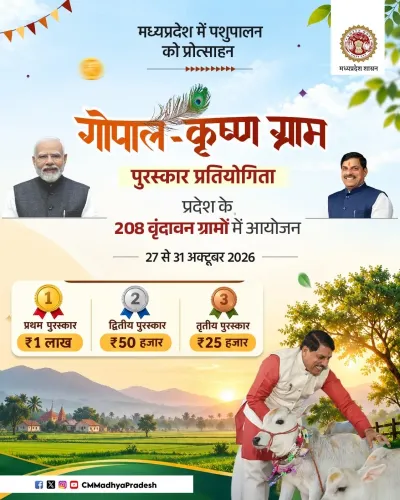
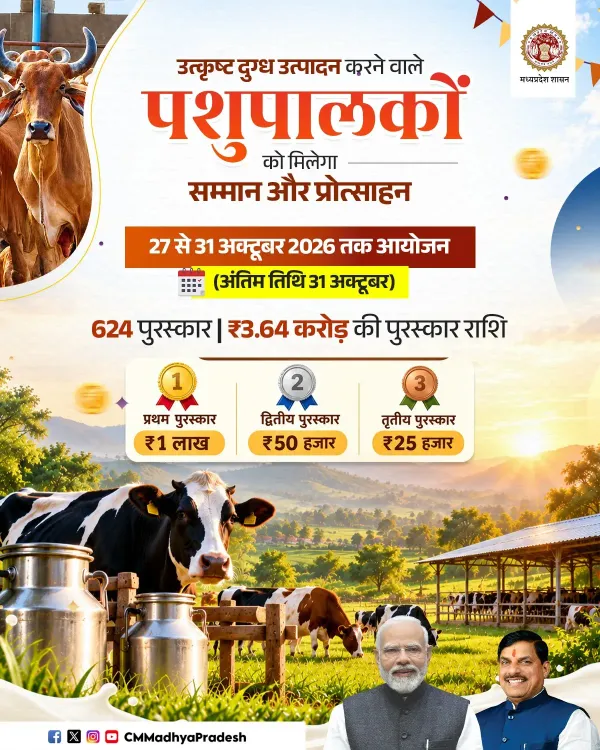
Madhya Pradesh's CMO has announced the 'Gopal-Krishna Gram Puraskar Pratiyogita' across 208 Vrindavan villages, awarding top dairy farmers ₹1 lakh, ₹50,000 and ₹25,000 respectively for outstanding milk production between 27–31 October 2026.
Key Takeaways
The Chief Minister's Office of Madhya Pradesh announced the Gopal-Krishna Gram Puraskar Pratiyogita on 30 October 2026 .
The competition spans 208 Vrindavan villages across Madhya Pradesh.
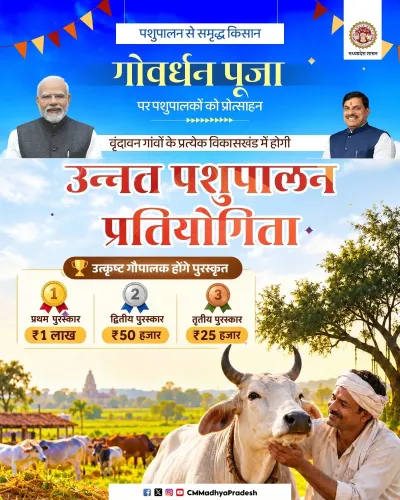
First prize for outstanding milk production: ₹1 lakh ; second prize: ₹50,000 ; third prize: ₹25,000 .
The competition window runs from 27 to 31 October 2026 .
The initiative is backed by CM Dr.
Mohan Yadav and the MP Animal Husbandry Department .
The scheme aligns with the state's broader push for dairy-led agricultural diversification in rural households.
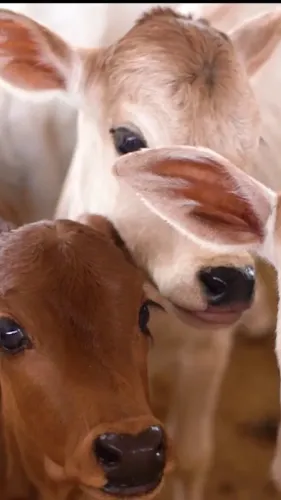
Excellence in dairy farming is about to be rewarded — handsomely. The Chief Minister's Office of Madhya Pradesh announced on Friday, 30 October 2026 that cattle herders across 208 Vrindavan villages in the state will compete for cash prizes of up to ₹1 lakh under the 'Gopal-Krishna Gram Puraskar Pratiyogita' (Gopal-Krishna Village Award Competition), running from 27 to 31 October 2026.
What the 'Gopal-Krishna' competition offers dairy farmers
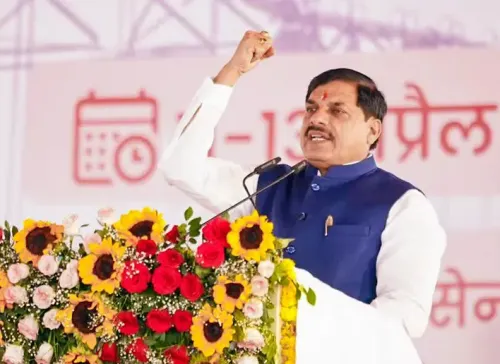
The prize structure is straightforward and substantial. First-place winners in outstanding milk production take home ₹1 lakh; second place earns ₹50,000; and third place receives ₹25,000. The competition is tagged to Chief Minister Dr. Mohan Yadav and the Madhya Pradesh Animal Husbandry Department, signalling active state-level backing for the initiative.
Why 208 Vrindavan villages are the chosen arena
Madhya Pradesh has over recent years designated select rural clusters as 'Vrindavan villages' — a nod to the pastoral and cattle-rearing traditions associated with the name — as part of a broader push to dignify and professionalise livestock-dependent livelihoods. Placing a competitive dairy award inside this framework ties cultural identity to economic incentive. The state's animal husbandry department has consistently promoted dairy as a diversification tool for farming households that depend heavily on a single crop cycle.
Dairy incentives as a rural-welfare lever
Incentive-based milk-production contests are a recurring playbook across Indian states seeking to lift rural incomes without direct subsidy outflows. A one-time prize of ₹1 lakh for a smallholder dairy farmer can represent several months of household income, making the recognition genuinely consequential rather than ceremonial. Dr. Mohan Yadav, who has helmed Madhya Pradesh since December 2023, has positioned rural welfare and agricultural diversification as signature priorities of his administration.
Whether the competition translates into lasting behavioural change — higher herd quality, better fodder practices, expanded cattle numbers — will depend on the rollout across all 208 villages and the consistency of disbursements once results are declared. The dairy sector's response in the days following 31 October 2026 will be the real scorecard.
Point of View
High-visibility prize to nudge smallholder behaviour without recurring fiscal commitments. For the Yadav administration, framing the scheme inside the culturally resonant 'Vrindavan village' identity is deliberate: it layers political symbolism onto an economic intervention, making the programme stickier in the public imagination. The broader question is whether a five-day competition window and a single prize cycle can shift long-term dairy productivity, or whether it functions primarily as a visibility exercise ahead of rural outreach cycles.
NationPress
30 Oct 2026
Frequently Asked Questions
What is the Gopal-Krishna Gram Puraskar Pratiyogita in Madhya Pradesh?
It is a milk-production competition launched by the Madhya Pradesh government across 208 designated Vrindavan villages, offering cash prizes of up to ₹1 lakh to cattle herders who achieve outstanding dairy output. The contest runs from 27 to 31 October 2026.
How much is the first prize in the MP dairy farmer competition?
The first prize is ₹1 lakh, the second prize is ₹50,000, and the third prize is ₹25,000 for outstanding milk production under the Gopal-Krishna Gram Puraskar Pratiyogita.
Which villages are included in the Gopal-Krishna competition in MP?
The competition is held across 208 Vrindavan villages in Madhya Pradesh, though the full list of specific village names has not been officially detailed in the announcement.
Who announced the Gopal-Krishna Gram Puraskar Pratiyogita?
The Chief Minister's Office of Madhya Pradesh announced the competition, with the initiative tagged to Chief Minister Dr. Mohan Yadav and the Madhya Pradesh Animal Husbandry Department.
What is a Vrindavan village in Madhya Pradesh?
Vrindavan villages are rural clusters designated by the Madhya Pradesh government to promote cattle-rearing and pastoral traditions, linking cultural identity with economic schemes for dairy and livestock-dependent households.