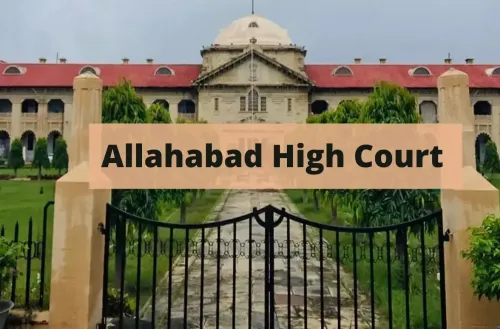
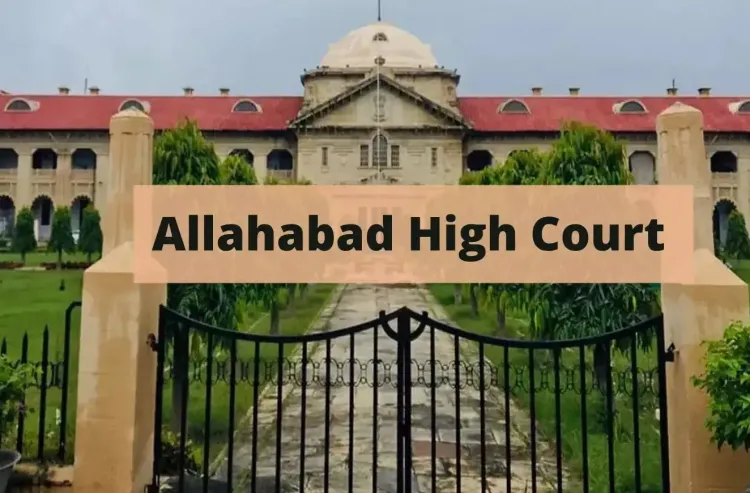
Allahabad HC orders probe into caste bias at NLU Prayagraj, bars professor from evaluation
Synopsis
The Allahabad High Court has stepped in at NLU Prayagraj, ordering blind re-evaluation of a Dalit student's answer scripts, appointing judicial officers to probe caste-bias allegations, and barring the accused professor from any academic or hostel role — all while asking the university why its UGC-mandated SC/ST grievance cell apparently failed to act for over a month.
Key Takeaways
The Allahabad High Court on 21 September 2026 ordered two independent committees to re-evaluate answer sheets and probe caste-discrimination allegations at NLU Prayagraj .
Justice Vinod Diwakar directed that answer sheets be placed before the re-evaluation committee with identities of the student and original evaluator masked.
Dr Deepak Sharma , Head of the Department of Law, has been barred from evaluating the second petitioner's scripts or handling any hostel-related or disciplinary matter concerning either petitioner.
Two district judicial officers — Archana Singh-I and Arun Kumar Yadava — have been appointed to conduct the caste-bias inquiry and submit a sealed report.
The Vice-Chancellor must file an affidavit disclosing whether the university's UGC-mandated Equal Opportunity Cell and SC/ST grievance committee are operational and what action was taken on the 20 August complaint.
The matter is next listed for hearing on 24 September at 12 noon .
The Allahabad High Court has ordered the formation of two independent committees to re-evaluate answer sheets and investigate allegations of caste-based humiliation and discrimination against students at Dr Rajendra Prasad National Law University (NLU), Prayagraj. The directions were passed on 21 September 2026 by a single-judge Bench of Justice Vinod Diwakar, while hearing a writ petition filed by a PhD research scholar and a fifth-semester B.A. LL.B. (Hons.) student of the university.
What the Petitioners Alleged
The two petitioners alleged that academic and administrative authority was misused by the Head of the Department of Law and the Warden of the Boys' Hostel for caste-based humiliation and retaliation. The complaint, submitted by the second petitioner to the Vice-Chancellor on 20 August, alleged that stricter evaluation of answer sheets was linked to the student's caste, and referred to remarks allegedly made by Dr Deepak Sharma concerning caste and reservation. The student sought an independent review of Constitutional Law-II and other answer scripts, citing fears of retaliation and adverse consequences in the academic environment.
The petitioners further alleged that the university failed to act on the complaint despite repeated reminders. The High Court noted that this apparent inaction would also be subject to scrutiny.
Key Directions Issued by the Court
The High Court directed the Vice-Chancellor to constitute an independent committee to re-evaluate the answer sheets of the second petitioner in subjects taught and evaluated by Dr Deepak Sharma, as well as any other subjects indicated by the student. Crucially, the answer sheets are to be placed before the committee with the identities of both the candidate and the original evaluator masked, and without disclosing the marks originally awarded.
'The Committee shall complete the exercise and submit its report to the Vice-Chancellor within one week,' the court ordered, directing that the report be placed before it on the next date of hearing.
For the inquiry into the discrimination allegations, the court appointed Archana Singh-I, Judge, Small Cause Court, District Court, Prayagraj, and Arun Kumar Yadava, Special Chief Judicial Magistrate, Prayagraj, as inquiring officers. Their mandate covers whether students belonging to Scheduled Castes and Scheduled Tribes were subjected to caste-based humiliation by Dr Sharma or any other university employee, and whether complaints were handled in accordance with applicable regulations.
Protections for Students and Bar on the Professor
The court issued several protective directions. Dr Sharma has been barred from evaluating the answer scripts of the second petitioner or playing any role in disciplinary or hostel-related matters concerning either petitioner until further orders. The university was also directed to relieve the assistant professor concerned of all administrative responsibilities until the completion of the inquiries.
The Vice-Chancellor was directed to ensure that neither petitioner faces any adverse academic or administrative consequences arising from the proceedings or statements made during the inquiry. Inquiring officers were also instructed to take appropriate measures to protect the identities of students who depose before them, given the apprehension of retaliation expressed in the 20 August complaint.
UGC Compliance Under the Scanner
The High Court further directed the Vice-Chancellor to file an affidavit disclosing whether the university had constituted an Equal Opportunity Cell and a grievance redressal committee for SC/ST students, as mandated under University Grants Commission (UGC) regulations. The affidavit must also cover the composition of these bodies, the action taken on the 20 August complaint and subsequent reminders, and reasons for the apparent failure to act.
The Registrar was separately directed to file a personal affidavit addressing the same aspects and to extend full cooperation to the inquiry committees. Strict confidentiality is to be maintained, with information disclosed only to persons necessary for compliance with the court's order.
Court's Clarification and Next Hearing
The High Court was careful to note that it had not recorded any finding on the truth of the allegations. 'The allegations are serious, and for that very reason they require to be examined by an impartial agency after affording a full opportunity of hearing to the person against whom they are made,' Justice Diwakar observed in the order. The inquiry report is to be submitted in a sealed cover before the next date of hearing, which has been posted for 24 September, at 12 noon.
This case surfaces amid broader concerns about the implementation of SC/ST protection frameworks at central universities and the effectiveness of grievance redressal mechanisms mandated by the UGC — a long-standing structural gap that courts have had to step in to address on multiple occasions.
Point of View
Judicial inquiry officers, identity protection for deponents, and a direct question to the Vice-Chancellor about UGC compliance. What it also reveals is a systemic failure: a complaint filed on 20 August went unanswered for over a month despite repeated reminders, at an institution specifically bound by UGC regulations to have grievance mechanisms for SC/ST students. That the court had to appoint district judges to do what the university's own Equal Opportunity Cell should have done raises uncomfortable questions about whether these mandated bodies exist on paper only. This is not an isolated instance — Indian courts have repeatedly had to substitute for non-functional institutional safeguards at law schools and central universities, pointing to a culture of impunity that no amount of regulatory architecture has yet broken.
NationPress
21 Sept 2026
Frequently Asked Questions
What has the Allahabad High Court ordered in the NLU Prayagraj caste-bias case?
The Allahabad High Court has ordered two independent committees: one to blindly re-evaluate the answer sheets of a student who alleged caste-based marking bias, and another — comprising two district judicial officers — to probe allegations of caste-based humiliation and discrimination at NLU Prayagraj. The directions were passed on 21 September 2026 by Justice Vinod Diwakar.
Who are the petitioners in the NLU Prayagraj case?
The petitioners are a PhD research scholar and a fifth-semester B.A. LL.B. (Hons.) student of Dr Rajendra Prasad National Law University, Prayagraj. They alleged that Dr Deepak Sharma, Head of the Department of Law, used academic and administrative authority for caste-based humiliation and retaliation against them.
What restrictions has the court placed on Dr Deepak Sharma?
Until further orders, Dr Deepak Sharma cannot evaluate the answer scripts of the second petitioner or play any role in disciplinary or hostel-related matters concerning either petitioner. He has also been relieved of all administrative responsibilities pending completion of the inquiry.
Why is the university's UGC compliance being questioned?
The High Court has asked the Vice-Chancellor to file an affidavit stating whether the university has constituted a UGC-mandated Equal Opportunity Cell and an SC/ST grievance redressal committee, and what action was taken on the complaint filed on 20 August. The apparent failure to act on the grievance for over a month, despite reminders, prompted the court's scrutiny.
When is the next hearing in the NLU Prayagraj case?
The matter has been listed for the next hearing on 24 September at 12 noon. The inquiry report on caste-bias allegations is to be submitted in a sealed cover before that date, and the re-evaluation committee must submit its report to the Vice-Chancellor within one week.