Himachal Pradesh, UNDP sign MoU for climate-resilient development
Synopsis
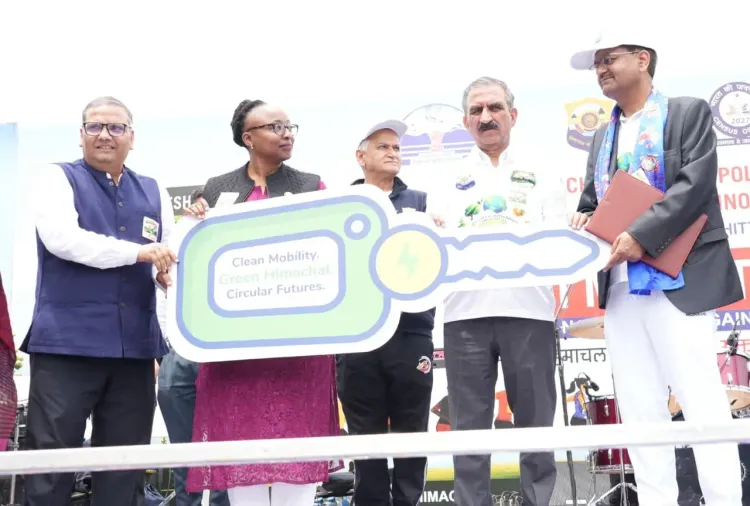
Himachal Pradesh and UNDP have formalised a climate partnership covering everything from circular economy and biodiversity corridors to electric waste collection — and Chief Minister Sukhu simultaneously launched the Safai Mitra Scheme to bring informal waste workers under a social protection framework. It is one of the more comprehensive state-level climate compacts signed this year.
Key Takeaways
Himachal Pradesh and the UNDP signed an MoU on 5 June in Shimla for climate-resilient, inclusive development.
The pact covers circular economy , waste management , electric mobility , biodiversity conservation, and ecosystem-based adaptation.
The agreement mandates participation of women , marginalised communities, and informal workers in planning and implementation.
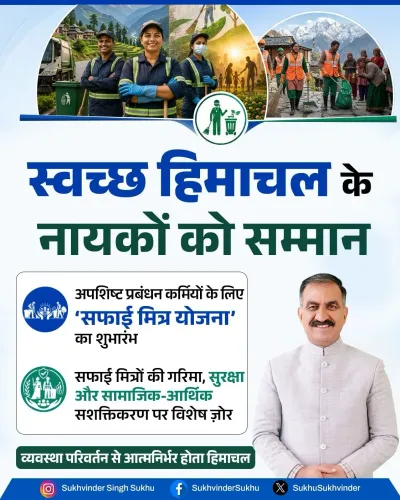
Chief Minister Sukhvinder Sukhu launched the Safai Mitra Scheme to empower informal waste management workers across the state.
The partnership will focus on knowledge exchange, capacity building, pilot projects, and mobilisation of climate finance .
Himachal Pradesh aims to become a 'Green Energy' state and a Himalayan model for sustainable development.
The Himachal Pradesh government and the United Nations Development Programme (UNDP) on Friday, 5 June signed a memorandum of understanding (MoU) in Shimla to advance climate-resilient, inclusive, and sustainable development across the state. The agreement was inked in the presence of Chief Minister Sukhvinder Sukhu, with State Secretary (Environment) Sushil Singla signing on behalf of the government and Angela Lusigi, Resident Representative, signing on behalf of the UNDP.
Key Areas of Collaboration
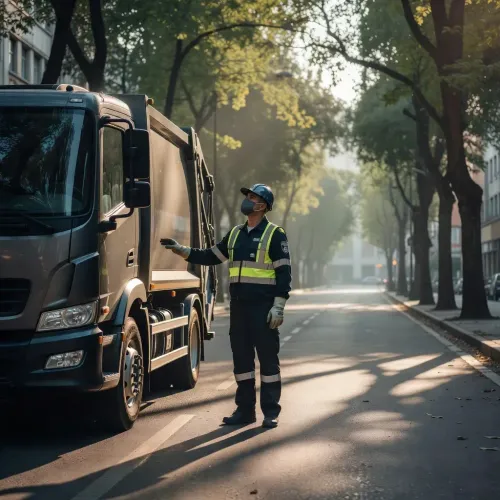
The partnership spans a broad range of climate and development priorities. Immediate focus areas include circular economy practices, waste management, social inclusion of waste management workers, and electric mobility for waste collection. The MoU also covers natural resource management and biodiversity conservation, encompassing landscape restoration, ecosystem-based adaptation, nature-based solutions, and protection of critical habitats and biodiversity corridors.
Governance and regulatory frameworks for ecological resilience in climate-vulnerable regions of the state are also part of the agenda. The pact further commits both parties to strengthening biodiversity-linked sustainable livelihoods for local communities.
Gender and Social Inclusion Mandate
A notable feature of the agreement is its gender-responsive framework. The partnership explicitly commits to ensuring the participation of women, marginalised communities, and informal workers in both planning and implementation of programmes. This signals a shift from top-down climate policy to community-anchored delivery — an approach that has gained traction in Himalayan states facing disproportionate climate vulnerability.
What the Chief Minister Said
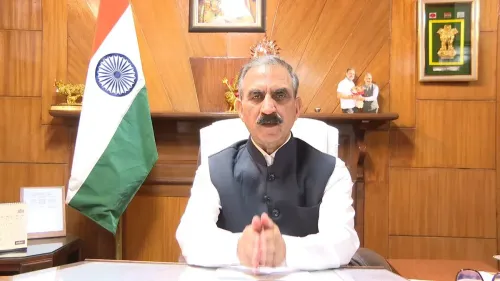
Speaking at the signing ceremony, Chief Minister Sukhu said the agreement would enable Himachal Pradesh to integrate global best practices with local solutions to protect its fragile Himalayan ecology while generating sustainable green livelihood opportunities. He expressed confidence that the collaboration would accelerate the state's progress toward achieving the Sustainable Development Goals (SDGs).
Sukhu added that the pact aligns with the government's vision of transforming Himachal Pradesh into a 'Green Energy' state and a model for sustainable development in the Himalayan region. The partnership will also focus on knowledge exchange, capacity building, pilot project implementation, and mobilisation of climate finance for long-term environmental goals.
Safai Mitra Scheme Launched
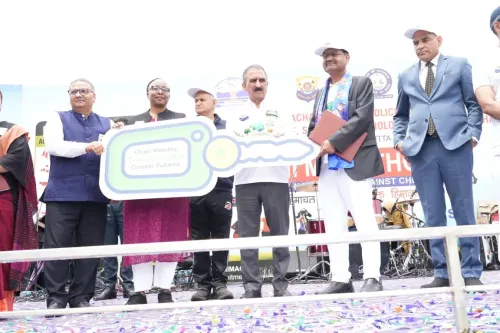
On the same occasion, Chief Minister Sukhu launched the Safai Mitra Scheme, aimed at empowering informal waste management workers across the state. Sukhu said sanitation and waste workers play a crucial role in maintaining cleanliness and environmental sustainability, and the scheme is intended to formally recognise and support their contributions to society.
This comes amid growing national and international attention to the welfare of informal waste workers, who often operate outside social protection systems. The scheme's launch alongside the UNDP MoU underscores the state's intent to link environmental goals with worker welfare — a dual mandate that few Indian states have pursued simultaneously.
What Comes Next
The MoU sets the stage for pilot projects and climate finance mobilisation, though specific timelines and funding allocations were not announced at the signing. Implementation details are expected to be worked out through subsequent technical consultations between state departments and UNDP teams. Himachal Pradesh's climate vulnerability — from glacial retreat to erratic monsoons — gives the partnership an urgency beyond policy optics.
Point of View
But the real test will be in implementation sequencing — specifically, whether climate finance actually reaches biodiversity corridor communities or stays at the departmental level. The simultaneous launch of the Safai Mitra Scheme is a smart political signal, but informal worker welfare schemes in India have a mixed record of delivery without dedicated funding lines. Himachal's geography makes it one of India's most climate-exposed states, yet it has historically received a fraction of national adaptation finance relative to coastal states. Whether this UNDP partnership unlocks new multilateral funding or merely repackages existing technical assistance is the question mainstream coverage is not yet asking.
NationPress
21 Oct 2026
Frequently Asked Questions
What is the Himachal Pradesh-UNDP MoU about?
The MoU, signed on 5 June in Shimla, is a formal partnership between the Himachal Pradesh government and the UNDP to advance climate-resilient, inclusive, and sustainable development in the state. It covers circular economy, waste management, biodiversity conservation, electric mobility, and climate finance mobilisation.
What is the Safai Mitra Scheme launched by Chief Minister Sukhu?
The Safai Mitra Scheme is a state initiative launched on 5 June by Chief Minister Sukhvinder Sukhu to empower informal waste management workers across Himachal Pradesh. It aims to formally recognise and support sanitation and waste workers who contribute to cleanliness and environmental sustainability.
Who signed the MoU on behalf of the Himachal Pradesh government and the UNDP?
State Secretary (Environment) Sushil Singla signed the MoU on behalf of the Himachal Pradesh government, while Angela Lusigi, Resident Representative of the UNDP, signed on behalf of the organisation. The signing took place in the presence of Chief Minister Sukhvinder Sukhu.
What are the key focus areas of the Himachal Pradesh-UNDP partnership?
The partnership focuses on circular economy practices, waste management and worker inclusion, electric mobility for waste collection, natural resource management, biodiversity conservation, landscape restoration, ecosystem-based adaptation, and gender-responsive social inclusion. It also covers capacity building and climate finance mobilisation.
How does this MoU relate to Himachal Pradesh's Green Energy vision?
Chief Minister Sukhu stated that the MoU aligns with the government's goal of transforming Himachal Pradesh into a 'Green Energy' state and a model for sustainable development in the Himalayan region. The partnership is also expected to accelerate the state's progress toward the Sustainable Development Goals (SDGs).