CM Sukhu Signs UNDP Pact, Launches Safai Mitra Yojana
Synopsis
Himachal Pradesh CM Sukhvinder Singh Sukhu signed an MoU with UNDP on World Environment Day 2026 to advance climate-resilient and inclusive development, while launching the Safai Mitra Yojana to protect and empower informal waste management workers across the state.
Key Takeaways
Himachal Pradesh government signed an MoU with UNDP on 5 June 2026 for climate-resilient, inclusive, and sustainable development.
The agreement was signed by Sushil Singla (state Environment Secretary) and Dr.
Angela Lusigi (UNDP Resident Representative).
The pact aims to promote circular economy, waste management, and electric mobility in the state.
CM Sukhu launched the Safai Mitra Yojana to provide dignity, safety, and empowerment to informal waste management workers.
The scheme specifically targets women, marginalised communities, and unorganised sector labourers for inclusion.
The initiative reinforces Himachal Pradesh's stated goal of becoming a leading green energy and sustainable development model among Indian states.
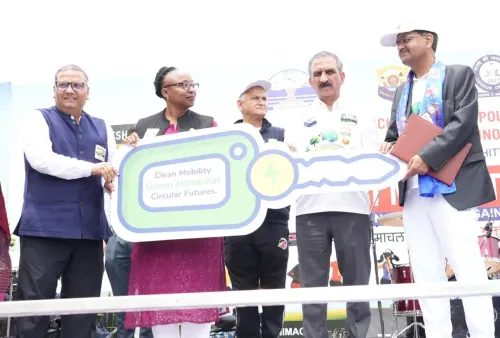
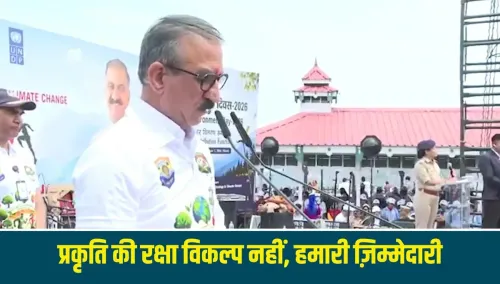
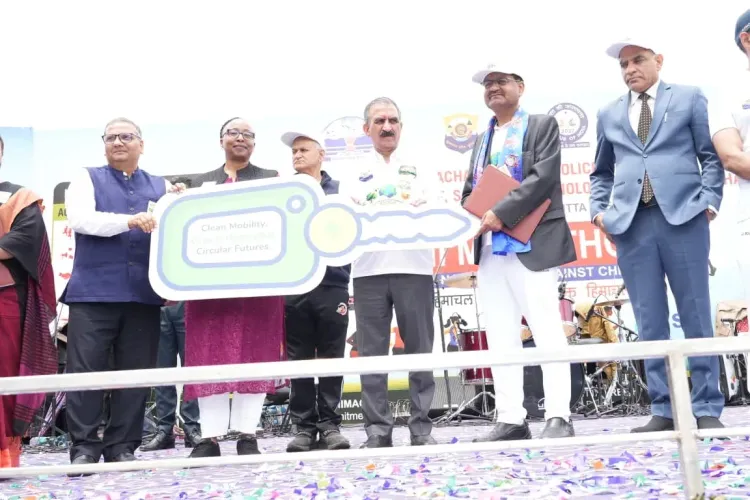
Himachal Pradesh Chief Minister Sukhvinder Singh Sukhu presided over the signing of a landmark agreement between the Himachal Pradesh government and the United Nations Development Programme (UNDP) on Friday, 5 June 2026, aimed at advancing climate-resilient, inclusive, and sustainable development in the hill state. The agreement was signed by Sushil Singla, Secretary of the Environment, Science, Technology and Climate Change Department, and Dr. Angela Lusigi, UNDP Resident Representative in India. On the same occasion, CM Sukhu launched the 'Safai Mitra Yojana', a dedicated scheme for the dignity, safety, and empowerment of informal waste management workers.
Context
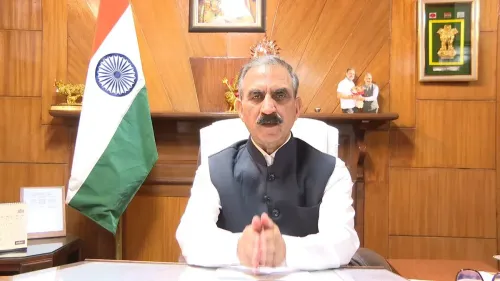
Posting on 5 June 2026 — coinciding with World Environment Day — CM Sukhu announced the agreement in Hindi, noting that it would promote paripatra arthavyavastha, apshisht prabandhan evam electric mobility (circular economy, waste management, and electric mobility). He added that the pact would accelerate climate-adaptive development initiatives and ensure the participation of women, marginalised communities, and unorganised sector workers. The timing on World Environment Day underscores the state government's intent to signal a firm policy commitment to green development.
Policy Backdrop
Himachal Pradesh has long positioned itself as a green-energy state, drawing on its vast hydropower potential and fragile Himalayan ecology. The new MoU with UNDP builds on India's commitments under the Paris Agreement (2015) and the broader framework of the Swachh Bharat Mission, launched in 2014, which tasked states with improving solid waste management and sanitation. Indian states have increasingly partnered with UNDP to localise Sustainable Development Goals (SDGs), particularly on climate action and circular economy targets. The Himachal agreement follows a pattern seen in other Himalayan and coastal states that have worked to integrate informal waste workers into formal systems while scaling up electric mobility and waste-to-energy projects.
The Safai Mitra Yojana specifically addresses a long-standing gap: informal waste workers, often from marginalised communities, have historically operated without social security, occupational safety protections, or formal recognition. The scheme is designed to bring them within a structured support framework, aligning with the SDG goal of decent work and economic growth.
Stakeholders and Impact
The agreement is expected to directly benefit waste management workers, women, and unorganised sector labourers across Himachal Pradesh. By embedding social inclusion within a climate framework, the state aims to ensure that the transition to a circular economy does not bypass its most vulnerable workers. The push for electric mobility under the pact could also benefit urban and semi-urban residents by reducing vehicular pollution in ecologically sensitive zones such as Shimla, Dharamshala, and Manali.
UNDP's involvement brings technical expertise and potential access to international climate finance, which could accelerate project implementation beyond what state budgets alone might allow. Dr. Angela Lusigi's participation at the signing signals institutional commitment from the UN agency to support Himachal's green transition at the ground level.
What's Next
Key milestones to watch include the rollout timeline and budget allocation for the Safai Mitra Yojana, as well as measurable targets for waste segregation and electric vehicle (EV) adoption under the new MoU. The state government has framed this partnership as central to establishing Himachal Pradesh as a leading model of sustainable development among Indian states. If the implementation framework is backed by clear timelines and accountability mechanisms, the agreement could serve as a replicable template for other hill states navigating the intersection of climate vulnerability and social inequality.
Point of View
Timed to World Environment Day, is a calculated move by CM Sukhu to anchor his government's identity in green governance — a politically useful distinction for a Congress-led state seeking to differentiate itself on the national stage. The simultaneous launch of the Safai Mitra Yojana is significant: it ties environmental policy to social justice, a framing that broadens the political coalition behind climate action to include marginalised workers rather than treating it as an elite concern. This dual-track approach — international partnership plus domestic welfare scheme — mirrors a broader pattern among opposition-ruled states using SDG alignment to attract UN technical support and climate finance outside central government channels. The real test will be whether the MoU translates into funded, time-bound targets or remains a framework agreement without teeth.
NationPress
23 Sept 2026
Frequently Asked Questions
What is the Safai Mitra Yojana launched in Himachal Pradesh?
The Safai Mitra Yojana is a Himachal Pradesh government scheme launched by CM Sukhvinder Singh Sukhu on 5 June 2026 to provide dignity, safety, and empowerment to informal and unorganised waste management workers in the state.
What did Himachal Pradesh and UNDP sign an agreement for?
The Himachal Pradesh government and UNDP signed an MoU on 5 June 2026 to advance climate-resilient, inclusive, and sustainable development, covering areas such as circular economy, waste management, electric mobility, and social inclusion of marginalised communities.
Who signed the Himachal Pradesh-UNDP MoU?
The MoU was signed by Sushil Singla, Secretary of the Environment, Science, Technology and Climate Change Department on behalf of the state government, and Dr. Angela Lusigi, UNDP Resident Representative in India.
How does the UNDP agreement benefit women and marginalised communities in Himachal Pradesh?
The agreement explicitly commits to ensuring the participation of women, marginalised communities, and unorganised sector workers in climate-adaptive development initiatives and waste management programmes under the new partnership.
Is Himachal Pradesh pursuing green energy and sustainable development goals?
Yes, Himachal Pradesh has consistently positioned itself as a green energy state, leveraging its hydropower resources and Himalayan ecology. The 2026 UNDP agreement and the Safai Mitra Yojana are part of the state's broader push to become a leading model of sustainable and inclusive development in India.