What Cultural Performances Captivated Visitors at the Hornbill Festival?
Synopsis
On December 4, 2025, the Hornbill Festival in Nagaland dazzled attendees with vibrant cultural performances, showcasing the rich heritage of various tribes. From traditional dances to indigenous songs, this festival is a true representation of the Nagas' cultural legacy and unity, attracting both local and foreign visitors to experience its magnificence.
Key Takeaways
Vibrant cultural performances from various Naga tribes.
Significant representation of Nagaland's rich heritage.
Over 86% tribal population in Nagaland.
Partnership with six countries promoting regional cooperation.
Unity and cultural pride showcased through the festival.
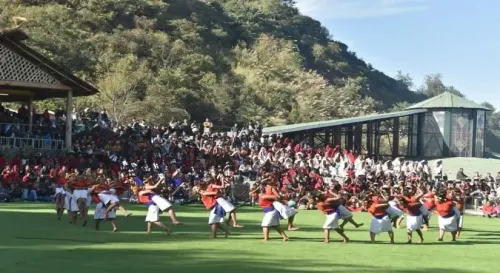
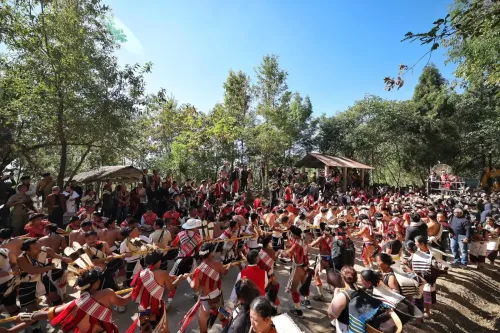
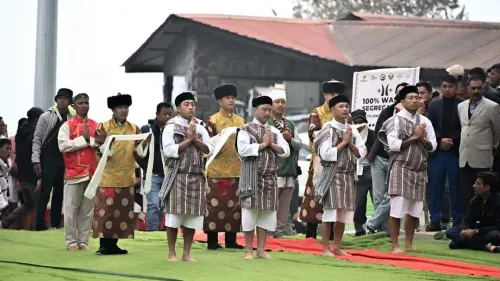
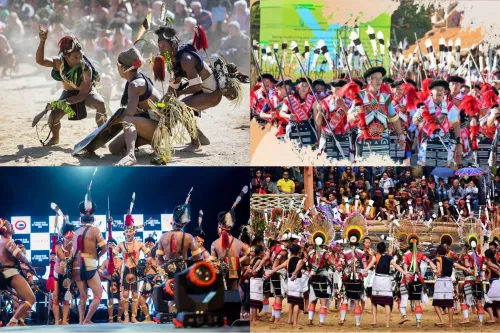
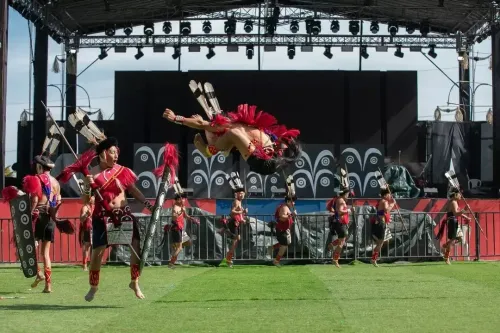
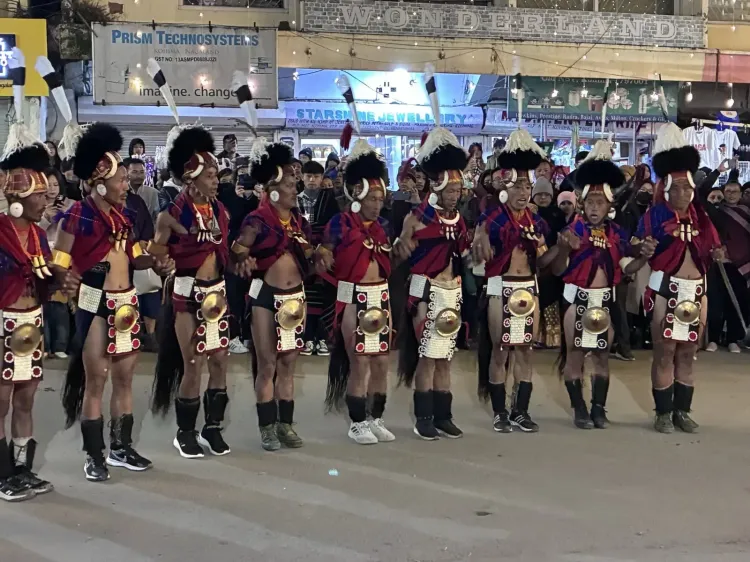
Kohima, Dec 4 (NationPress) Traditional dances, indigenous songs, and customary performances captivated audiences, including international guests, on the fourth day of the 10-day Hornbill Festival on Thursday at the Naga heritage village in Kisama.
Commemorating the 4th day of the Hornbill Festival 2025, the cultural showcase occurred at Unity Plaza in the Naga Heritage Village, Kisama, which is located approximately 12 km south of Kohima, the state capital.
The Thursday event was led by Metsubo Jamir, the Minister for Rural Development & SIRD, with co-host Mhathung Yanthan, the Advisor for Agriculture.
Special attendees included Aloke Singh, Managing Director of Air India Express, and Surabhi Varma Garg, Principal Chief Commissioner of Income Tax (NER), Guwahati. The cultural lineup featured a vibrant mix of traditional performances from numerous Naga tribes.
The Konyak cultural troupe showcased Alea-Boa, a dance linked with the Aoleang festival, celebrated post-sowing season to mark the New Year. The Sumi cultural troupe presented Aphilo Kuwo, a traditional warrior dance honoring the bravery of victorious fighters from the headhunting period.
The Kuki cultural troupe exhibited Khulkon Lam, illustrating the legendary journey of the Chin-Kuki-Mizo people from the underground world to the surface in search of arable land, while the Phom cultural troupe performed Moolum Shou, a powerful song conveying feelings of vengeance and animosity after triumph over foes.
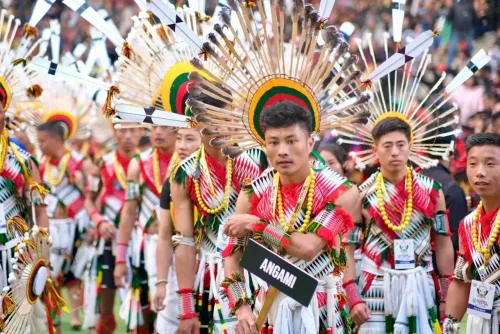
Various cultural troupes from Rengma, Pochury, Tikhir, Lotha, Sangtam, Yimkhiung, Zeliang, Angami, Ao, Chang, Khiamniungan, Garo, and Chakhesang communities presented distinct traditional performances.
Wrapping up the lineup, the Kachari cultural troupe presented Swdwmsri Mwsanai, representing the mythical expertise of all folk dances, reflecting women’s desire to safeguard cultural knowledge and heritage. During the inaugural ceremony on the evening of December 1, Chief Minister Neiphiu Rio mentioned that the Hornbill Festival embodies the Nagas’ way of life; it symbolizes the unity and cohesiveness of the Naga people. He emphasized that it represents a rich legacy, enduring traditions, and respect for ancestors.
Over 86% of the state's population of two million (according to the 2011 Census) is comprised of tribal communities.
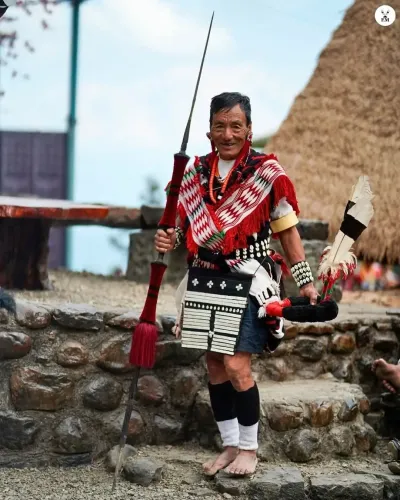
Nagaland is home to 17 primary tribes and numerous sub-tribes, each possessing its unique cultural heritage, traditional dances, music, attire, and customs. This year's 10-day 26th Hornbill Festival features six partner countries: Austria, France, Ireland, Malta, Switzerland, and the United Kingdom, promoting regional cooperation alongside Arunachal Pradesh as the state partner.
Point of View
It is crucial to recognize the Hornbill Festival not just as an event but as a significant reflection of Nagaland's identity. This festival underscores the importance of cultural preservation and unity among the diverse tribal communities in the region, showcasing their rich traditions and fostering a sense of belonging.
NationPress
25 Sept 2026
Frequently Asked Questions
What is the Hornbill Festival?
The Hornbill Festival is an annual cultural festival in Nagaland that celebrates the rich heritage of the Naga tribes through traditional dances, music, and performances.
When does the Hornbill Festival take place?
The Hornbill Festival typically takes place from December 1 to December 10 each year.
Where is the Hornbill Festival held?
The festival is held at the Naga Heritage Village in Kisama, which is approximately 12 km south of Kohima, the capital of Nagaland.
Who can attend the Hornbill Festival?
The festival is open to everyone, including local residents and international tourists, providing a unique opportunity to experience Naga culture.
What activities can be expected at the Hornbill Festival?
Visitors can expect a variety of cultural performances, traditional dances, indigenous music, food stalls, and exhibitions showcasing Naga art and crafts.