Is the Trucks-on-Trains service of Indian Railways gaining momentum?
Synopsis
Discover how the innovative Trucks-on-Trains service by Indian Railways is revolutionizing long-haul freight logistics. With impressive operational data, this multimodal integration is cutting costs, emissions, and travel times, making it a game-changer for the industry. Explore the benefits and future of this service!
Key Takeaways
Trucks-on-Trains service enhances long-haul logistics efficiency.
Over 1,955 trips completed since inception.
Revenue generation exceeding Rs 131 crore .
Significant adoption from key sectors like dairy and FMCG.
Reduction in logistics costs and environmental impact.
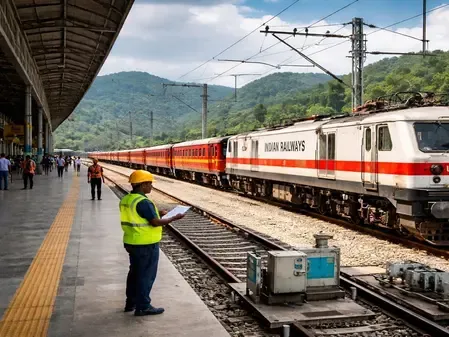
New Delhi, Jan 22 (NationPress) The revolutionary Trucks-on-Trains (ToT) initiative launched by Indian Railways aims to optimise long-distance freight operations through multimodal integration and is gaining significant traction, as evidenced by operational statistics from the current financial year.
"In FY 2025 (April–December), the Trucks-on-Trains service successfully managed a total of 545 rakes, transporting over three lakh tonnes of freight and generating a revenue of Rs 36.95 crore. This volume highlights ToT's potential as a commercially viable and scalable logistics solution that will reduce emissions, ease road congestion, and lower logistics expenses," reported the Ministry of Railways on Thursday.
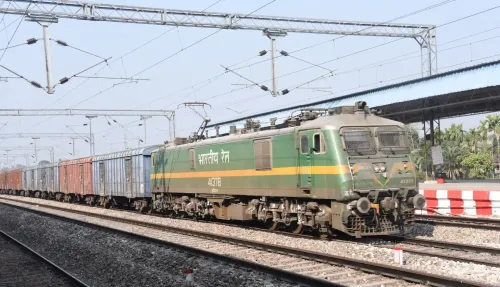
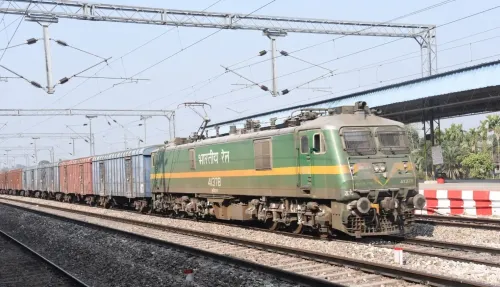
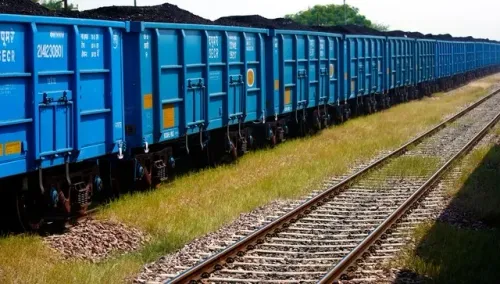
The ToT service combines the flexibility of road transport with the efficiency and environmental advantages of the electrified rail infrastructure established under the Dedicated Freight Corridor (DFC) programme by Indian Railways.
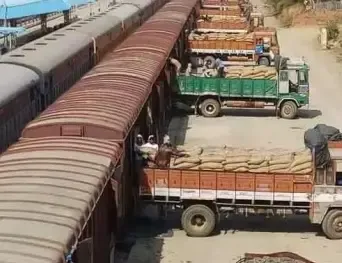
This service facilitates the transportation of loaded trucks on specially designed flat wagons along the dedicated freight corridor.
By utilizing railways for the main haul, trucks can bypass lengthy, congested highway trips and only need to cover short distances for first- and last-mile road movements.
Since its launch, the service has completed over 1,955 trips, transported more than a million tonnes of freight, and generated cumulative revenue surpassing Rs 131 crore.
The strong demand from sectors such as dairy, automobiles, Fast-Moving Consumer Goods (FMCG), and food processing indicates increasing industry trust in this model.
Each freight train can replace dozens of long-distance trucks, leading to a smoother flow of traffic, decreased accident risks, reduced diesel usage, and less wear and tear on road infrastructure.
"Currently, the ToT service operates between New Rewari and New Palanpur on the fully electrified Western DFC network. Plans are in place to extend the service to additional sections as infrastructure develops. The New Palanpur–New Rewari corridor spans approximately 636 kilometres, reducing end-to-end transit time from around 30 hours by road to roughly 12 hours via the ToT service. This integrated road–rail solution boosts transit reliability, shortens turnaround times, and lowers overall logistics costs while protecting long-haul freight movement from many uncertainties associated with highway transport," the statement added.
"A significant advantage of the ToT is its straightforward and competitive pricing model. Freight rates are based on transparent weight slabs: Rs 25,543 per wagon for trucks up to 25 tonnes, Rs 29,191 for 25-45 tonnes, and Rs 32,000 for 45-58 tonnes, while empty trucks are transported at just Rs 21,894 per wagon. To further assist the dairy sector, no GST is applied to milk tankers, making the service particularly appealing for time-sensitive and perishable cargo. Enhancing operational flexibility, Open Indent booking has been available since January 2024, enabling customers to plan movements according to their dynamic logistics needs," the statement indicated.
"An examination of origin-based performance showcases its strength. New Palanpur alone accounted for 273 rakes, handling more than 2 lakh tonnes and generating revenue of Rs 20.18 crore, indicating strong adoption from western India's freight clusters, especially in the dairy and FMCG sectors. New Rewari contributed nearly equally operationally, with 272 rakes moving around 0.1004 million tonnes and generating Rs 16.76 crore in revenue. Together, these terminals exemplify how strategically located nodes on the DFC can anchor sustained multimodal freight flows and enhance corridor-based logistics efficiency," the statement noted.
The service has seen robust patronage from western India's freight hubs, particularly from major clients like the Gujarat Cooperative Milk Marketing Federation (Amul) for milk and dairy products, along with various logistics service providers.
The relaunch of the Trucks-on-Trains service through a Memorandum of Understanding with the Gujarat Cooperative Milk Marketing Federation in June 2023 has significantly bolstered industry confidence and facilitated regular volumes from the dairy sector.
An essential economic advantage for transporters is the elimination of highway toll costs.
Long-distance trucking on national highways incurs substantial toll expenses, which escalate logistics costs and increase trip unpredictability.
By transferring the long-haul segment to railways, the Trucks-on-Trains service allows operators to bypass these recurring toll charges entirely, enhancing cost predictability and profit margins, particularly for high-frequency and long-distance movements.
"The environmental benefits are reinforced by the fact that the entire DFC network is fully electrified. Transitioning trucks from road to rail significantly lowers emissions of carbon dioxide (CO₂), nitrogen oxides (NOₓ), and particulate matter. As India's power generation mix gradually incorporates a higher share of renewable energy, the carbon footprint of railway-based freight under the ToT model is anticipated to further decrease," the statement concluded.
Point of View
The Trucks-on-Trains service represents a critical advancement in India's logistics framework. It highlights the potential for sustainable transport solutions that align with national goals for economic efficiency and environmental responsibility. The growing adoption from various sectors illustrates the confidence in this innovative model, positioning India as a leader in modern logistics.
NationPress
15 Oct 2026
Frequently Asked Questions
What is the Trucks-on-Trains service?
The Trucks-on-Trains (ToT) service is a logistics initiative by Indian Railways that combines road transport flexibility with rail efficiency, allowing loaded trucks to be transported on flat wagons along dedicated freight corridors.
How has the service performed financially?
In FY 2025, the ToT service handled 545 rakes, moving over three lakh tonnes of freight and generating Rs 36.95 crore in revenue, indicating its commercial viability.
What benefits does the ToT service provide to transporters?
Transporters benefit from reduced logistics costs, elimination of toll fees, lower emissions, and improved traffic flow by using the ToT service.
Which sectors are utilizing the ToT service?
Key sectors utilizing the ToT service include dairy, automobiles, Fast-Moving Consumer Goods (FMCG), and food processing.
What is the environmental impact of the ToT service?
The ToT service significantly reduces emissions of CO₂, NOₓ, and particulate matter due to its reliance on electrified rail infrastructure, contributing to a greener transport solution.