Human Rights Council Condemns Pakistan's Fuel Price Surge Amid Rising Inflation
Synopsis
The Human Rights Council of Pakistan has condemned the government's significant rise in fuel prices, warning it will worsen the economic burden on citizens already facing inflationary pressures. The HRC urges immediate government action to alleviate public distress.
Key Takeaways
Significant fuel price hikes announced by the Pakistani government.
The rise is 43% for petrol and 55% for HSD.
The Human Rights Council expresses concerns over economic implications.
Call for government transparency and accountability in pricing.
Urgent need for public relief measures emphasized.
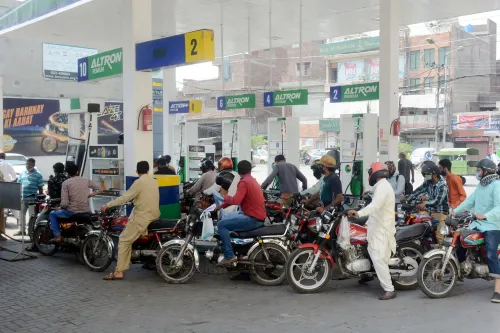
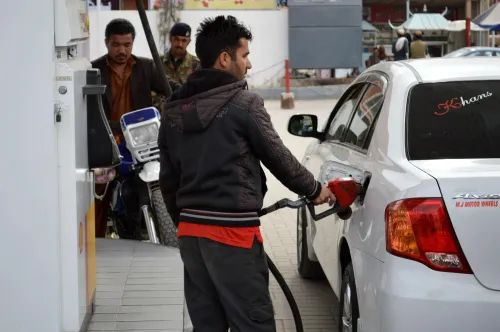
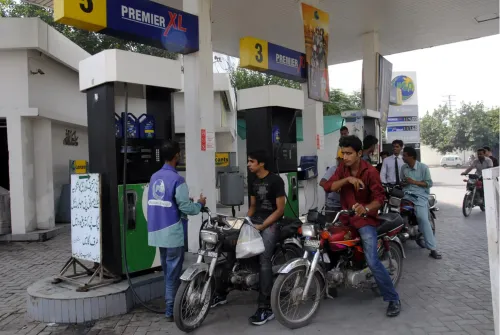
Islamabad, April 3 (NationPress) The Human Rights Council of Pakistan (HRC) has expressed strong disapproval of the government's recent dramatic hike in fuel prices, emphasizing that this action will exacerbate the hardships faced by citizens already struggling with soaring inflation and economic difficulties.
The rights organization pointed out that raising the prices of petroleum products to unprecedented levels comes at a time when the population is already enduring significant economic strain, heightening concerns that the purchasing power of everyday citizens will be further diminished.
This criticism follows the government’s announcement of a substantial increase in fuel costs, with petrol prices climbing by 43% and high-speed diesel (HSD) by 55%, as reported by local media.
Specifically, the price of petrol has surged by PKR 137.23 per litre, from PKR 321.17 to PKR 458.41, while HSD has increased by PKR 184.49 per litre, moving from PKR 335.86 to PKR 520.35. Additionally, the cost of kerosene has risen by PKR 34.08, now priced at PKR 457.80, according to Pakistan's leading daily, Dawn.
In their statement, the HRC remarked, “Citing regional or global conflicts as a reason for such an extraordinary price increase lacks sufficient justification, especially considering that global oil supplies remain largely uninterrupted, and the nation has access to alternative energy options.”
They observed that a price surge of this scale for petroleum products throughout Pakistan appears to contradict the principles of policy transparency and the public interest.
“This action will not only escalate inflationary pressures but will also directly impact the daily lives of ordinary citizens by adding burdens on transportation, essential goods, and services. This ultimately infringes upon basic human rights, notably the right to a dignified standard of living,” the rights group emphasized.
The HRC of Pakistan urged the government to swiftly reconsider this decision, implement tangible relief measures for the public, and maintain transparency and accountability in the determination of fuel prices.
They warned that “increasing public unrest could result in socio-economic instability, which would place the burden of responsibility squarely on the shoulders of policymakers.”
Point of View
It is essential to highlight the significant impact of government policies on the populace. The recent fuel price hike by the Pakistani government is alarming, particularly in the context of rising inflation. The Human Rights Council's call for transparency and accountability in this matter underscores the need for policies that prioritize citizen welfare.
NationPress
15 Oct 2026
Frequently Asked Questions
What was the recent fuel price increase in Pakistan?
The government announced a 43% increase in petrol prices and a 55% increase in high-speed diesel prices.
How does the Human Rights Council view this price hike?
The HRC has strongly criticized the fuel price surge, warning that it will worsen the economic burden on citizens already facing inflation.
What does the HRC suggest the government do?
The HRC urges the government to reconsider the fuel price increase and implement relief measures for the public.
Why is the fuel price increase concerning?
It is concerning because it exacerbates inflation, affecting the purchasing power and daily lives of ordinary citizens.
What are the current prices of petrol and diesel in Pakistan?
Petrol is now priced at PKR 458.41 per litre, and high-speed diesel is at PKR 520.35 per litre.