Pakistan Fuel Price Hike Slammed as 'Economic Suicide' by HRC
Synopsis
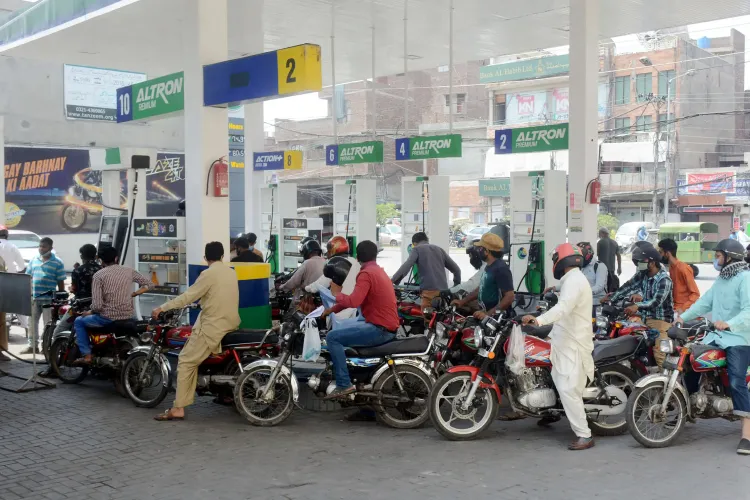
Pakistan's Human Rights Council has called the government's Rs 26.77 per litre fuel price hike an 'economic suicide attack' on citizens. Coming weeks after petrol surged 43% and diesel 55%, the move exposes a deepening contradiction: IMF-driven austerity crushing the poor while elite privileges remain intact.
Key Takeaways
The Pakistani government raised petrol and high-speed diesel prices by Rs 26.77 per litre each, effective Saturday, April 26, 2025 , per the Ministry of Energy (Petroleum Division) .
Pakistan's Human Rights Council (HRC) condemned the hike as an 'economic suicide attack' on citizens and demanded immediate reversal of the decision.
Petroleum Minister Ali Pervaiz Malik attributed the hike to regional tensions and international partner agreements , including IMF commitments.
Earlier in April 2025 , Pakistan had already raised petrol prices by 43% and high-speed diesel by 55% in a separate adjustment.
The HRC demanded reduction in elite privileges and formulation of pro-poor economic policies to protect vulnerable citizens from inflation.
Pakistan's fuel hikes are structurally linked to its IMF bailout conditions mandating energy subsidy removal, creating a cycle of price escalation amid rupee depreciation.
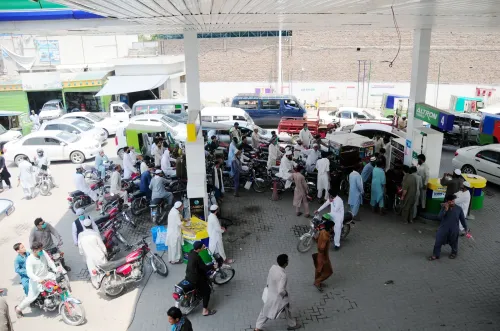
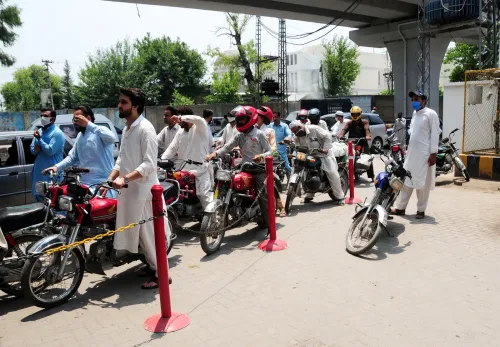
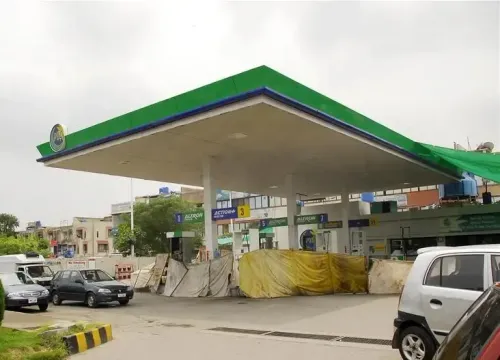
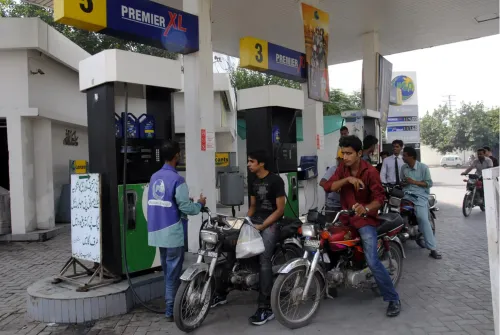
Islamabad, April 25: Pakistan's Human Rights Council (HRC) has sharply condemned the latest fuel price hike announced by the Pakistani government, describing it as an 'economic suicide attack' on ordinary citizens. The revised petroleum prices — effective Saturday, April 26 — include an increase of Rs 26.77 per litre each on both petrol and high-speed diesel (HSD), as notified by the Ministry of Energy (Petroleum Division). The move has triggered fierce backlash from rights groups and civil society amid an already crippling inflation crisis.
What the Government Said
Pakistan's Petroleum Minister Ali Pervaiz Malik defended the hike, citing mounting regional tensions and international oil market pressures. He stated that due to 'rising oil prices and agreements with global partners', the government was compelled to pass the financial burden on to the public, as quoted by Pakistani business daily Business Recorder.
The government's justification, however, has done little to quell public anger. Critics argue that invoking geopolitical pressures as a rationale has become a recurring deflection tactic by Islamabad, even as elite privileges and government expenditures remain largely untouched.
HRC's Scathing Indictment
The Human Rights Council of Pakistan issued a strongly worded statement, warning that repeated fuel price increases are not merely a 'numerical change' but rather 'an invitation to a storm of inflation that has already broken the back of the common man.'
The Council's chairperson stressed that access to a dignified life is a fundamental human right, and that cascading price rises in transport, medicines, and essential commodities risk pushing poor and middle-class Pakistanis below the poverty line.
'The government should listen to the cries of the public and formulate economic policies that are pro-poor, not anti-public. We demand that privileges for the elite be reduced so that the common citizen gets a chance to breathe,' the HRC chairperson said.
The rights body demanded an immediate review of what it called an 'oppressive decision' and urged emergency measures to provide direct relief to citizens.
Scale of the Crisis: A Pattern of Hikes
This latest revision is not an isolated incident. Earlier in April 2025, the Pakistani government announced a dramatic surge in fuel costs — petrol prices rose by 43 per cent and high-speed diesel by 55 per cent — in what was already one of the steepest single-month adjustments in Pakistan's recent economic history.
Pakistan has been navigating a severe economic crisis, compounded by its ongoing IMF bailout programme, foreign exchange reserve depletion, and structural fiscal deficits. The government's repeated recourse to fuel price hikes reflects the constraints of its international financial commitments, particularly conditions tied to the International Monetary Fund (IMF) agreement that mandates reduction of energy subsidies.
Impact on Citizens and the Broader Economy
Fuel price hikes in Pakistan have a multiplier effect on daily life. Rising diesel costs directly inflate freight and logistics charges, which in turn push up prices of food, medicines, and consumer goods. For a country where a significant portion of the population already lives near or below the poverty line, each successive hike erodes purchasing power at an accelerating rate.
Economists and civil society observers note a stark contradiction: while the government cites global oil market pressures, Pakistan's ruling elite continues to enjoy subsidised utilities, government vehicles, and lavish official perks — a disparity the HRC explicitly flagged in its statement demanding 'reduction in elite privileges.'
The Pakistani rupee's continued depreciation against the US dollar further compounds the problem, as oil imports become costlier in local currency terms, creating a self-reinforcing cycle of price escalation that disproportionately burdens wage earners and informal sector workers.
What Comes Next
With Pakistan's IMF programme reviews ongoing and regional tensions — particularly in the context of India-Pakistan relations following recent geopolitical developments — showing no signs of immediate de-escalation, further fuel price adjustments cannot be ruled out in the coming weeks. The HRC has called for emergency legislative and executive action, but with Islamabad's fiscal space severely constrained, meaningful relief for ordinary Pakistanis remains uncertain. Civil society groups are expected to intensify pressure campaigns as the economic strain deepens across urban and rural communities alike.
Point of View
Repeatedly, to sacrifice the latter. The Human Rights Council's use of the phrase 'economic suicide attack' is not hyperbole; it reflects a lived reality where diesel and petrol prices have surged over 50 percent within a single month, yet elite perks remain untouched. What mainstream coverage misses is the structural irony: Pakistan's political class, which negotiated the very IMF terms that mandate subsidy removal, insulates itself from the consequences while framing the pain as inevitable. This is not just an economic story — it is a governance accountability crisis with human rights dimensions that demand far sharper scrutiny.
NationPress
3 Oct 2026
Frequently Asked Questions
How much did Pakistan increase petrol and diesel prices in April 2025?
Pakistan's government raised petrol and high-speed diesel prices by Rs 26.77 per litre each, effective April 26, 2025. Earlier in April, petrol had already risen by 43 percent and high-speed diesel by 55 percent in a separate hike.
Why did Pakistan hike fuel prices in April 2025?
Petroleum Minister Ali Pervaiz Malik cited rising global oil prices and commitments to international partners, including IMF agreement conditions, as reasons for the hike. The government stated it was compelled to pass the cost burden on to consumers.
What did Pakistan's Human Rights Council say about the fuel price hike?
The Human Rights Council of Pakistan condemned the hike as an 'economic suicide attack' on the public. It warned that cascading price rises in transport, medicines, and essentials risk pushing poor and middle-class citizens below the poverty line.
How does Pakistan's fuel price hike affect ordinary citizens?
Rising fuel costs directly increase freight, transport, food, and medicine prices, eroding purchasing power for millions of low and middle-income Pakistanis. The HRC noted that access to a dignified life — a fundamental human right — is being undermined by successive price hikes.
Is Pakistan's fuel price hike linked to the IMF bailout programme?
Yes, Pakistan's ongoing IMF programme includes conditions requiring the reduction of energy subsidies, which has driven repeated fuel price increases. The government has cited both IMF commitments and global oil market pressures to justify the hikes.