India International Water Week 2026: CR Paatil calls for public role in climate-resilient water management
Synopsis
The 9th India International Water Week wrapped up at Bharat Mandapam with a clear message: public participation and on-the-ground implementation must now follow high-level deliberation. Minister CR Paatil's call to anchor the next phase of Jal Jeevan Mission in community ownership and source sustainability signals a policy pivot from coverage numbers to service quality — the harder, less headline-friendly challenge.
Key Takeaways
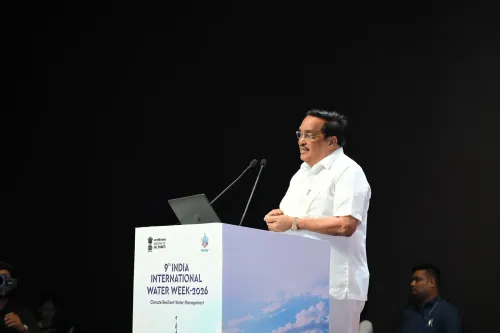
The 9th India International Water Week (IIWW) 2026 concluded on 25 September at Bharat Mandapam, New Delhi , under the theme 'Climate Resilient Water Management' .
Union Minister CR Paatil stressed public participation, science-led solutions, and international cooperation as core pillars of water security.
The Jal Jeevan Mission , launched in 2019 , was cited for improving rural health and reducing women's water-fetching burden; a WHO assessment was referenced on its child mortality prevention potential.
The next phase of JJM must focus on community participation , source sustainability , and appropriate technology , according to Paatil.
Meena called the hydrological cycle a global common good and urged translating IIWW deliberations into measurable ground-level outcomes.
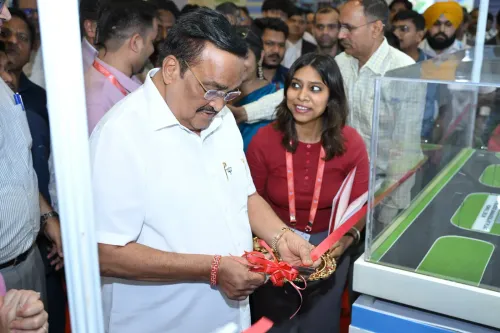
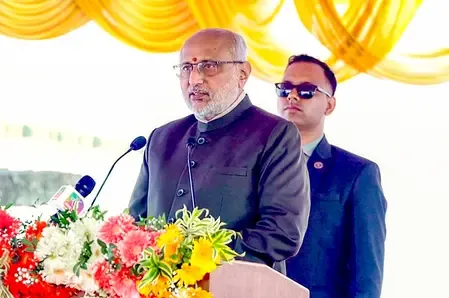
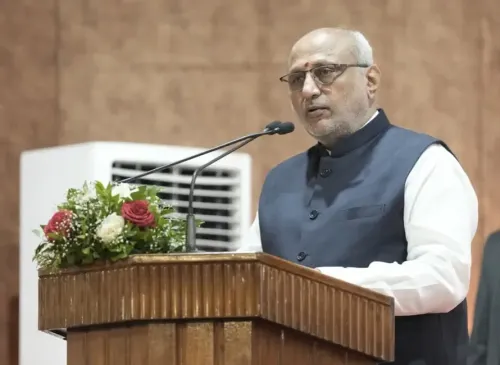
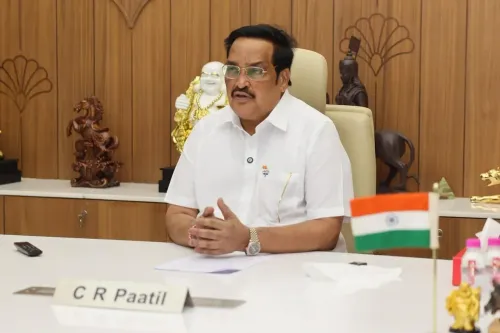
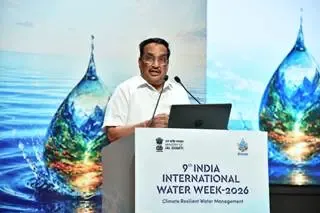
The 9th India International Water Week (IIWW) 2026 concluded on Friday, 25 September at Bharat Mandapam, New Delhi, with Union Minister of Jal Shakti C R Paatil urging greater public participation in water conservation, wider adoption of science and technology at the grassroots, and stronger international and institutional cooperation. The four-day event, themed 'Climate Resilient Water Management', drew policymakers, researchers, industry leaders, and young professionals from across the country and beyond.
Key Developments at the Valedictory Session
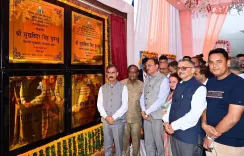
The closing session on 25 September was attended by Ministers of State for Jal Shakti — V. Somanna and Raj Bhushan Choudhary — alongside senior officials including Ashok K. K. Meena, Secretary, Department of Drinking Water and Sanitation; Archana Varma, Director General, National Mission for Clean Ganga; Kamal Kishore Soan, Chairman, Central Water Commission; and Anupam Prasad, Director General, National Water Development Agency, among others.
The gathering, held from 22 to 25 September 2026, brought together government officials, international organisations, development partners, academia, water-sector practitioners, and innovators to deliberate on emerging challenges and solutions for water security in the face of a changing climate.
Jal Jeevan Mission: Progress and the Road Ahead
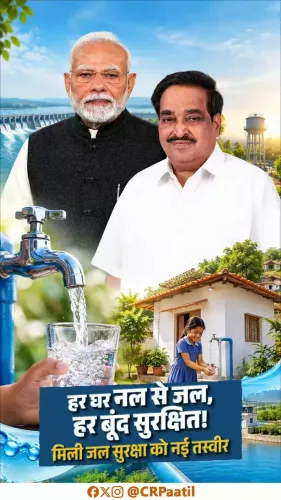
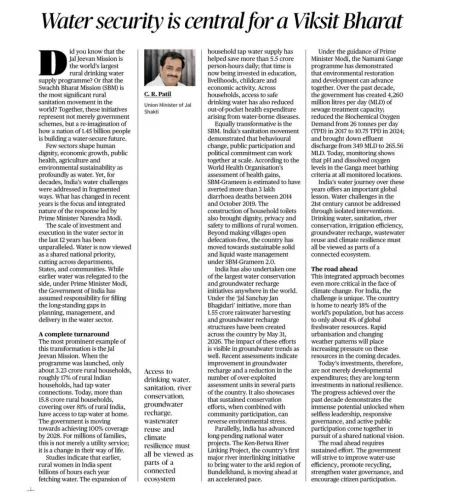
Minister Paatil highlighted the transformative impact of the Jal Jeevan Mission (JJM) since its launch in 2019, noting that expanded household tap water access has improved health, dignity, and quality of life in rural communities. He pointed out that the Mission has significantly reduced the time and effort women spend fetching water — a quality-of-life gain that tends to go untracked in conventional metrics.
Citing a World Health Organization (WHO) assessment, Paatil said that improved access to safe drinking water under the Mission has the potential to prevent a significant number of deaths among children and reduce the overall health burden associated with unsafe water. He stressed that the next phase of JJM must centre on ensuring water services that are adequate, regular, safe, and sustainable, with community participation, source sustainability, and appropriate technology as its three pillars.
Climate Resilience Begins with Water Resilience
Addressing the Valedictory Session, Ashok K. K. Meena argued that climate resilience is inseparable from water resilience. He described the hydrological cycle as a global common good and 'nature's most successful water management system', stressing a collective responsibility to manage water in harmony with natural processes — conserving, reusing, and replenishing every drop.
Meena underscored that the long-term success of water programmes would ultimately depend on translating the knowledge and solutions discussed at IIWW into measurable, on-the-ground outcomes — a signal that the government is aware of the implementation gap that has historically followed high-profile water policy forums.
Why This Forum Matters
India faces a compounding water challenge: groundwater depletion, erratic monsoons driven by climate change, ageing urban infrastructure, and a rural-urban divide in service quality. IIWW serves as a platform to align domestic policy with global best practices and attract international partnerships. Notably, this edition's focus on climate resilience comes as India records increasingly frequent extreme weather events — floods and droughts occurring in the same season across different regions.
What Comes Next
Officials indicated that the deliberations and recommendations from IIWW 2026 will inform the next phase of Jal Jeevan Mission's implementation guidelines. Industry bodies and development partners who participated are expected to contribute to co-financing and technology transfer frameworks. The onus now shifts from discussion to delivery — a challenge that has defined India's water policy journey for decades.
Point of View
But India's water crisis demands more than well-attended forums — it requires accountability structures that track outcomes, not just outputs. Paatil's emphasis on 'community participation' is the right instinct, yet successive water missions have struggled to move from centrally driven rollouts to genuinely community-owned systems. The reference to a WHO assessment on child mortality is striking: if safe water access can prevent a significant number of children's deaths, the urgency of the next JJM phase should be treated as a public health emergency, not just a rural infrastructure target. The real test is whether IIWW's recommendations produce binding implementation timelines — or simply feed the next edition's agenda.
NationPress
25 Sept 2026
Frequently Asked Questions
What is the India International Water Week 2026?
The India International Water Week (IIWW) 2026 is the 9th edition of an annual forum held from 22 to 25 September at Bharat Mandapam, New Delhi, under the theme 'Climate Resilient Water Management'. It brings together policymakers, researchers, international organisations, industry leaders, and innovators to address water security challenges and share solutions.
What did Union Minister CR Paatil say at IIWW 2026?
Minister CR Paatil stressed the need for greater public participation in water conservation, wider use of science and technology at the grassroots level, and stronger international and institutional cooperation. He also highlighted the Jal Jeevan Mission's achievements since 2019 and outlined priorities for its next phase.
What is the current status of the Jal Jeevan Mission?
The Jal Jeevan Mission, launched in 2019, has expanded household tap water access across rural India, improving health outcomes and reducing the burden on women who traditionally fetch water. According to a WHO assessment cited by Minister Paatil, the Mission has the potential to prevent a significant number of child deaths linked to unsafe water.
What are the priorities for the next phase of Jal Jeevan Mission?
The next phase of JJM will focus on ensuring water services are adequate, regular, safe, and sustainable. Minister Paatil identified community participation, source sustainability, and appropriate technology as the three central priorities for sustaining and deepening the Mission's gains.
Why does climate resilience matter for India's water management?
India faces compounding water pressures — groundwater depletion, erratic monsoons, urban infrastructure gaps, and growing rural-urban service disparities — all worsened by climate change. Secretary Ashok K. K. Meena argued at IIWW 2026 that climate resilience is inseparable from water resilience, urging conservation, reuse, and replenishment of every available water drop.