Strengthening India-Israel Relations: Trade, Tech, and Investment Initiatives
Synopsis
In a recent summit, Prime Ministers Modi and Netanyahu highlighted the need to maximize bilateral trade and investment between India and Israel. This collaboration spans various sectors, including AI, cybersecurity, and agriculture, aiming to drive technological innovation and mutual progress.
Key Takeaways
India and Israel are enhancing trade and investment ties through a bilateral agreement.
Collaboration in AI and technology is a key focus.
Direct air connectivity is essential for expanding relations.
Financial cooperation is being prioritized through strategic dialogues.
Joint initiatives in water management and agriculture are underway.
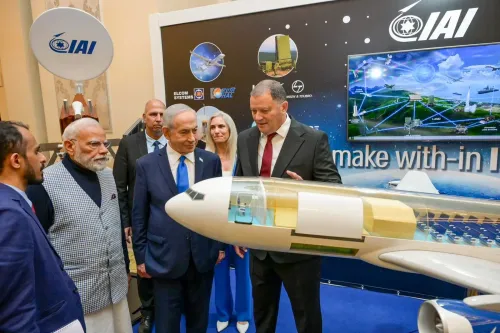
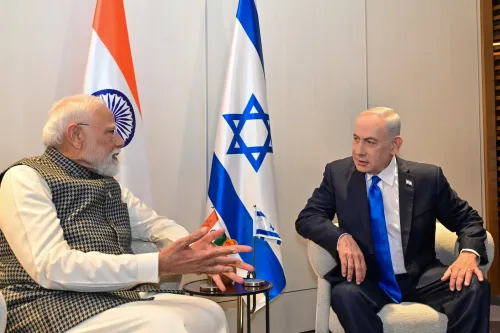
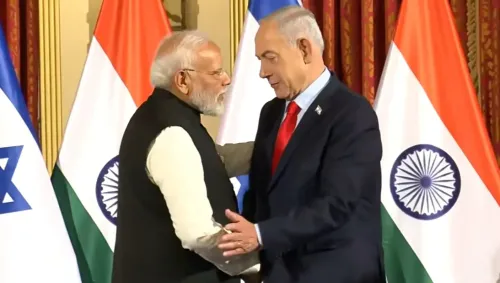
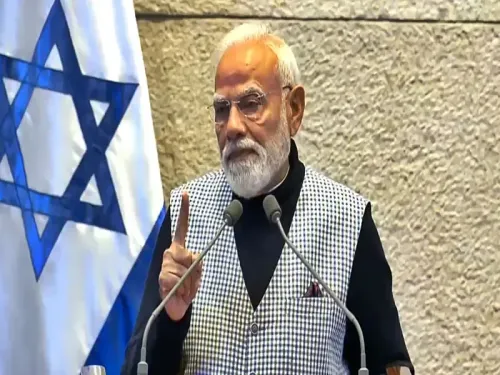
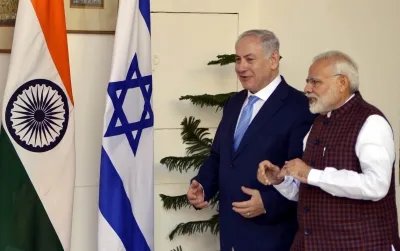
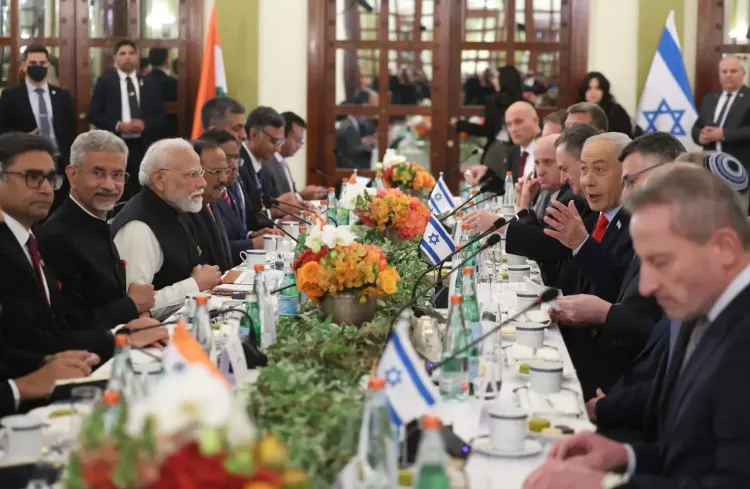
Tel Aviv, Feb 26 (NationPress) During a recent summit, Prime Minister Narendra Modi and Prime Minister Benjamin Netanyahu of Israel underscored the necessity of tapping into the vast potential of trade and investments between India and Israel, as highlighted in a joint statement following their successful meeting.
The leaders reiterated their dedication to merging India's strengths with Israel's advancements in AI, cybersecurity, semiconductors, quantum computing, biotechnology, agriculture, water management, defense platforms, and space exploration.
This alliance supports India's vision of an ‘Atmanirbhar and Viksit Bharat 2047’ and aims to ignite a new era of technological evolution and mutual progress, as stated in the joint declaration.
The leaders acknowledged that the capabilities of both nations greatly complement each other—Israel stands out as a global leader in technology and innovation, while India is recognized as a hub of talent, manufacturing excellence, and entrepreneurial vigor.
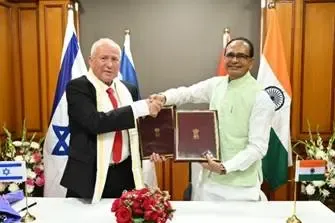
They celebrated the signing of the India-Israel Bilateral Investment Agreement by their Finance Ministers in New Delhi in September 2025, which is expected to boost investor confidence, encourage reciprocal investments, and ensure transparency, predictability, and protection through a well-defined investment treatment framework and an independent dispute resolution mechanism.
Both leaders reaffirmed their commitment to realizing the FTA Agreement between their countries and instructed their negotiating teams to accelerate discussions for an expedited signing.
The two prime ministers welcomed the strategic partnership in the financial-cyber realm, aiming to strengthen the resilience of the financial ecosystem via the exchange of financial-cyber intelligence, collaborative development of methodologies, and conducting multilateral financial-cyber simulations through the Financial Computer Security Incident Response Teams from both nations.
Prime Minister Netanyahu expressed admiration for India’s fintech revolution, particularly the Unified Payments Interface (UPI), which is recognized as a world-class model for affordable, real-time cross-border transactions. They agreed to explore the possibility of linking UPI with Israel’s rapid payment system to enhance interoperability and fortify economic relations.
The leaders noted that enhancing direct air connectivity is a fundamental element crucial for elevating the bilateral relationship. They expressed a desire to improve direct air links between Tel Aviv and major Indian cities, encouraging both Indian and Israeli airlines to initiate direct flights.
They acknowledged the launch of the India–Israel Financial Dialogue to foster closer financial cooperation, encouraging greater Indian involvement in Israel’s infrastructure sector, especially with significant upcoming projects in metro, rail, road, airports, desalination, and wastewater treatment.
The Prime Ministers reviewed the operations of the India-Israel Industrial R&D and Innovation Fund (I4F), collaboratively managed by India’s Department of Science and Technology and the Israel Innovation Authority.
They agreed to further enhance the operational execution of the I4F initiative by increasing outreach to industry and facilitating high-quality joint R&D partnerships to fully unlock the Fund’s potential and expand impactful cooperation between Indian and Israeli enterprises.
Recognizing the success of the India-Israel Joint Research Calls (IIJRC), implemented by the Department of Science and Technology (DST) in India and the Ministry of Innovation, Science and Technology (MOST) of Israel, the Prime Ministers agreed to raise contributions from both sides—from the current USD 1 million to USD 1.5 million each.
The Prime Ministers acknowledged the necessity of establishing institutional support to advance joint innovation projects between both countries.
In this regard, they agreed to explore the creation of Tech Gateway mechanisms to facilitate collaborative R&D initiatives, technology validation processes, pilot projects, and joint development efforts between the innovation ecosystems of India and Israel.
The leaders recognized the strategic significance of Artificial Intelligence as a critical driver of innovation and encouraged deeper collaboration in AI expertise and talent.
They welcomed initiatives aimed at developing enabling frameworks that strengthen connections between AI professionals, research institutions, and innovative enterprises, promoting professional collaboration and participation in leading innovation activities in both nations.
Recognizing the advancements made by both countries in artificial intelligence, they welcomed the signing of the MoU on Cooperation in Artificial Intelligence (AI) and committed to enhancing collaboration in this essential technology for the benefit of their citizens.
The Prime Ministers appreciated the ongoing collaboration between the Israel Space Agency (ISA) and the Indian Space Research Organisation (ISRO).
They emphasized the necessity of fostering greater cooperation between the space industries of both nations, encouraging joint ventures, innovation partnerships, and knowledge sharing to propel progress in the global space sector.
Understanding the vital role of water and agriculture in sustainable development, Prime Minister Modi and Prime Minister Netanyahu affirmed the significance of strengthening their partnership in these areas.
This partnership will concentrate on crucial aspects such as water conservation, wastewater treatment and reuse in agriculture, desalination, reforms in water utilities, and cleaning initiatives for the Ganges and other rivers utilizing advanced water technologies, as noted in the joint statement.
Point of View
The focus on technology and investment signifies a pivotal moment for both nations. This collaboration not only aims to enhance economic ties but also showcases the complementary strengths of each country in driving innovation and progress.
NationPress
3 Oct 2026
Frequently Asked Questions
What is the significance of the India-Israel Bilateral Investment Agreement?
The agreement aims to enhance investor confidence, promote two-way investments, and ensure a transparent framework for investment treatment and dispute resolution.
How are India and Israel collaborating in the field of artificial intelligence?
Both nations have signed an MoU to deepen cooperation in AI, focusing on talent exchange and collaborative projects to drive innovation.
What sectors are being targeted for increased cooperation between India and Israel?
The partnership spans various sectors, including technology, agriculture, water management, and defense.
Why is direct air connectivity important for India-Israel relations?
Enhancing direct air links is crucial for scaling the bilateral relationship and facilitating trade and tourism.
What initiatives are being taken to strengthen the financial relationship?
The launch of the India-Israel Financial Dialogue aims to boost financial cooperation and encourage Indian investment in Israeli infrastructure projects.