How is India Shaping the Quad’s Strategy and Indo-Pacific Stability?

Synopsis
Discover how India's maritime resurgence is becoming a pivotal force in the Quad's strategy and ensuring stability in the Indo-Pacific. As tensions rise, India's role is not only crucial for regional security but also for global maritime order.
Key Takeaways
India’s maritime resurgence is central to the Quad’s strategy.
China’s naval expansion poses challenges to regional stability.
Maritime India Vision 2030 outlines strategic maritime objectives.
India is a net security provider in the Indo-Pacific.
The Quad strengthens operational cohesion among member nations .
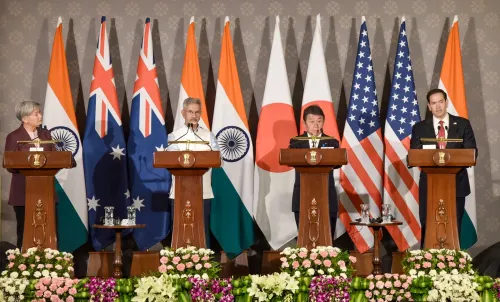
Washington, Nov 4 (NationPress) India's maritime revitalization is central to the Quad’s strategic unity and the enduring stability of the Indo-Pacific, according to a report released on Tuesday.
It further noted that as China amplifies its naval capabilities and assertiveness at sea, the Quad’s effectiveness in maintaining a free, open, and rules-based maritime order is contingent upon India's ability to secure the Indian Ocean, enhance regional maritime infrastructure, and provide collective security benefits.
"The future of the Indo-Pacific depends on navigation freedom, the safety of sea lanes, and robust maritime infrastructure. At this pivotal moment, India's maritime transformation — as exemplified by the Maritime India Vision 2030 and its subsequent extension to 2047 — is not just a domestic policy measure. It signifies a strategic shift that positions India as a crucial cornerstone of the Quadrilateral Security Dialogue (Quad) and a significant counterbalance in the shifting geopolitical landscape of the Indo-Pacific," the report from India Narrative elaborated.
"With almost 95 percent of India's trade by volume relying on maritime routes, the nation's economic stability is inherently connected to the safety and efficiency of its ports and shipping lanes. However, India's maritime aspirations go beyond mere commercial interests. They stem from a vision of regional leadership, collective security, and a rules-based maritime order—principles that resonate perfectly with the Quad's strategic aims and the wider Indo-Pacific framework," it continued.
The report indicates that by adopting a balanced yet assertive approach through initiatives like Security and Growth for All in the Region (SAGAR) and the Indo-Pacific Oceans Initiative, India has positioned itself as a net security provider, thereby strengthening the Quad’s collective regional initiatives.
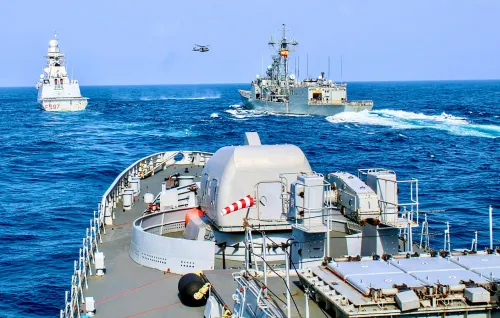
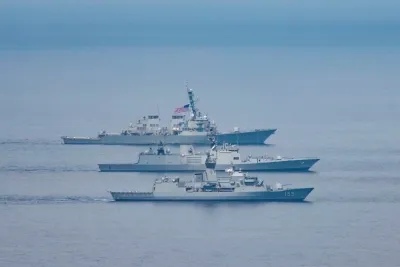
The inaugural Quad at Sea Ship Observer Mission, launched in June 2025, united Indian Coast Guard personnel with their counterparts from Japan, the United States, and Australia, showcasing operational alignment. Such cross-embarkation programs, it stated, enhanced joint preparedness, domain awareness, and interoperability—essential competencies for combating illegal maritime activities, including fishing violations, piracy, and territorial encroachments.
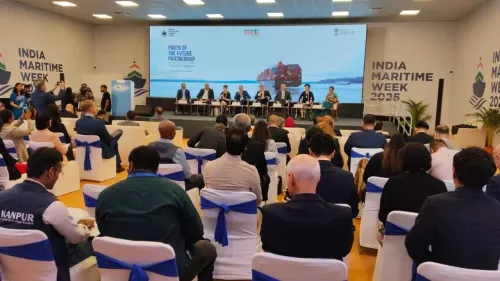
The report highlighted that India's maritime future is intricately linked to the Quad and the Indo-Pacific, as Prime Minister Narendra Modi articulated during the recent India Maritime Week 2025.
"India's extensive coastline, strategic positioning, and ambitious vision for Blue Economy development establish it as a prime investment hub and a maritime leader. The critical question is not if India will influence the Indo-Pacific maritime order, but how swiftly and effectively it can utilize its strategic assets to anchor a free, open, and prosperous region. The tides of change are already in motion—India must navigate them with foresight, strategy, and resolve," the report concluded.
Point of View
It is imperative to recognize India's significant role in the Quad and the Indo-Pacific. The nation's strategic maritime initiatives not only enhance regional security but also reinforce its position as a global leader in maintaining a rules-based order. The evolving dynamics require India to navigate carefully, balancing its interests with global expectations.
NationPress
7 Oct 2026
Frequently Asked Questions
What is the significance of India's maritime initiatives?
India's maritime initiatives enhance regional security and ensure the stability of trade routes, critical for both national and global economies.
How does the Quad influence Indo-Pacific stability?
The Quad enhances collaborative efforts among member countries, promoting a free, open, and rules-based maritime order in the Indo-Pacific.
What does the Maritime India Vision 2030 entail?
The Maritime India Vision 2030 outlines India's strategic objectives for maritime development, focusing on enhancing maritime infrastructure and security.
Why is collective security important in the Indo-Pacific?
Collective security fosters cooperation among nations, enabling them to address common threats and ensure stability in the region.
What role does India play in countering maritime threats?
India acts as a net security provider, enhancing regional safety through initiatives like SAGAR and collaborative maritime missions.