India, ASEAN adopt AI disaster management pact at 23rd Summit in Manila

Synopsis
At the 23rd ASEAN-India Summit in Manila, India and ASEAN did something rare in multilateral diplomacy — they put AI governance into a disaster management treaty. The joint statement, backed by all ASEAN leaders and PM Modi, commits both sides to ethical AI for early warnings and risk assessment, with a five-year action plan and institutional accountability built in.
Key Takeaways
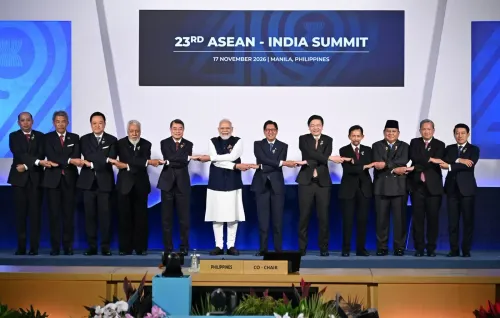
India and ASEAN adopted a Joint Statement on Disaster Preparedness and Management at the 23rd ASEAN-India Summit in Manila on 17 November 2026 .
The statement commits both sides to the ethical use of AI, machine learning, and big data analytics for disaster risk assessment, early warning, and response coordination.
Joint training programmes will involve India's National Institute of Disaster Management (NIDM) and the AHA Centre .
Implementation is tasked to the ASEAN Committee on Disaster Management (ACDM) under the ASEAN-India Plan of Action (2026–2030) .
PM Modi called for India and ASEAN to co-create technologies rather than remain consumers, linking ASEAN Community Vision 2045 with VIKSIT BHARAT 2047 .
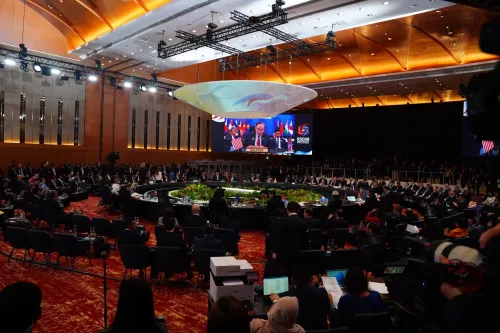
India and the Association of Southeast Asian Nations (ASEAN) on Tuesday, 17 November 2026, formally committed to the responsible and ethical use of Artificial Intelligence (AI) in disaster management, covering risk assessment, early warning systems, and response coordination. The commitment was enshrined in a Joint Statement on Disaster Preparedness and Management adopted at the 23rd ASEAN-India Summit in Manila, Philippines.
What the Joint Statement Commits To
The statement calls on both sides to 'promote the safe, responsible and ethical application of artificial intelligence, machine learning and big data analytics for disaster risk assessment, early warning and response coordination, in accordance with national laws and regulations.' It also encourages cooperation between research institutions of ASEAN Member States and India on disaster-resilient technologies and infrastructure standards.
Under the agreement, the two sides will conduct joint training programmes for disaster management officials, drawing on relevant ASEAN and AHA Centre capacity-building initiatives, as well as India's National Institute of Disaster Management (NIDM) and other relevant Indian agencies. Scholarships and technical exchanges for disaster management professionals across ASEAN and India are also envisaged.
Implementation Roadmap
The statement tasked the ASEAN Committee on Disaster Management (ACDM) and its Indian counterparts to identify concrete activities aligned with the ASEAN-India Plan of Action (2026–2030), with progress to be reported through existing institutional mechanisms. This anchors the AI and disaster management commitments within a broader five-year strategic framework rather than leaving them as aspirational declarations.
Modi's Address: Indo-Pacific, Technology Co-creation
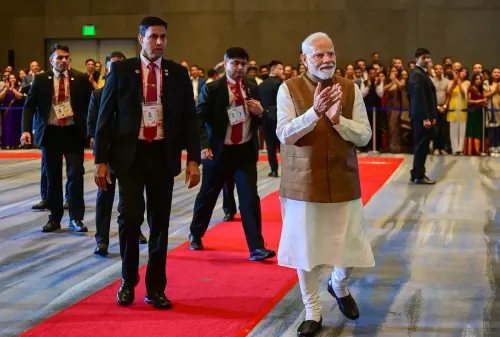
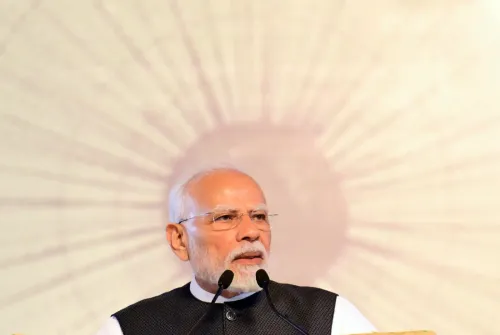
Earlier in the day, Prime Minister Narendra Modi addressed the summit, underlining the significance of the India-ASEAN Comprehensive Strategic Partnership and calling for peace, stability, and predictability across the Indo-Pacific region. He reiterated India's commitment to a 'free, open, inclusive and rules-based Indo-Pacific,' adding that the region's future depends on 'cooperation and not competition.'
Modi noted that India's ACT EAST policy had imparted new momentum to the partnership, and drew a parallel between ASEAN Community Vision 2045 and VIKSIT BHARAT 2047 as complementary long-term blueprints for shared prosperity. He also made a pointed argument on technology: India and ASEAN, he said, should not merely be consumers of emerging technologies but should co-create them and jointly skill their populations.
Broader Context and Significance
The Manila summit comes at a moment of heightened global uncertainty, with climate-linked disasters intensifying across South and Southeast Asia. The joint AI commitment is notable because it moves beyond traditional bilateral disaster-relief cooperation — which has historically focused on humanitarian aid and logistics — toward technology-first frameworks. ASEAN Secretary-General Kao Kim Hourn participated alongside leaders of all ASEAN member states, signalling broad multilateral buy-in rather than a bilateral India-only arrangement.
Notably, the emphasis on 'national laws and regulations' as a guardrail for AI deployment reflects a cautious approach consistent with ongoing global debates on AI governance — suggesting the two sides are aware of the sovereignty sensitivities that attend cross-border data sharing in disaster scenarios.
With implementation guidelines now delegated to the ACDM and Indian counterparts, the practical shape of these commitments will come into sharper focus over the coming months.
Point of View
The two sides have created a monitoring mechanism that most multilateral AI declarations conspicuously lack. The 'national laws and regulations' carve-out, however, could become an escape hatch — particularly on cross-border data sharing, which is essential for regional early-warning systems but politically sensitive. Modi's co-creation framing is the right instinct, but India's track record of translating multilateral tech commitments into actual joint R&D is uneven. Whether Manila 2026 becomes a template or a talking point will depend on what the ACDM tables in its first progress report.
NationPress
17 Nov 2026
Frequently Asked Questions
What did India and ASEAN agree on AI at the 2026 summit?
India and ASEAN adopted a Joint Statement on Disaster Preparedness and Management at the 23rd ASEAN-India Summit in Manila on 17 November 2026, committing to the ethical use of AI, machine learning, and big data analytics for disaster risk assessment, early warning, and response coordination. The agreement also covers joint training, scholarships, and technical exchanges for disaster management professionals.
Where was the 23rd ASEAN-India Summit held?
The 23rd ASEAN-India Summit was held in Manila, Philippines, on 17 November 2026. It was attended by leaders of ASEAN member states, Prime Minister Narendra Modi, and ASEAN Secretary-General Kao Kim Hourn.
How will the India-ASEAN disaster management joint statement be implemented?
Implementation has been tasked to the ASEAN Committee on Disaster Management (ACDM) and its Indian counterparts, who are to identify concrete activities under the ASEAN-India Plan of Action (2026–2030) and report progress through existing mechanisms. India's National Institute of Disaster Management (NIDM) will play a key role in joint training programmes.
What did PM Modi say at the ASEAN Summit in Manila?
PM Modi reaffirmed India's commitment to a free, open, inclusive, and rules-based Indo-Pacific, saying the region's future depends on 'cooperation and not competition.' He linked ASEAN Community Vision 2045 with VIKSIT BHARAT 2047 and argued that India and ASEAN should co-create technologies rather than be mere consumers.
Why is the AI commitment in disaster management significant?
It moves India-ASEAN cooperation beyond traditional humanitarian aid toward technology-driven disaster response frameworks, with built-in institutional accountability through the ACDM and a five-year action plan. The focus on AI governance — including adherence to national laws — also reflects awareness of the sovereignty and data-sharing sensitivities involved in cross-border disaster management.