TKDL access pact: India, Australia seal traditional knowledge IP deal at 3rd Annual Summit
Synopsis
India has brought Australia's patent office into its Traditional Knowledge Digital Library network — a database of over 5.2 lakh Ayurveda, Unani, Siddha, Sowa Rigpa, and Yoga formulations — making IP Australia the 18th global patent office with access. The deal, signed at the India–Australia Annual Summit in Melbourne, extends a shield that has previously helped India defeat wrongful patents on turmeric and neem.
Key Takeaways
CSIR granted IP Australia access to the Traditional Knowledge Digital Library (TKDL) at the 3rd India–Australia Annual Summit in Melbourne on 10 July 2025 .
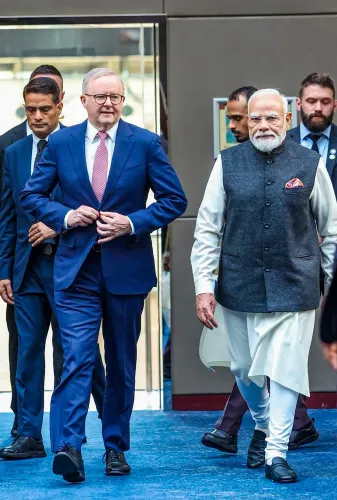
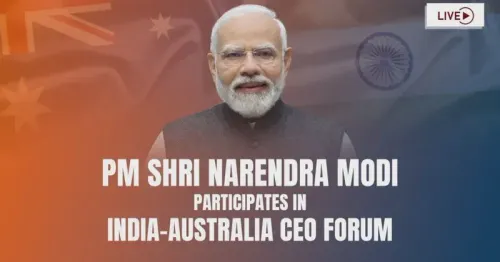
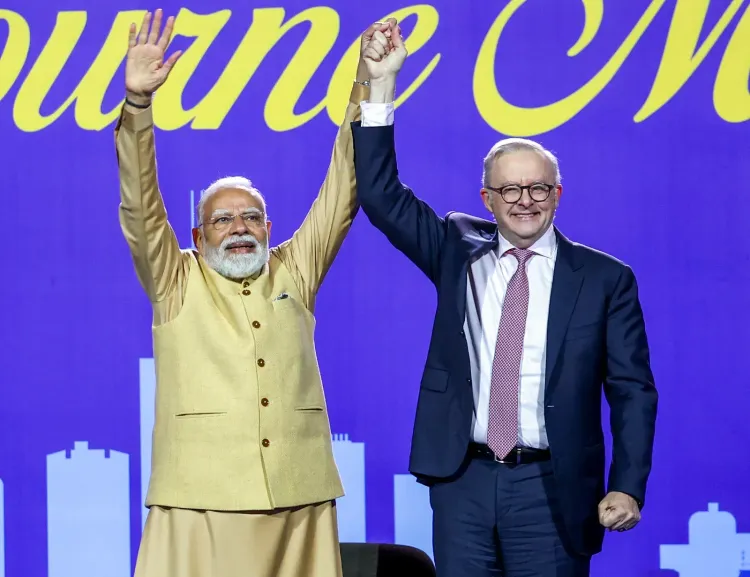
The TKDL Access Agreement is one of eighteen key outcomes of the summit, signed in the presence of PM Narendra Modi and PM Anthony Albanese .
The CSIR-TKDL contains over 5.2 lakh formulations and practices from Ayurveda, Unani, Siddha, Sowa Rigpa, and Yoga, in five international languages .
IP Australia becomes the 18th patent office globally to access the database under a Non-Disclosure Agreement (NDA) .
The pact aims to prevent erroneous patent grants on knowledge already part of India's documented traditional heritage.
India's Council of Scientific and Industrial Research (CSIR) formally extended access to the Traditional Knowledge Digital Library (TKDL) to IP Australia under an agreement concluded during the 3rd India–Australia Annual Summit in Melbourne on 10 July 2025, according to an official statement from the Ministry of Science & Technology. The pact enables Australian patent examiners to consult the TKDL database when evaluating patent applications, helping prevent erroneous grants based on knowledge already embedded in India's documented heritage.
What the Agreement Covers
The TKDL Access Agreement is one of eighteen key outcomes of the summit. It permits IP Australia to reference the database to identify relevant prior art during patent examination, in line with Australia's patent laws and examination procedures. The agreement was signed in the presence of Prime Minister Narendra Modi and Australian Prime Minister Anthony Albanese.
About the Traditional Knowledge Digital Library
The CSIR-TKDL is a first-of-its-kind prior art database developed by India specifically to counter the misappropriation of its traditional knowledge through wrongful patent grants. It currently documents over 5.2 lakh formulations and practices drawn from Ayurveda, Unani, Siddha, Sowa Rigpa, and Yoga. The database has been translated into five international languages — English, German, French, Japanese, and Spanish — to ensure usability by patent examiners across jurisdictions worldwide.
Growing Global Reach
With IP Australia now on board, eighteen patent offices globally have access to the TKDL under Non-Disclosure Agreements (NDAs). This marks a steady expansion of the database's international footprint, reinforcing India's position as a proactive defender of indigenous intellectual heritage. Notably, both India and Australia are home to rich indigenous knowledge systems that have evolved over centuries and remain vulnerable to commercial misappropriation.
Why This Matters
The agreement reflects a shared commitment between the two nations to strengthen intellectual property systems through documented prior art. For India, the TKDL has historically served as a critical shield — most notably in successfully challenging patents on turmeric and neem in international forums. Bringing Australia's patent office into the TKDL network extends that protective reach to one of the Asia-Pacific's most active IP jurisdictions. The pact also signals a broader alignment between New Delhi and Canberra on knowledge sovereignty as both countries deepen bilateral ties under the Comprehensive Strategic Partnership framework.
Point of View
And Australia, with an active pharmaceutical and agri-biotech patent pipeline, is a meaningful addition. What the agreement does not resolve is the gap in coverage: dozens of patent offices worldwide still operate without TKDL access, meaning traditional knowledge remains exposed in large swathes of the global IP system. India's challenge is to move from bilateral NDAs to a multilateral prior-art framework — a push that has stalled at WIPO for years. This summit outcome is progress, but the architecture of protection remains incomplete.
NationPress
8 Oct 2026
Frequently Asked Questions
What is the Traditional Knowledge Digital Library (TKDL)?
The TKDL is a first-of-its-kind prior art database developed by India's CSIR to prevent the wrongful grant of patents based on Indian traditional knowledge. It documents over 5.2 lakh formulations and practices from Ayurveda, Unani, Siddha, Sowa Rigpa, and Yoga, translated into five international languages for use by patent examiners worldwide.
What does the India–Australia TKDL access agreement do?
The agreement allows IP Australia to consult the TKDL database when examining patent applications, helping identify prior art rooted in India's traditional knowledge. This prevents patents from being granted on knowledge that already exists in India's documented heritage.
How many patent offices now have access to the TKDL?
With IP Australia's inclusion, eighteen patent offices globally now have access to the TKDL under Non-Disclosure Agreements. The network has grown steadily since the database was first made available to international IP offices.
Where and when was the agreement signed?
The TKDL Access Agreement was signed on 10 July 2025 in Melbourne during the 3rd India–Australia Annual Summit, in the presence of Prime Minister Narendra Modi and Australian Prime Minister Anthony Albanese.
Why is protecting traditional knowledge through patent databases important?
Both India and Australia are home to indigenous knowledge systems that have evolved over centuries and are vulnerable to commercial misappropriation. Access to a documented prior art database like the TKDL ensures patent examiners can identify and reject applications that attempt to patent knowledge already in the public domain of traditional communities.