CM Yogi: Ayodhya Now Established as Solar City

Synopsis
Chief Minister Yogi Adityanath has declared Ayodhya established as a Solar City, fulfilling a vision stated by PM Modi that the ancient Suryavansh capital should be illuminated by solar energy. The announcement marks a convergence of heritage redevelopment and renewable-energy policy in one of India's most significant pilgrimage cities.
Key Takeaways
The Chief Minister's Office of Uttar Pradesh announced on 10 July 2026 that Ayodhya has been established as a Solar City.
CM Yogi Adityanath attributed the initiative to a vision expressed by PM Narendra Modi that the capital of the Suryavansh dynasty should glow with solar light at night.
The Solar City push is part of a broader post- 2019 redevelopment of Ayodhya that has included a new airport, railway station, and road upgrades.
India's National Solar Mission (launched 2010 ) provides the policy framework under which cities can earn Solar City designation by meeting energy demand through solar installations.
Residents, pilgrims, and businesses in Ayodhya are the primary beneficiaries, with potential gains in reliable power supply and lower electricity costs.
The model may be extended to other heritage towns across Uttar Pradesh , creating a network of solar-powered pilgrim cities.
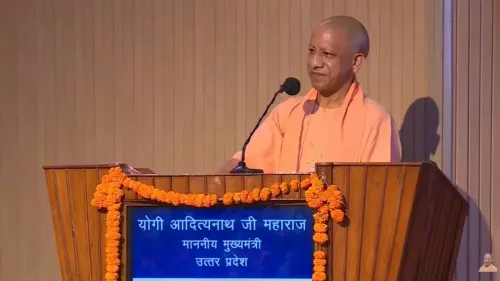
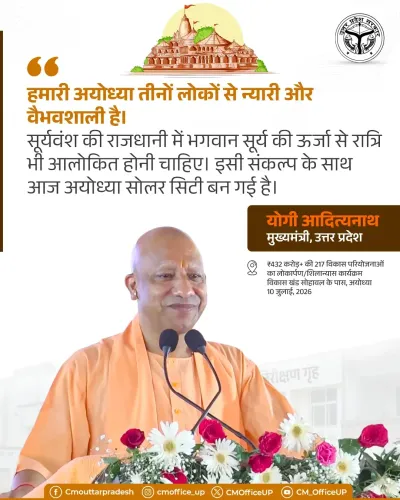
The Chief Minister's Office of Uttar Pradesh on Friday, 10 July 2026 shared a statement from Chief Minister Yogi Adityanath declaring that Ayodhya has been established as a Solar City, citing a vision articulated by Prime Minister Narendra Modi that the capital of the Suryavansh dynasty should glow with the light of Lord Surya even at night.
Context
The post quotes CM Yogi Adityanath invoking a directive from PM Modi: 'Suryavansh ki rajdhani ratri mein Bhagwan Surya ki roshni se jagmagani chahiye' — 'The capital of the Suryavansh should be illuminated by the light of Lord Surya even at night.' The statement declares that this vision has now been realised, with Ayodhya formally taking shape as a Solar City. The post was accompanied by a video, which the Chief Minister's Office released alongside the announcement.
Ayodhya, the ancient city in Uttar Pradesh revered as the birthplace of Lord Ram and the seat of the Suryavansh (Solar dynasty) of Hindu tradition, has been at the centre of large-scale infrastructure redevelopment since 2019. Upgrades have spanned a new international airport, a redeveloped railway station, widened roads, and now a renewable-energy push that culminates in this Solar City designation.
Policy Backdrop
India's National Solar Mission, launched in 2010, introduced the concept of Solar Cities — urban centres that meet a significant share of their energy demand through solar installations. The programme encourages municipalities to commission rooftop and ground-mounted solar plants, reduce dependence on conventional grid power, and lower long-term electricity costs for residents and institutions.
Ayodhya's designation follows a broader pattern in which the central and state governments have paired heritage redevelopment with renewable-energy mandates in major religious centres. Similar initiatives have been pursued in Varanasi and other pilgrim cities, projecting a dual image of cultural revival and modern sustainability. The Uttar Pradesh government has positioned this convergence — ancient Suryavansh heritage meeting solar technology — as a symbolic as well as practical achievement.
Stakeholders and Impact
The most direct beneficiaries are Ayodhya's residents, who stand to gain from more reliable and potentially lower-cost electricity as solar capacity expands. The city receives millions of pilgrims and tourists annually, and well-lit, sustainably powered public spaces are expected to improve the visitor experience, particularly after dark.
Local businesses, temple trusts, and hospitality establishments along the pilgrimage circuit are also stakeholders, as reduced power outages and lower tariffs could ease operating costs. For the Uttar Pradesh government, the Solar City label reinforces its pitch to investors and development agencies that the state can deliver modern infrastructure in heritage contexts.
What's Next
Attention will now turn to the phased commissioning of rooftop and ground-mounted solar installations across Ayodhya, including on temples, public buildings, and new infrastructure completed under the city's redevelopment plan. The state government is expected to publish capacity and coverage figures as individual projects come online.
Policymakers and urban planners will also watch whether the Ayodhya model is extended to additional towns in Uttar Pradesh that hold religious or cultural significance, potentially creating a network of solar-powered heritage cities across the state.
Point of View
Creating a story that resonates with both devotees and development-minded audiences. For CM Yogi Adityanath, it provides a tangible deliverable to pair with the Ram temple consecration, demonstrating that Ayodhya's transformation extends beyond religious restoration into liveable, sustainable infrastructure. The invocation of PM Modi's original directive also reinforces a chain-of-command narrative: the Centre sets the vision, the state executes it — a framing that benefits both leaders ahead of any future electoral cycle. Analysts will watch whether actual installed capacity and coverage data are released promptly, since the gap between designation and verifiable on-ground deployment has been a recurring critique of Solar City programmes across India.
NationPress
9 Oct 2026
Frequently Asked Questions
Has Ayodhya been declared a Solar City?
Yes. The Chief Minister's Office of Uttar Pradesh announced on 10 July 2026 that Ayodhya has been established as a Solar City, with CM Yogi Adityanath citing a vision expressed by PM Modi for the city to be powered by solar energy.
What is the significance of calling Ayodhya the capital of Suryavansh?
Ayodhya is revered in Hindu tradition as the birthplace of Lord Ram and the seat of the Suryavansh, or Solar dynasty. The government has used this heritage connection symbolically to align solar energy development with the city's ancient identity.
What is India's Solar City programme?
India's National Solar Mission, launched in 2010, introduced the Solar Cities concept to encourage urban centres to meet a significant share of their energy needs through rooftop and ground-mounted solar installations, reducing dependence on conventional grid power.
Who is responsible for Ayodhya's infrastructure redevelopment?
Chief Minister Yogi Adityanath's government in Uttar Pradesh has overseen large-scale redevelopment of Ayodhya since 2019, encompassing a new international airport, a redeveloped railway station, road upgrades, and now the Solar City initiative.
How will Ayodhya's Solar City status benefit residents and pilgrims?
Residents stand to gain from more reliable electricity and potentially lower tariffs as solar capacity grows. Pilgrims and tourists are expected to benefit from better-lit public spaces and a more modern visitor experience, particularly at night.