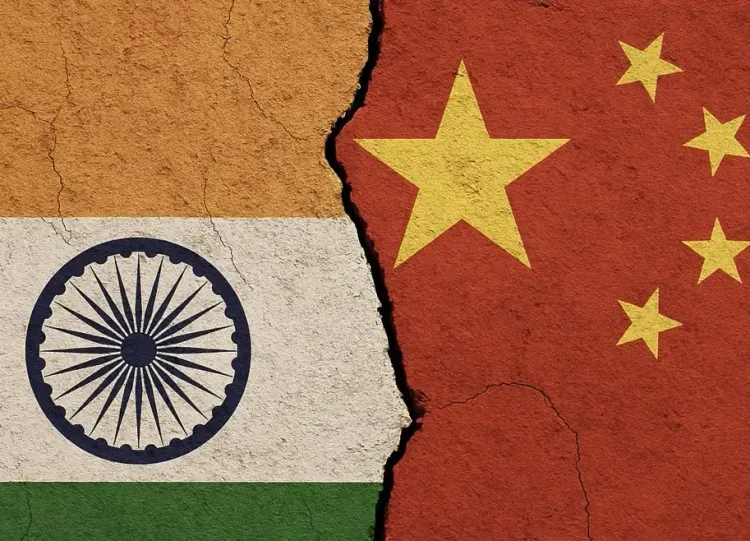
Is the India-China Rivalry Deepening Amid Diplomatic Thaw?
Synopsis
The India-China rivalry is intensifying as experts highlight strategic concerns over China's military presence and economic leverage. Despite recent diplomatic efforts, the underlying tensions remain. This article delves into the complexities of this geopolitical relationship, emphasizing the critical role of the United States in balancing power in the region.
Key Takeaways
China ’s military and economic expansions are heightening India ’s strategic anxieties.
Despite disengagement efforts, tensions along the Line of Actual Control remain high.
India continues to view China as an adversary due to various underlying issues.
The US is pivotal in helping India balance China ’s influence.
Economic interdependence with China is approached cautiously by India .
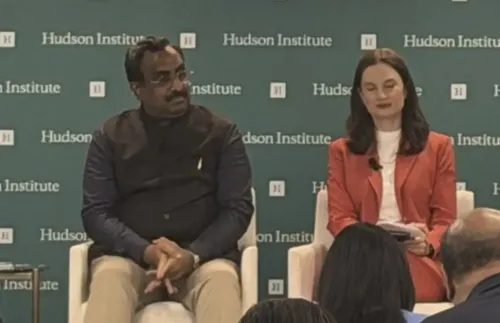
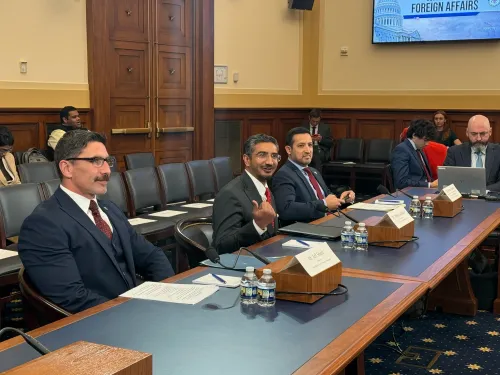
Washington, Feb 18 (NationPress) The growing military presence, economic influence, and technological supremacy of China are intensifying India’s strategic concerns, as highlighted by leading experts from the United States and India during a session at a U.S. congressional commission on Tuesday. They cautioned that New Delhi’s rivalry with Beijing remains fundamentally rooted, despite a recent diplomatic thaw.
During their testimony before the US-China Economic and Security Review Commission, scholars, think tank representatives, and former officials pointed out that the disengagement in October 2024 along the Line of Actual Control may have eased immediate tensions but has not changed the overall power dynamics.
“Regardless of attempts to lower tensions amid uncertainty, India will continue to view China as a competitor and maintain its stance of rivalry due to various factors including territorial, political, economic, and technological issues,” stated Sameer Lalwani before the commission.
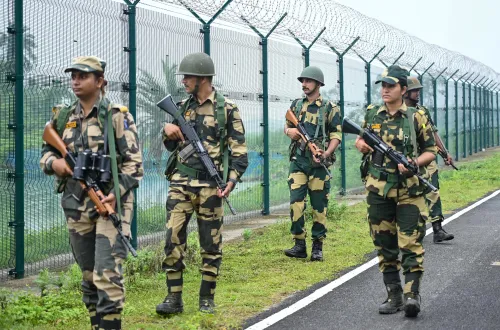
The border situation remains “highly militarized, with the military balance tipping in favor of China,” he added.
The construction of Chinese infrastructure in Tibet and along disputed areas has persisted even after the disengagement. Lalwani cautioned that a political crisis—such as a succession crisis involving the Dalai Lama—could potentially escalate into a significant conventional conflict.
Tanvi Madan from the Brookings Institution characterized the current phase in Sino-Indian relations as a “tactical thaw rather than a strategic reset.” She emphasized that “India’s enduring rivalry with its largest neighbor continues,” citing a lack of trust in Beijing following the border crisis of 2020.
India’s perception of threats has broadened beyond its borders. Beijing’s increasing presence in South Asia and the Indian Ocean has amplified Indian unease. Soumya Bhowick from the Observer Research Foundation noted that China’s naval operations and economic outreach in adjacent countries have resulted in “unprecedented Chinese strategic leverage in India’s immediate vicinity.”
On the economic side, the testimony revealed India’s susceptibility to Chinese supply chains. Chandresh Harjivan informed lawmakers that “China is the primary supplier of bulk pharmaceuticals and chemical precursors, while India transforms these inputs into finished medicines that cater to a significant portion of global needs.”
He cautioned that U.S. health security is contingent upon this interdependence.
According to Soumya Bhowmick, India’s economic relationship with China is characterized as “managed interdependence within the context of strategic competition.” New Delhi aims to maintain commercial ties while establishing “guardrails around critical sectors.”
Experts also indicated that India considers the United States essential for counterbalancing China. Lindsey Ford from the Centre for a New American Security remarked, “Neither India nor the United States can balance China independently.” She urged Congress to expedite defense and technology cooperation to strengthen deterrence.
Tarun Chhabra, a former U.S. official, described India as “the most crucial swing state in the global technology contest against the Chinese Communist Party.” He argued that India’s decisions regarding supply chains, standards, and digital infrastructure “will significantly determine whether the broader Indo-Pacific functions within a democratic technology framework or one led by China.”
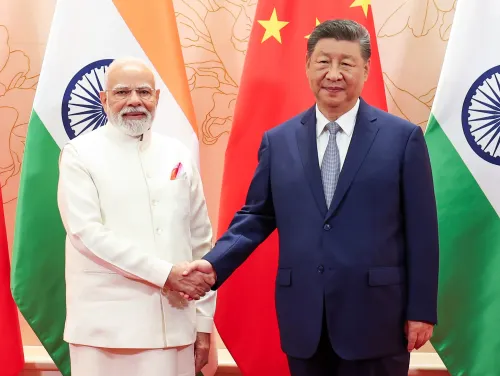
Despite renewed discussions between PM Modi and Xi, the hearing emphasized that competition rather than rapprochement shapes future relations.
Since the deadly confrontations in Galwan in 2020, India has bolstered military deployments along the border and strengthened security collaborations with the U.S., Japan, and Australia through the Quad. In contrast, China has accelerated its infrastructure and missile deployments in the Western Theatre Command.
Point of View
I believe that the ongoing tensions between India and China highlight the complexities of geopolitical relationships in today’s world. While diplomatic efforts are essential, the reality remains that strategic competition shapes future interactions. We must navigate these waters carefully, fostering dialogue while recognizing the underlying challenges.
NationPress
1 Oct 2026
Frequently Asked Questions
What recent developments have escalated the India-China rivalry?
Recent military build-ups, economic influences, and technological competition have intensified the rivalry, despite attempts at diplomatic engagement.
How does the US play a role in the India-China dynamics?
The United States is seen as crucial for India in balancing China's growing influence, emphasizing defense and technology cooperation.
What are the implications of the China-India border situation?
The highly militarized border and ongoing infrastructure developments by China contribute to a precarious balance of power in the region.
Why is India cautious about its economic ties with China?
India views its economic relationship with China as a managed interdependence, balancing commercial interests with strategic security concerns.
What potential crises could escalate the situation further?
Political crises, such as a succession crisis involving the Dalai Lama, could inadvertently trigger larger conflicts.