India-Russia Ukraine talks: Ambassador Vinay Kumar meets Deputy FM Galuzin in Moscow
Synopsis
India and Russia are deepening diplomatic contact even as the Ukraine war drags on. Ambassador Vinay Kumar's meeting with Deputy FM Galuzin in Moscow — following Jaishankar-Lavrov talks at UNGA and the Putin-Modi BRICS summit — reveals New Delhi's deliberate strategy of keeping every channel to Moscow active, regardless of Western pressure.
Key Takeaways
Indian Ambassador Vinay Kumar met Russian Deputy FM Mikhail Galuzin in Moscow on 29 September 2026 for talks on Ukraine and bilateral issues.
The Russian Foreign Ministry stated that Moscow's position on a 'fair and sustainable' Ukraine resolution — attributed to Western intent to inflict a 'strategic defeat' on Russia — was conveyed to the Indian diplomat.
The meeting follows EAM Jaishankar and FM Lavrov reaffirming India-Russia strategic partnership at the 81st UNGA in New York .
President Putin visited New Delhi for the 18th BRICS Summit on 12-13 September 2026 , holding talks with PM Modi described as 'substantive, frank, and productive.' India has consistently called for dialogue and diplomacy on Ukraine while maintaining ties with both Russia and Western partners.
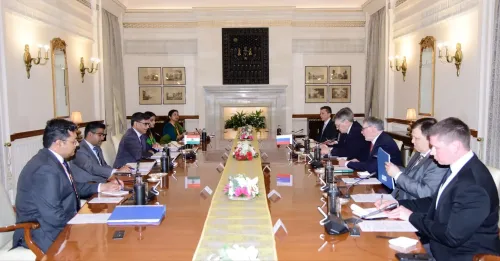
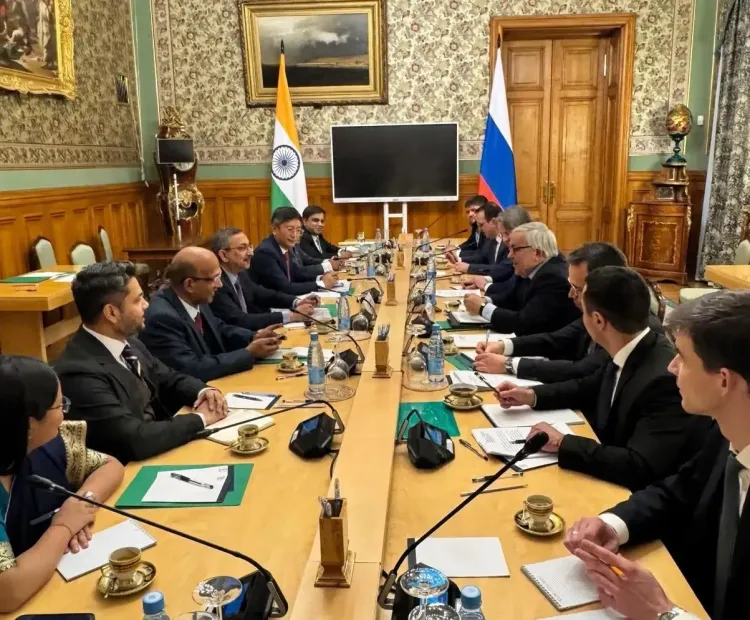
Indian Ambassador to Russia Vinay Kumar on Tuesday, 29 September 2026, called on Russian Deputy Minister of Foreign Affairs Mikhail Galuzin in Moscow, holding an in-depth discussion on the situation surrounding Ukraine alongside broader bilateral and international agenda items. The meeting, confirmed by a statement from the Russian Foreign Ministry, signals continued high-level diplomatic engagement between New Delhi and Moscow even as the Ukraine conflict remains unresolved.
What Moscow Communicated
According to the Russian Foreign Ministry statement, Ambassador Kumar was briefed on Moscow's assessment of the current situation in Ukraine. The Russian side emphasised what it described as the 'unacceptability' of the Kyiv regime and its European sponsors allegedly obstructing a political and diplomatic settlement, while reportedly promoting military escalation, including in the Azov-Black Sea region.
The statement further outlined Moscow's stated position: that a 'fair and sustainable resolution' of the crisis must address what Russia characterises as its root causes — primarily, what it calls the West's intention to inflict a 'strategic defeat' on Russia by using Ukraine as a tool. These are Moscow's assertions and do not represent an independent assessment.
Tone and Diplomatic Context
The Russian Foreign Ministry described the exchange as a 'lively exchange of views' conducted in a friendly atmosphere, characteristic of the two nations' 'specially privileged strategic partnership.' The language mirrors the framing used consistently by both sides to underscore the resilience of India-Russia ties despite pressure from Western partners.
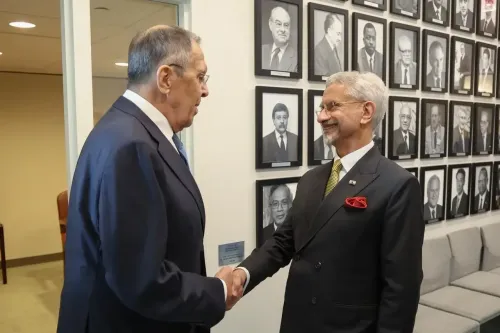
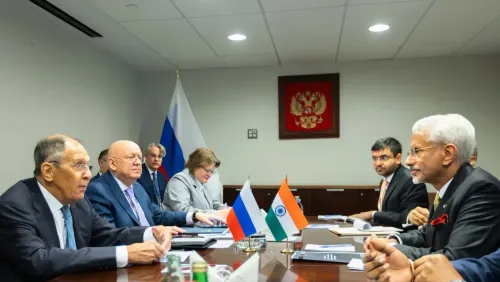
This meeting comes just days after External Affairs Minister (EAM) S. Jaishankar and Russian Foreign Minister Sergei Lavrov met on the sidelines of the 81st session of the United Nations General Assembly (UNGA) in New York, where the two reaffirmed commitment to their 'special and privileged' strategic partnership and reviewed bilateral relations and cooperation within the BRICS grouping. EAM Jaishankar noted the meeting in a post on X, saying the two exchanged views on 'several ongoing issues.'
BRICS Summit Backdrop
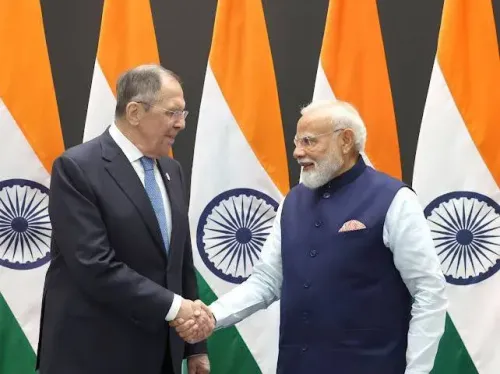
The diplomatic tempo between India and Russia has been notably elevated in recent weeks. Russian President Vladimir Putin visited New Delhi for the 18th BRICS Summit held on 12-13 September 2026. On the summit's sidelines, on 11 September, Prime Minister Narendra Modi reiterated that dialogue and diplomacy remain the way forward for resolving ongoing conflicts — a consistent Indian position on Ukraine.
Following the summit, President Putin sent a message to PM Modi on his 76th birthday on 17 September 2026, describing their talks as 'substantive, frank, and productive' and lauding Modi's 'extraordinary political wisdom and foresight,' according to a post by the Russian Embassy in India on Instagram.
India's Balancing Act
India has consistently advocated for dialogue and diplomacy in resolving the Ukraine conflict, while simultaneously maintaining robust ties with both Russia and its Western partners — a position that has drawn scrutiny from capitals in Europe and Washington, but one that New Delhi has defended as an expression of its strategic autonomy. Diplomatic observers note that the frequency of India-Russia ministerial and diplomatic contacts — across BRICS, the Shanghai Cooperation Organisation (SCO), UNGA, and now bilateral channels — underlines New Delhi's intent to keep the line to Moscow open regardless of shifting global alignments.
EAM Jaishankar and Lavrov have met regularly at international forums, with discussions typically spanning regional security, energy, trade, and multilateral cooperation. The latest round of engagements suggests the bilateral relationship remains insulated from the broader geopolitical friction generated by the war in Ukraine.
What to Watch
With the Ukraine conflict showing no signs of an imminent resolution and global alignments continuing to shift, India's diplomatic posture will remain under scrutiny. Any further high-level contact — whether at the UN, G20, or in bilateral channels — will be closely parsed for signals of where New Delhi is prepared to apply its diplomatic weight on the path to a settlement.
Point of View
Jaishankar-Lavrov at UNGA, and now an ambassador-level briefing in Moscow — paint a picture of India systematically institutionalising its Russia engagement even as other democracies distance themselves from Moscow. New Delhi is receiving Moscow's framing of the Ukraine conflict directly and at multiple levels; the question mainstream coverage rarely asks is what, if anything, India feeds back into those conversations. India's 'strategic autonomy' posture is coherent as a diplomatic brand, but it carries a cost in credibility with partners who are bearing the material burden of the conflict. The real test of India's diplomatic weight will come when it is asked to move from a posture of listening to one of actively brokering.
NationPress
29 Sept 2026
Frequently Asked Questions
What did Indian Ambassador Vinay Kumar discuss with Russia's Deputy FM Galuzin?
Ambassador Vinay Kumar held an in-depth discussion on the Ukraine situation and bilateral agenda items with Russian Deputy Foreign Minister Mikhail Galuzin in Moscow on 29 September 2026. According to the Russian Foreign Ministry, Kumar was briefed on Moscow's assessment of the conflict, including Russia's stated position on the need for a 'fair and sustainable' resolution.
What is Russia's stated position on the Ukraine conflict as conveyed to India?
Russia communicated that it views the Kyiv regime and its European sponsors as obstructing a diplomatic settlement and promoting military escalation, including in the Azov-Black Sea region. Moscow also reiterated its position that the crisis must be resolved by addressing what it calls 'root causes,' primarily the West's alleged intention to inflict a strategic defeat on Russia using Ukraine — a framing India has neither endorsed nor publicly rejected.
When did Jaishankar and Lavrov last meet, and what did they discuss?
EAM S. Jaishankar and Russian Foreign Minister Sergei Lavrov met on the sidelines of the 81st session of the United Nations General Assembly in New York, the week before the Moscow ambassador meeting. They reaffirmed the 'special and privileged' strategic partnership, reviewed bilateral relations, and exchanged views on several ongoing issues including BRICS cooperation.
What was the outcome of the India-Russia BRICS Summit in September 2026?
The 18th BRICS Summit was held in New Delhi on 12-13 September 2026, with Russian President Vladimir Putin attending. PM Modi and Putin met on 11 September and held talks described by Putin as 'substantive, frank, and productive.' Modi reiterated India's consistent call for dialogue and diplomacy in resolving the Ukraine conflict.
What is India's official position on the Ukraine war?
India has consistently called for dialogue and diplomacy as the path to resolving the Ukraine conflict, while refraining from directly condemning Russia. New Delhi maintains active engagement with both Moscow and Western partners, positioning itself as a proponent of a negotiated settlement — a stance critics argue avoids taking a firm stand, but which India defends as an expression of strategic autonomy.