India, Japan anchor Indo-Pacific security as US priorities shift: Report
Synopsis
As Washington sends mixed signals — engaging China diplomatically while toughening its stance on allies — India and Japan are quietly anchoring Indo-Pacific security. A Taipei Times report warns this may not be enough: without clear US resolve, Beijing could read the ambiguity as an invitation to test Taiwan, reshape the status quo, and redraw the region's security map.
Key Takeaways
A Taipei Times report says India and Japan are sustaining Indo-Pacific security cooperation amid uncertainty over US strategic priorities.
India 's role is highlighted as uniquely significant — it contributes major-power weight without fully aligning with Washington .
Chinese President Xi Jinping 's September meeting with US President Donald Trump in Washington has sharpened regional concerns about US-China engagement.
The report warns that a more conciliatory US posture toward Beijing could encourage China to intensify pressure on Taiwan or alter the status quo.
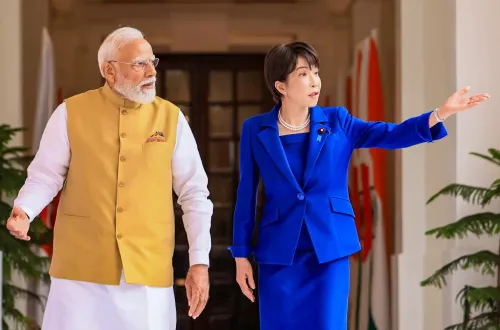
Japanese PM Sanae Takaichi unveiled an updated Free and Open Indo-Pacific vision in May , signalling continued strategic engagement.
Regional partners can deepen defence ties, but the report stresses that US resolve remains critical if China moves against Taiwan .
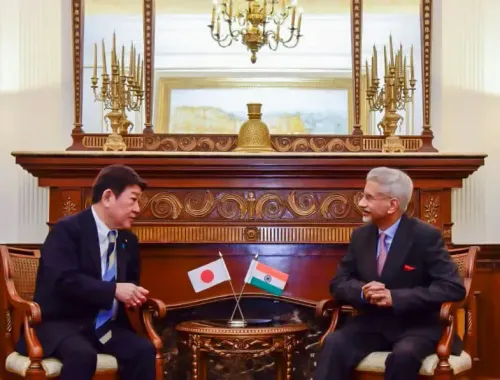
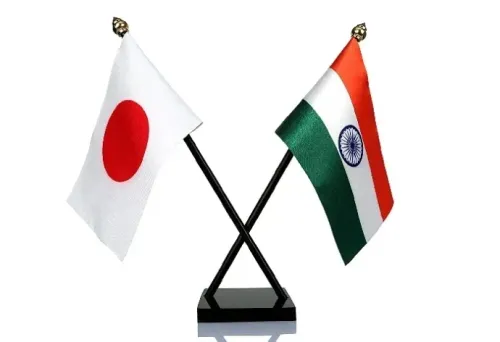
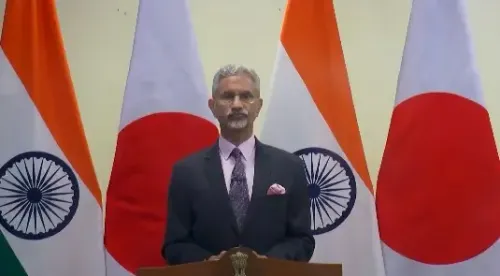
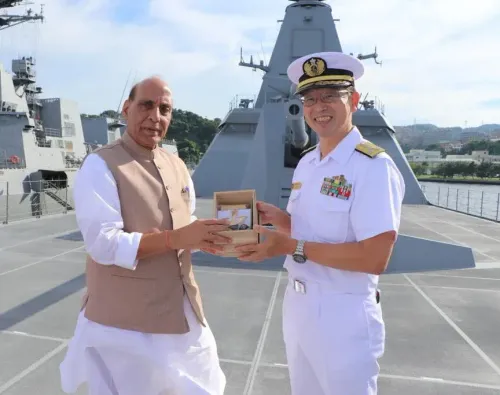
India and Japan's sustained bilateral engagement is playing a critical role in preserving security cooperation across the Indo-Pacific, even as uncertainty mounts over Washington's strategic direction in the region, according to a report published by the Taipei Times. Both New Delhi and Tokyo share strong incentives to resist coercion and push back against a regional order defined solely by China's expanding military footprint.
India's Strategic Weight in the Region
The report notes that India's contribution to regional stability carries particular significance precisely because it engages as a major power without full alignment with Washington. New Delhi continues to maintain dialogue with Beijing despite unresolved border tensions, while simultaneously deepening defence ties with regional partners and participating in joint military exercises.
India's pursuit of strategic autonomy makes its policy choices less predictable, but it also ensures that New Delhi's regional posture is not solely a function of its relationship with the United States. This independence, the report argues, adds a distinct and valuable layer to the region's security architecture.
Washington's Shifting Signals and Regional Uncertainty
US foreign policy this year has been marked by what the report describes as increasingly difficult-to-reconcile positions — a greater willingness to engage diplomatically with China, alongside a tougher approach toward its own allies and partners. Chinese President Xi Jinping's meeting with US President Donald Trump in Washington in September brought this tension into sharper focus.
'Across the Indo-Pacific region, governments are trying to work out what these shifts mean for their security and for the future of US engagement in the region,' the report stated. The concern is that a more conciliatory US posture toward Beijing, without accompanying resolve, could embolden China to take greater risks — particularly over Taiwan.
Taiwan: The Most Immediate Stakes
For Taiwan, the report says, the security implications are more immediate than for any other regional actor. China's military capabilities have continued to grow, backed by sustained pressure on the island. If Washington appears more focused on stabilising relations with Beijing than on deterring Chinese coercion, Beijing's leadership could interpret that as an opening — either to intensify military activities around Taiwan, apply greater economic pressure, or gradually erode the existing status quo.
'There is no clear evidence that the US intends to abandon Taiwan, but changes in Washington's approach could affect how Beijing and Taipei assess the longer-term security environment,' the report noted, underscoring the ambiguity that currently pervades the cross-strait calculus.
Japan's Stake and Tokyo's Strategic Vision
Japan's proximity to Taiwan gives it a direct stake in any potential crisis in the Taiwan Strait. The report points to Japanese Prime Minister Sanae Takaichi's announcement in May of an updated Free and Open Indo-Pacific vision as evidence that Tokyo is actively keeping regional strategy on its agenda. A conflict in the strait, the report warns, would disrupt trade and shipping across the wider region and force neighbouring governments into extremely difficult decisions.
The report acknowledges the structural limits of regional cooperation: 'India, Japan and others can deepen defence cooperation and improve their ability to respond to a crisis, but much would still depend on how Washington responds if China moves against Taiwan.' The implication is clear — regional partners can hedge and prepare, but they cannot substitute for a credible US deterrent posture.
What This Means Going Forward
The report's framing reflects a broader anxiety across the Indo-Pacific: that the architecture of security cooperation built over decades is being stress-tested by a period of genuine US strategic ambiguity. How Beijing reads that ambiguity — and whether New Delhi and Tokyo can collectively offset it — will shape the region's security trajectory in the months ahead.
Point of View
However, is about deterrence arithmetic — if Beijing calculates that Washington will prioritise stabilisation over confrontation in a Taiwan crisis, regional hedging by India and Japan, however robust, may not be enough to hold the line. The Trump-Xi September meeting has already shifted that calculus in ways that are not yet fully visible.
NationPress
12 Nov 2026
Frequently Asked Questions
Why are India and Japan important to Indo-Pacific security?
India and Japan provide a stabilising counterweight in the Indo-Pacific at a time when US strategic priorities are increasingly uncertain. India contributes the influence of a major regional power without fully aligning with Washington, while Japan's geographic proximity to Taiwan and its Free and Open Indo-Pacific vision keep security commitments active in the region.
What has changed in US foreign policy toward the Indo-Pacific?
According to the Taipei Times report, US foreign policy this year has reflected positions that are difficult to reconcile — a greater openness to engaging China diplomatically alongside a tougher stance toward its own allies. The September meeting between President Xi Jinping and President Donald Trump in Washington crystallised these tensions for governments across the Indo-Pacific.
How could shifting US priorities affect Taiwan?
The report warns that if Washington appears more focused on stabilising ties with Beijing than on deterring Chinese coercion, Beijing could interpret this as an opportunity to intensify military pressure on Taiwan, increase economic leverage, or gradually alter the existing status quo. While there is no clear evidence that the US intends to abandon Taiwan, the ambiguity itself changes how both Beijing and Taipei assess long-term security.
What is India's strategic approach in the Indo-Pacific?
India continues to pursue strategic autonomy — engaging Beijing despite border tensions, while deepening defence cooperation with regional partners and participating in joint military exercises. This makes India's policy choices less predictable but ensures its engagement is not solely determined by its relationship with Washington.
What limits does regional cooperation face without strong US commitment?
The report is explicit that regional partners cannot substitute for US resolve. India, Japan, and others can deepen defence cooperation and crisis-response capabilities, but the outcome of a potential Chinese move against Taiwan would still depend heavily on how Washington chooses to respond.