India may need 105–150 GW more coal power as demand surges: CEA chief
Synopsis
India's grid regulator has put a startling number on the table: the country may need up to 150 GW of additional coal capacity above existing plans, as daily peak demand runs 45–50 GW above year-ago levels. At a time when India is also commissioning 50 GW of renewables a year, the CEA chief's remarks expose a widening gap between clean-energy ambition and the hard arithmetic of round-the-clock reliability.
Key Takeaways
CEA chairman Ghanshyam Prasad on 13 October 2026 said additional coal capacity requirements could rise 105 GW to 150 GW above current expansion plans.
India had previously projected adding 97 GW of coal capacity by 2035 , taking total installed coal capacity to about 307 GW .
Daily peak power demand is running 45–50 GW higher than levels recorded a year earlier.
Electricity shortages hit 560 million kWh in September — the highest since August 2023 .
Coal-based generation rose 13.3% year-on-year in September; hydropower fell roughly 20% in the same period.
India is still adding more than 50 GW of renewable capacity annually, but the CEA chief says renewables alone cannot ensure grid reliability.
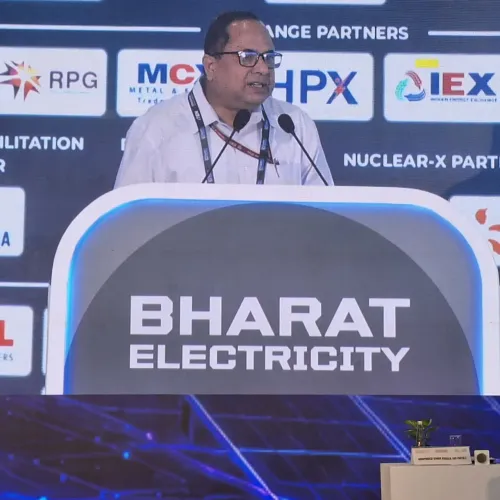
Ghanshyam Prasad, chairman of the Central Electricity Authority (CEA), on Tuesday, 13 October 2026, warned that India's surging electricity demand could force planners to commission significantly more coal-fired generation capacity than earlier projections envisaged — even as the country pursues one of the world's most ambitious renewable energy build-outs. Speaking at an event organised by the Indian Chamber of Commerce in New Delhi, Prasad said the scale of future coal capacity additions may need to be substantially revised upward to guarantee reliable supply over the coming decade.
What the Numbers Say
India had projected last year that it would add 97 GW of new coal-fired capacity by 2035, which would raise total installed coal generation to approximately 307 GW. However, Prasad indicated that stronger-than-anticipated consumption growth could push additional requirements to between 105 GW and 150 GW above current expansion plans — a potential revision that would dwarf the original forecast.
'Demand is growing and as demand grows we need stable sources of supply to meet that demand,' Prasad said at the event.
Scale of the Demand Surge
Daily peak power demand has strengthened markedly, running roughly 45 GW to 50 GW higher than levels recorded a year earlier, according to Prasad. Compounding the pressure, below-average monsoon rainfall this season curtailed hydropower output, pushing greater reliance onto thermal plants to bridge supply gaps.
Government data showed electricity shortages climbed to 560 million kilowatt-hours (kWh) in September — the highest deficit since August 2023 — despite higher coal-plant output. Coal-based generation rose 13.3% year-on-year that month, while hydropower output slid roughly 20% compared with September last year. This comes amid a broader pattern of demand outpacing infrastructure across multiple recent summers.
Renewables Still on Track — But Not Enough Alone
Prasad was emphatic that the renewed attention on coal should not be read as a retreat from India's clean-energy targets. The country added roughly 50 GW of renewable capacity last year and is expected to continue commissioning more than 50 GW annually in the years ahead. Yet the CEA chief stressed that intermittent renewables cannot, on their own, satisfy round-the-clock demand without complementary firm-power sources.
Notably, expanding nuclear generation, pumped-storage hydropower, and other grid-balancing technologies will be critical to maintaining system stability as renewable penetration rises, he said.
The Policy Dilemma
The remarks crystallise the central tension in India's energy policy: a legally non-binding but politically significant commitment to clean energy coexists with an economy where industrial output, cooling loads, and urbanisation are accelerating demand at a pace that grids struggle to absorb. Policymakers have repeatedly stressed that coal remains a 'transition fuel' for India, but the CEA chief's figures suggest the transition timeline may be longer — and the coal footprint larger — than official targets currently acknowledge. The government has not yet released a revised integrated resource plan in response to the updated demand projections.
Point of View
Which means investment signals to private generators and lenders remain ambiguous. The 560-million-kWh September deficit, the worst in over three years despite record coal output, points to a structural demand-supply mismatch that renewable additions alone will not close in this decade. India's credibility on both energy security and climate commitments now depends on how quickly it can scale nuclear and pumped-storage solutions — neither of which has moved at anywhere near the speed required.
NationPress
13 Oct 2026
Frequently Asked Questions
Why is India considering expanding coal power capacity beyond its earlier targets?
Stronger-than-expected electricity demand growth has prompted the Central Electricity Authority to reassess its projections. Daily peak demand is running 45–50 GW above year-ago levels, and electricity shortages in September 2026 reached 560 million kWh — the worst since August 2023 — making existing capacity plans insufficient.
How much additional coal capacity is India now looking at?
CEA chairman Ghanshyam Prasad indicated that additional requirements could reach between 105 GW and 150 GW above current expansion plans, compared with a previous projection of 97 GW of new coal capacity by 2035 that would take total installed capacity to about 307 GW.
Does this mean India is abandoning its renewable energy goals?
No. Prasad explicitly said the renewed coal focus should not be interpreted as a slowdown in renewable ambitions. India added roughly 50 GW of renewable capacity last year and expects to sustain that pace, but the CEA chief stressed that intermittent renewables alone cannot guarantee round-the-clock supply without firm power backup.
What role will nuclear and pumped-storage hydro play?
Prasad identified nuclear generation, pumped-storage hydropower, and other grid-balancing technologies as critical complements to renewables. These firm-power sources are needed to maintain grid stability as renewable penetration rises, reducing the economy's exposure to the kind of shortfall seen in September 2026.
Why did electricity shortages worsen in September despite higher coal output?
Reduced monsoon rainfall curtailed hydropower generation by roughly 20% year-on-year in September, wiping out gains from a 13.3% rise in coal-based generation. The combined effect pushed the electricity deficit to its highest point since August 2023, highlighting how weather-dependent generation can rapidly destabilise supply.