Is India Negotiating Fair Trade Agreements with 50 Nations?
Synopsis
India is making strides in establishing fair trade agreements with nearly 50 nations, aiming for economic resilience and self-reliance. Minister Piyush Goyal emphasizes the importance of innovation and technology in this evolving landscape, showcasing India’s potential as a global leader in emerging sectors. Discover how these agreements could reshape India's economic future!
Key Takeaways
India is negotiating trade agreements with 50 nations.
Self-reliance is central to India's economic strategy.
The EFTA agreement involves a $100 billion investment in India.
India's youth demographic is key to its tech sector growth.
Free trade agreements foster economic cooperation.
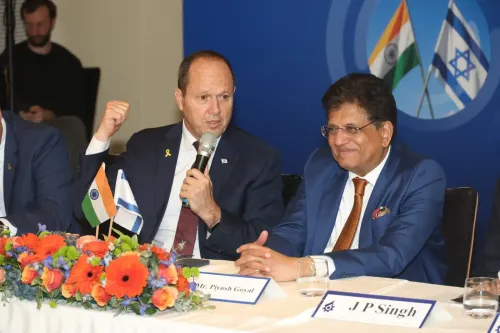
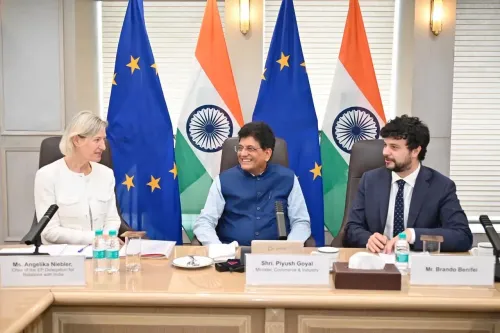
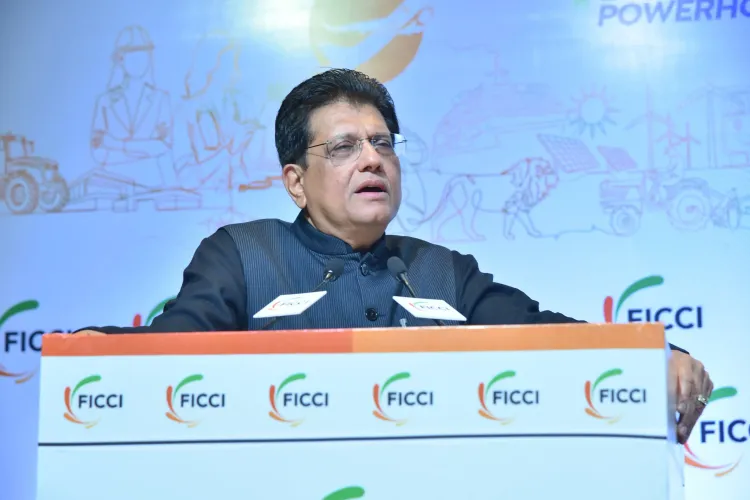
New Delhi, Nov 28 (NationPress) Commerce and Industry Minister Piyush Goyal announced on Friday that India is actively engaged in negotiations concerning equitable and fair trade agreements with 14 countries and groups, collectively representing nearly 50 nations. These include the United States, the European Union, GCC countries, New Zealand, Israel, Eurasia, Canada, South Africa, and the Mercosur group.
Speaking at the annual meeting of the Federation of Indian Chambers of Commerce and Industry (FICCI), the minister emphasized that significant and balanced trade agreements have already been established with Australia, the UAE, Mauritius, the United Kingdom, and the four-nation EFTA bloc.
Addressing wider global trends, Goyal remarked that recent geopolitical and economic challenges have highlighted the necessity for reliable partners and robust supply chains. He stated that India’s growing network of free trade agreements (FTAs) and economic collaborations is designed to foster long-term cooperation based on fairness, transparency, and mutual advantage.
The minister highlighted that the concept of self-reliance is integral to India’s civilizational ethos, invoking teachings from the Bhagavad Gita and Mahatma Gandhi’s advocacy for Swadeshi. He noted that self-reliance has historically shaped India's growth and remains central to its economic strategy, a vision reinforced through the Atmanirbhar Bharat initiative under Prime Minister Narendra Modi.
Discussing the recent EFTA agreement, Goyal pointed out that the bloc has pledged to invest $100 billion in India focusing on innovation and precision manufacturing. He underlined India’s cost-effectiveness in research and innovation, asserting that high-quality developments can be realized in India at significantly lower costs compared to Europe or the United States.
The Minister outlined India’s technological strengths, bolstered by a youthful demographic, rising digital adoption, and an expanding talent pool. He noted that India’s substantial number of STEM graduates and widespread internet accessibility create significant opportunities in emerging sectors like applied artificial intelligence, automation, robotics, and deep-tech innovation.
He also highlighted the recently unveiled $12 billion Research, Development and Innovation (RDI) fund, along with ongoing support for startups and deep-tech industries, which will further enhance India’s innovation landscape.
Goyal stressed the necessity of improving skilling to prepare India’s youth for forthcoming opportunities. He pointed out that unlike many developed nations with aging populations, India’s youthful demographic is adept at embracing new technologies and has shown significant engagement with digital platforms. This readiness positions India to play a pivotal role in the global technology arena.
The minister elaborated on India’s advantages using the 'PESTLE' framework, stating that Prime Minister Modi has persistently promoted the vision of self-reliance across various sectors. Politically, a stable and predictable government committed to “Minimum Government, Maximum Governance” has bolstered investor confidence. Economically, initiatives like the National Manufacturing Mission and the Rs 25,000 crore Export Promotion Mission are paving the way for India’s ascent as the world’s third-largest economy.
On the social front, he mentioned that the four Labour Codes ensure improved wages and protections, while the Antyodaya approach aids in meeting basic needs.
In the technology sector, Goyal highlighted initiatives aimed at reducing external dependencies, including the Semiconductor Mission (Rs 76,000 crore) and the Rs 7,000 crore program for permanent magnet production, which enhance domestic manufacturing and fortify supply chain security. In the legal landscape, he referenced ongoing reforms, including advancements toward Jan Vishwas 3.0, which is designed to improve the ease of doing business.
He also noted that the 'Atomic Energy Bill 2025' signifies a transformative move by opening up the nuclear sector to bolster energy sovereignty.
The Minister urged FICCI to embrace a mission-centric approach to foster innovation, deepen research and development, strengthen industry-academia collaborations, and support India’s journey toward becoming a developed nation by 2047.
Point of View
The emphasis on fair trade agreements and self-reliance reflects a broader strategy to enhance its global standing. Minister Piyush Goyal's insights provide a glimpse into the nation’s commitment to innovation and technological advancement, crucial for sustaining growth in a competitive landscape.
NationPress
1 Oct 2026
Frequently Asked Questions
What countries is India negotiating trade deals with?
India is in discussions with 14 countries and groups, representing nearly 50 nations, including the United States, the European Union, GCC countries, New Zealand, Israel, Eurasia, Canada, South Africa, and the Mercosur group.
What is the significance of the EFTA agreement?
The EFTA agreement includes a commitment of $100 billion in investment in India, focusing on innovation and precision manufacturing, which will enhance India's economic landscape.
How does India's youth demographic impact its economy?
India's youthful demographic is quick to adapt to new technologies and shows high engagement with digital platforms, positioning the country to play a significant role in the global technology market.
What is the Atmanirbhar Bharat initiative?
The Atmanirbhar Bharat initiative is aimed at promoting self-reliance in India, emphasizing the importance of domestic production and innovation to boost economic growth.
What role do free trade agreements play in India's economy?
Free trade agreements are crucial for India as they enhance trade relations, promote economic cooperation, and provide access to international markets, contributing to India's growth as a major economy.