SC grants bail to Odisha lifer after 22 years, slams Orissa HC
Synopsis
After 22 years in prison without a single parole, Odisha lifer Arjun Jani finally gets bail — not because his murder conviction was overturned, but because the Supreme Court found it unconscionable that the Orissa High Court dismissed his appeal on a technicality without ever hearing its merits. The ruling is a sharp rebuke of how delay-condonation rules can trap the incarcerated in a procedural maze.
Key Takeaways
The Supreme Court granted bail to Arjun Jani alias Tuntun , an Odisha lifer who has spent more than 22 years in prison without parole or furlough.
The Orissa High Court had dismissed his criminal appeal in January 2016 , refusing to condone a delay of 3,157 days in filing it.
A Bench of Justice J.B.
Pardiwala and Justice Ujjal Bhuyan called the High Court's decision "very disturbing" and said a jail appeal warranted a sympathetic approach.
The Supreme Court invoked Article 142 of the Constitution to order release on a personal bond of ₹10,000 .
The District Legal Services Authority, Koraput , has been directed to help Jani seek remission of sentence ; compliance hearing set for 28 May .
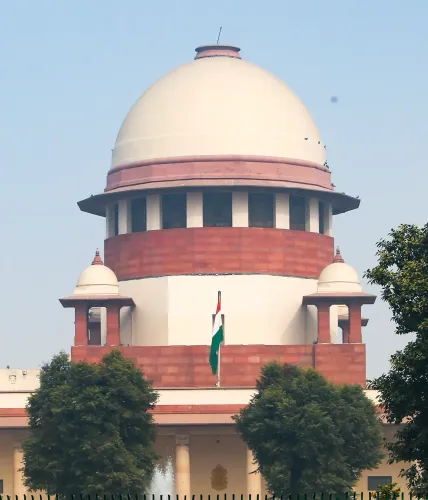
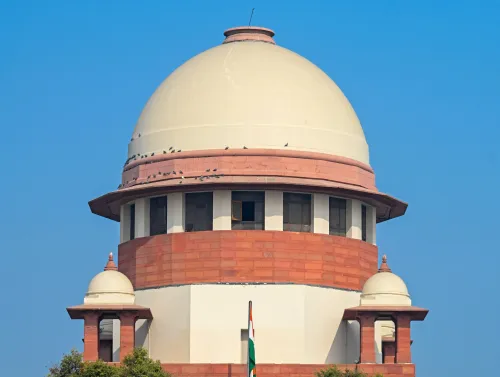
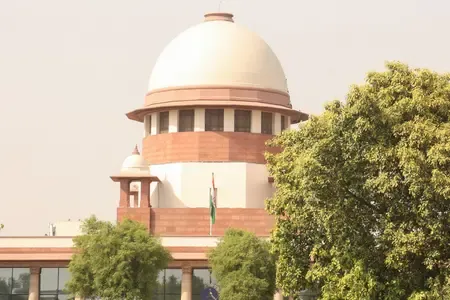
The Supreme Court of India on 8 May 2025 ordered the release on bail of Arjun Jani alias Tuntun, a life convict from Odisha who has spent more than 22 years behind bars, sharply criticising the Orissa High Court for dismissing his criminal appeal solely on the ground of a nearly nine-year delay in filing it. The apex court called the High Court's decision "very disturbing" and invoked its extraordinary powers under Article 142 of the Constitution to secure the convict's release.
Background of the Case
Arjun Jani was tried before the Additional Sessions Judge, Nabarangpur, Odisha, for offences under Sections 302 and 201 of the Indian Penal Code (IPC) — murder and causing disappearance of evidence. He was sentenced to life imprisonment on 25 August 2006. A criminal appeal filed through the jail mechanism reached the Orissa High Court but was dismissed on 11 January 2016, when the court refused to condone a delay of 3,157 days in filing it.
The High Court's order had stated: "This appeal is beyond time by 3157 days. From the jail memo of appeal, we do not find any viable reason to condone the delay near about nine years. Delay condonation application is dismissed and appeal too stands dismissed." Jani subsequently filed a Special Leave Petition (SLP) before the Supreme Court challenging that order.
What the Supreme Court Said
A Bench comprising Justice J.B. Pardiwala and Justice Ujjal Bhuyan took strong exception to the High Court's approach, observing that when the appeal was filed, Jani had already undergone more than 12 years of imprisonment. The fact that it was a jail appeal — filed from within prison, often without access to independent legal counsel — should itself have prompted a more sympathetic consideration, the Bench held.
"The High Court ought to have also considered that it was an appeal through jail. This itself was sufficient for the High Court to take a practical view or rather a sympathetic view of the matter and at least ought to have condoned the delay so as to give one opportunity to the petitioner to argue his criminal appeal on merits," the Justice Pardiwala-led Bench observed.
Key Factors Behind the Bail Order
The Supreme Court took note of two critical facts. First, Jani has now undergone almost 22 years of sentence and has never been released even once on parole or furlough during this entire period. Second, his counsel produced a conduct certificate issued by the Senior Superintendent of Circle Jail, Koraput, confirming that his behaviour in prison had remained satisfactory with no adverse remarks or punishment ever recorded against him.
Invoking Article 142 — a constitutional provision that empowers the Supreme Court to pass any order necessary to do complete justice — the Bench declared this an exceptional case warranting bail. It directed Jani's release on furnishing a personal bond of ₹10,000 to the satisfaction of the Jail Superintendent.
Legal Aid and Next Steps
The apex court also directed the District Legal Services Authority (DLSA), Koraput, to assist Jani in preparing a representation seeking remission of sentence in accordance with the prevailing remission policy applicable to him. The matter has been posted for reporting compliance on 28 May.
This ruling underscores a growing pattern of Supreme Court intervention in cases where procedural technicalities have resulted in prolonged incarceration without a hearing on merits — a concern that senior advocates and legal scholars have repeatedly flagged before the court.
Point of View
Filed by a man already past 12 years of imprisonment, reflects a mechanical application of limitation rules that the Supreme Court has repeatedly warned against. What is equally notable is the court's use of Article 142 — a power meant for exceptional cases — suggesting that ordinary appellate channels had completely failed Jani. The broader question this raises is systemic: how many other lifers remain in prison because their jail appeals were similarly buried under delay-condonation dismissals that no one reviewed?
NationPress
24 Sept 2026
Frequently Asked Questions
Why did the Supreme Court grant bail to Arjun Jani after 22 years?
The Supreme Court granted bail because Arjun Jani had spent over 22 years in prison without parole or furlough, and his criminal appeal was never heard on merits after the Orissa High Court dismissed it on a delay technicality. The court invoked Article 142 of the Constitution, calling it an exceptional case warranting immediate relief.
Why had the Orissa High Court dismissed Arjun Jani's appeal?
The Orissa High Court dismissed the appeal in January 2016 because it was filed 3,157 days — nearly nine years — after the prescribed deadline, and the court found no viable reason to condone the delay. The Supreme Court criticised this as a failure to adopt a practical or sympathetic view, especially given it was a jail appeal.
What is a jail appeal and why does it matter here?
A jail appeal is a criminal appeal filed directly from prison, typically without independent legal assistance, through the jail administration. The Supreme Court held that this mode of filing should itself have prompted the High Court to be more lenient on delay, since incarcerated persons face significant barriers in accessing legal counsel and court processes.
What is Article 142 of the Constitution and how was it used here?
Article 142 empowers the Supreme Court to pass any order necessary to do complete justice in any matter before it, beyond the ordinary scope of its jurisdiction. The court invoked it as an exceptional measure to order Jani's bail directly, bypassing the usual appellate process that had failed him.
What happens next in Arjun Jani's case?
Arjun Jani will be released on a personal bond of ₹10,000. The District Legal Services Authority, Koraput, has been directed to help him file a representation seeking remission of sentence under the applicable policy. The Supreme Court has scheduled a compliance hearing for 28 May.