India on high alert as Jamaat plans border protests over Bangladeshi repatriation

Synopsis
Jamaat-e-Islami is mobilising protests along the India-Bangladesh border on 15 June, alleging illegal push-ins and BSF killings — charges India flatly denies. Indian intelligence agencies warn the real agenda is a disinformation campaign designed to incite communal violence and strain bilateral ties, just as New Delhi and Dhaka are resetting relations under Prime Minister Tarique Rahman.
Key Takeaways
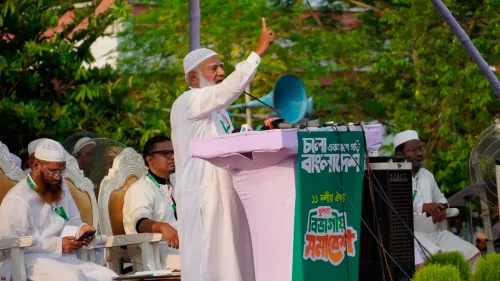
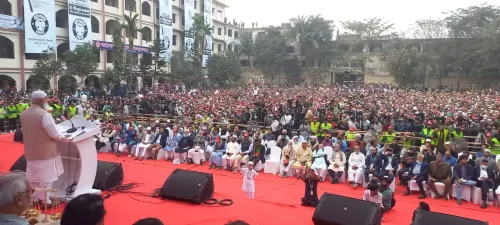
Jamaat-e-Islami and its 11-party alliance have scheduled border protests from Friday , with a major rally on 15 June , against India's repatriation of illegal Bangladeshi nationals.
India has denied allegations of forced push-ins, stating all repatriations follow established legal procedures and bilateral agreements.
Indian officials allege the protests aim to run a disinformation campaign and deliberately strain India-Bangladesh relations.
Jamaat secured 51 of 68 seats in border-adjacent constituencies in recent elections, raising security concerns in New Delhi.
The student-led National Citizen Party (NCP) has called for human shields against alleged push-ins; officials warn of potential cross-border violence.
India has urged Bangladesh to expedite nationality verification to facilitate smoother repatriation processing.
Indian intelligence agencies are maintaining heightened surveillance along the India-Bangladesh border following reports that Jamaat-e-Islami and allied parties are planning large-scale protests against the repatriation of illegal Bangladeshi nationals, which they have characterised as forced push-ins. The protests are set to commence on Friday in border districts, with a major rally and procession scheduled for 15 June.
What the Protests Are About
According to Indian security officials, the 11-party alliance in Bangladesh — led by Jamaat-e-Islami — is pursuing two primary objectives through these demonstrations. The first is a disinformation campaign alleging that India is conducting illegal push-ins and that the Border Security Force (BSF) has killed Bangladeshi nationals near the frontier. The second, officials allege, is to deliberately inflame tensions between the two countries.
'This information and narrative that is being set is completely false,' an official stated. 'The idea is to incite people into taking on the Indian establishment and also target the BSF by spreading misinformation,' the official added.
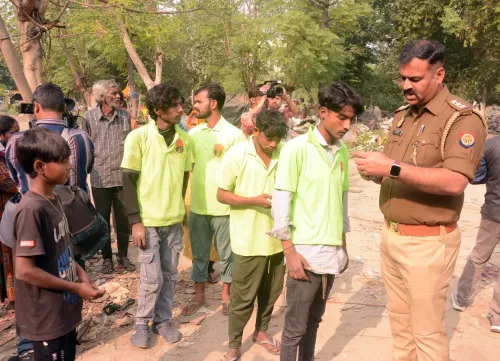
India has categorically denied the push-in allegations, maintaining that the repatriation of illegal foreign nationals is being conducted strictly through established legal procedures and bilateral agreements.
Security Concerns Along the Border
The planned demonstrations are drawing particular scrutiny because they are concentrated in border districts where Jamaat holds significant electoral influence. In recent elections, the party secured 51 of its 68 seats in constituencies directly adjoining India — a result that Indian agencies had flagged as a cause for heightened vigilance.
Adding to the security calculus, the student-led National Citizen Party (NCP) has called for the formation of human shields against the alleged push-ins. Officials have warned that 'there would be attempts to incite violence, which could well spill out into India.'
India's Position on Repatriation
New Delhi has maintained that all repatriation actions comply with Indian law and existing bilateral frameworks. Officials have also urged Dhaka to accelerate nationality verification procedures to facilitate a smoother repatriation process.
The renewed focus on illegal Bangladeshi immigration follows the Bharatiya Janata Party's (BJP) substantial electoral victories in recent West Bengal and Assam elections. Officials contend that illegal immigration has contributed to demographic shifts, terror recruitment, job displacement through cheap labour, counterfeiting networks, and cattle smuggling. 'Hence, this action is of utmost importance in terms of both national security and economic stability,' an official explained.
Jamaat's Historical Ties and ISI Allegations
Indian security officials allege that Jamaat-e-Islami, following Bangladesh's Liberation War, worked in coordination with Pakistan's Inter-Services Intelligence (ISI) to facilitate large-scale illegal immigration into India. 'The objective was to alter demographics, fuel communal tensions, build crime syndicates and create economic distress by affecting local employment opportunities,' officials allege.
The alliance has also accused the Tarique Rahman-led Bangladesh Nationalist Party (BNP) government of being too accommodating toward India — a charge that underscores the domestic political pressures shaping the protests.
India-Bangladesh Ties and the Road Ahead
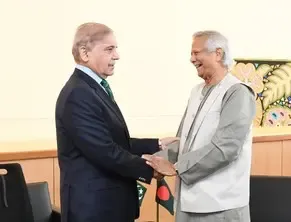
Both nations have been in a phase of diplomatic reset since Tarique Rahman assumed the office of Prime Minister earlier this year. Bangladesh has signalled its intent to maintain constructive relations with its neighbours and has acknowledged India's strategic significance in the region, according to officials.
Despite this broader diplomatic trajectory, the Jamaat-led protests represent a disruptive variable. Indian agencies have stated that the country remains on a state of 'very high alert' and that any attempts to incite communal violence or cross-border unrest will be firmly countered.
Point of View
Jamaat is exploiting the repatriation issue to corner a rival and mobilise its base in border districts where it has just demonstrated formidable electoral strength. India's challenge is dual: manage a legitimate border security operation while not handing Jamaat the provocation it needs to validate its narrative. The ISI-linkage allegation, if substantiated, would elevate this from a bilateral irritant to a regional security concern — but Indian officials have so far offered it as an assertion, not evidence. The diplomatic reset with Dhaka is real, but fragile; how both governments handle the next 72 hours around the 15 June rally will signal whether that reset has operational depth.
NationPress
26 Oct 2026
Frequently Asked Questions
Why is India on high alert along the Bangladesh border?
Indian intelligence agencies are on high alert following plans by Jamaat-e-Islami and its allied parties to stage protests in border districts starting Friday, with a major rally on 15 June. The protests allege illegal push-ins and killings by the BSF — charges India has categorically denied.
What is India's official position on the repatriation of Bangladeshi nationals?
India maintains that it is not conducting forced push-ins and is only repatriating illegal foreign nationals through established legal procedures and bilateral agreements. Officials have also urged Bangladesh to expedite nationality verification to smoothen the process.
What are Indian agencies alleging about Jamaat-e-Islami's objectives?
According to Indian security officials, the 11-party alliance led by Jamaat-e-Islami has two goals: running a disinformation campaign against India's border actions, and deliberately stoking tensions between India and Bangladesh. Officials also allege historical ties between Jamaat and Pakistan's ISI to facilitate illegal immigration.
How significant is Jamaat-e-Islami's presence in Bangladesh's border districts?
Jamaat-e-Islami won 51 of its 68 seats in constituencies directly bordering India in recent elections, giving it considerable grassroots influence in the very districts where protests are planned. Indian agencies had flagged these electoral gains as a cause for heightened border vigilance.
How does this affect India-Bangladesh diplomatic relations?
Both countries have been resetting ties since Tarique Rahman became Prime Minister earlier this year, with Bangladesh signalling a desire for constructive relations with India. However, the Jamaat-led protests represent a stress test for that reset, with Indian officials warning that attempts to incite communal tensions or cross-border unrest will be firmly countered.