India rises as global influencer amid geopolitical tensions: BRICS 2026
Synopsis
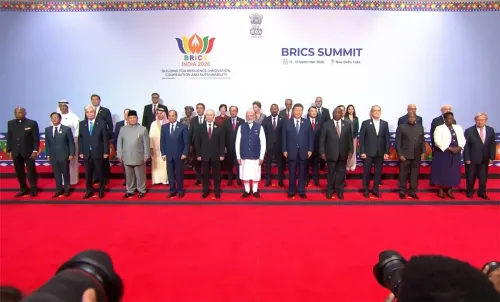
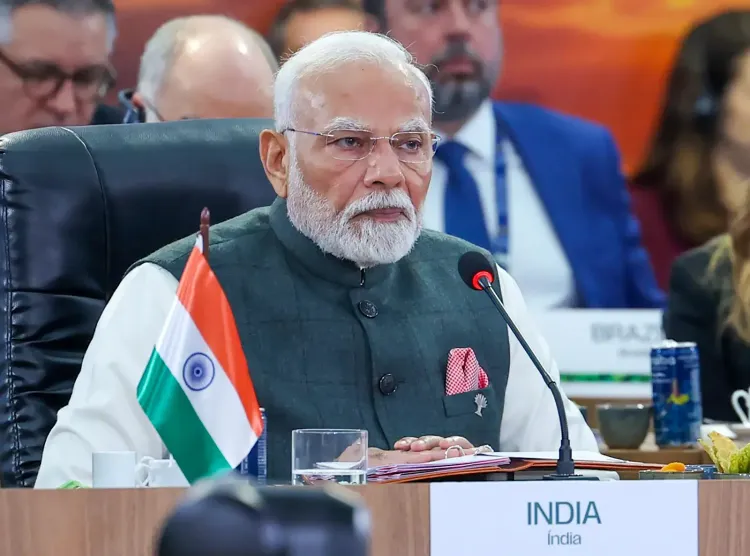
At the 18th BRICS Summit in New Delhi, PM Modi declared the Global South must stop being a 'rule taker' and become a 'rule-shaper' — and proposed 10 concrete governance reforms as a BRICS roadmap. With India's diplomatic weight growing and its strategic autonomy intact, New Delhi is no longer content to participate in the global order; it is positioning itself to redesign it.
Key Takeaways
India has been identified as a confident, constructive and influential global voice amid rising geopolitical and economic uncertainty, according to an opinion piece in Greater Kashmir .
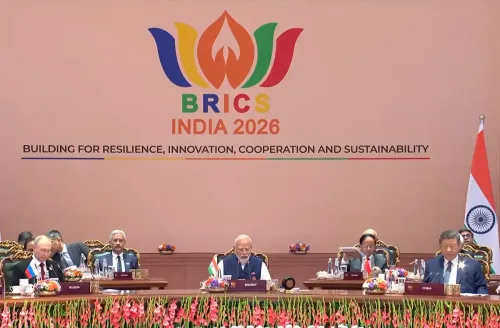
PM Modi addressed the 18th BRICS Summit in New Delhi on 12 September 2026 , calling on the Global South to shift from being a 'rule taker' to a 'rule-shaper' .
Modi proposed that BRICS nations jointly formulate 10 proposals for global governance reform, targeting a BRICS reform roadmap by the next summit.
India's foreign policy prioritises strategic autonomy , maintaining ties with all major powers without aligning against any nation.
India has consistently pushed for global governance structures that give developing nations an active role in shaping international outcomes, not just participating in them.
India has emerged as a confident, constructive and influential voice in global affairs at a time when the world grapples with geopolitical tensions, technological disruptions and economic uncertainty, according to an opinion piece published in Greater Kashmir. The country's ascent is increasingly being described as one of the defining realities of the shifting international order.
India's Vision at the Global Stage
Writing in Greater Kashmir, analyst Anil Dhar argued that the transformation is rooted in Prime Minister Narendra Modi's vision of an Atmanirbhar, Viksit and globally connected India — a nation that safeguards its strategic interests while contributing to global peace, prosperity and cooperation. Dhar identified the BRICS platform as a key avenue through which India is advancing this vision.
For India, BRICS serves as a critical mechanism to strengthen partnerships, deepen economic cooperation, and amplify the aspirations of the Global South within international decision-making forums. Notably, this engagement comes as the global order undergoes what analysts describe as a profound structural transformation.
Strategic Autonomy as a Cornerstone
India's foreign policy under Modi's leadership has placed a strong emphasis on dialogue, strategic autonomy, national interest and mutually beneficial partnerships, the piece noted. This approach has enabled New Delhi to maintain ties with all major global powers — including the US, Russia and China — without compromising its independent decision-making.
India has consistently argued that global governance structures must reflect contemporary realities rather than the architecture of a different era. The country seeks a world order where developing nations are not merely participants in global discussions but active contributors to shaping their outcomes.
'This diplomatic confidence, combined with India's growing economic and strategic weight, has given the country greater capacity to influence international conversations,' Dhar wrote, adding that India 'increasingly seeks to shape that order — by advocating greater representation for developing nations, promoting practical cooperation and offering solutions based on its own development experience.'
Modi at the 18th BRICS Summit
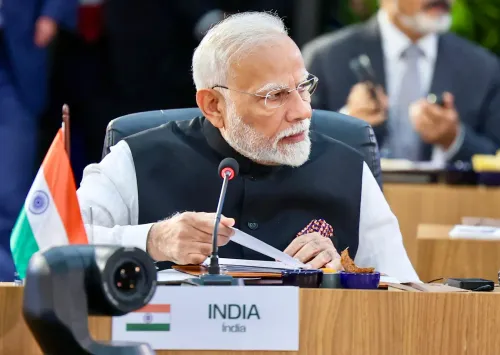
The analysis draws directly from Prime Minister Narendra Modi's remarks at the 18th BRICS Summit held in New Delhi on 12 September 2026, where the opening session was themed 'Inclusive Global Governance and Strengthening Multilateralism'. Modi used the platform to call on the Global South to move from being a 'rule taker' to a 'rule-shaper'.
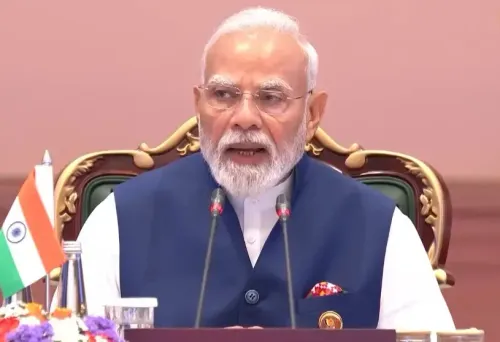
Modi stated that the current structure of global governance 'resembles a pyramid: power and decision-making are concentrated at the top, while the lower tiers consist of nations that are affected by these decisions yet unable to shape them.' He called for transforming this 'pyramid of privilege' into a 'platform of partnership.'
10 Proposals for Global Governance Reform
A centrepiece of Modi's address was his proposal that BRICS nations jointly formulate 10 proposals for global governance reform, with the aim of shaping them into a BRICS reform roadmap by the time of the next summit. He underscored that the Global South 'stands in the front row of global crises but in the back row of decision-making.'
This is consistent with India's longstanding push — amplified since its G20 presidency in 2023 — for structural reform of multilateral institutions including the UN Security Council, the IMF and the World Bank. The BRICS summit outcome, if translated into a concrete reform roadmap, could mark a significant escalation in that campaign.
How the 10-proposal framework takes shape — and whether it attracts consensus among BRICS members with divergent interests — will be closely watched in the months ahead.
Point of View
But BRICS consensus-by-design means the lowest common denominator often prevails. The real measure of India's global influence is not how confidently it speaks at multilateral summits, but whether its reform proposals survive contact with Beijing and Moscow's veto instincts. The gap between India's growing diplomatic weight and its ability to deliver concrete multilateral outcomes remains the story mainstream coverage consistently undersells.
NationPress
16 Sept 2026
Frequently Asked Questions
What did PM Modi say at the 18th BRICS Summit in New Delhi?
PM Modi, speaking at the 18th BRICS Summit in New Delhi on 12 September 2026, urged Global South nations to move from being 'rule takers' to 'rule-shapers' in global governance. He proposed that BRICS jointly formulate 10 reform proposals to be shaped into a BRICS reform roadmap by the next summit.
Why is India described as an influential global voice in 2026?
India is increasingly recognised for its growing economic weight, strategic autonomy and active diplomatic engagement across major multilateral platforms including BRICS, the G20 and the UN. Analysts argue its ability to maintain ties with competing global powers — while advancing the interests of the Global South — has made its voice disproportionately impactful.
What is India's role in BRICS?
For India, BRICS is a key platform to deepen economic cooperation, strengthen partnerships and ensure that developing nations have a greater say in international decision-making. India has used the forum to push for global governance reform that reflects contemporary geopolitical realities rather than post-World War II power structures.
What does Modi mean by transforming the 'pyramid of privilege' into a 'platform of partnership'?
Modi used the phrase to describe his vision of reformed global governance — one where power and decision-making are no longer concentrated among a few wealthy nations but shared equitably with developing countries. He argued the Global South bears the brunt of global crises yet has minimal influence over the decisions that cause or resolve them.
How does India's BRICS stance connect to its broader foreign policy?
India's engagement with BRICS is consistent with its broader foreign policy of strategic autonomy — maintaining ties with all major powers, including the US, Russia and China, without formally aligning with any bloc. The BRICS platform allows India to champion Global South interests while projecting its independent diplomatic identity on the world stage.