How Did India Stack Contribute to a Cashless and Paperless Digital Economy?
Synopsis
Discover how the India Stack framework has revolutionized India's digital landscape, paving the way for a cashless, paperless, and presence-less economy. This article explores its components, impact on various sectors, and how it fosters innovation and financial inclusion.
Key Takeaways
India Stack is crucial for a cashless and paperless economy.
It enables access to services without physical documentation.
Promotes financial inclusion for previously unbanked individuals.
Fosters innovation and entrepreneurship in digital sectors.
Helps reduce corruption and increase efficiency in government services.
New Delhi, Jan 27 (NationPress) India's transformative digital journey in the last decade has been accelerated by an innovative framework named India Stack, which has enabled the nation to create a cashless, paperless, and presence-less digital ecosystem on a large scale, according to a report.
Structured as a series of open digital platforms, the India Stack has revolutionized the interactions between citizens, businesses, and governments, facilitating service delivery, as highlighted by www.theaustraliatoday.com.au.
The India Stack comprises open application programming interfaces and digital public goods that collectively form the foundation of India's digital public infrastructure.
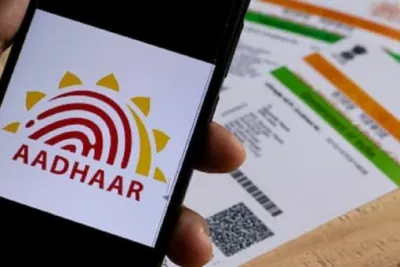
Key components include Aadhaar for digital identity, UPI for payments, DigiLocker for document storage, e-Sign for digital signatures, e-KYC for verification, Direct Benefit Transfer for welfare delivery, and digital health platforms under the Ayushman Bharat Digital Mission.
These systems empower individuals to access services without the need for physical paperwork, cash, or in-person validation.
Though the framework bears India's name, its design and implications extend far beyond national borders.
Initiated in the early 2000s and first realized through the Aadhaar initiative in 2009, India Stack was conceived as a scalable and interoperable model that can be embraced by both developed and developing nations.
This framework leverages technology to efficiently and securely deliver services to vast populations.
At its core, India Stack operates through various digital layers that collaborate seamlessly. The payments layer facilitates cashless transactions via platforms such as UPI and IMPS, enabling instant bank-to-bank transfers for both individuals and businesses.
These systems saw significant uptake during the Covid-19 pandemic and have continued to expand rapidly, reducing transaction costs and minimizing risks, the report stated.
The paperless layer allows for the digital storage and retrieval of documents through platforms like DigiLocker, e-Sign, and e-KYC, enabling citizens to share verified information instantly.
Complementing this is the presence-less layer, which utilizes Aadhaar-based biometric identity to verify individuals anytime and anywhere without requiring physical documents, thereby mitigating fraud and simplifying access to services.
Another vital aspect is the consent-based data-sharing framework, which empowers individuals to manage how their personal data is utilized, according to the report.
Through regulated entities such as account aggregators, users can securely share information like bank statements with service providers for specific purposes and for a limited duration, ensuring data transparency and protection.
The digital ecosystem also encompasses commerce through the Open Network for Digital Commerce, which allows small businesses and local shops to engage in online markets using open protocols.
By lowering entry barriers and fostering interoperability, the platform promotes competition and diminishes the dominance of major players.
India's journey with India Stack has resulted in widespread adoption across sectors such as finance, healthcare, education, and public services.
Millions of citizens now receive government benefits directly into their bank accounts, access services digitally, and execute transactions without paperwork or intermediaries.
This advancement has not only enhanced convenience but also curbed leakages and corruption in welfare distribution, the report concluded.
The open nature of the Stack has further spurred innovation and entrepreneurship, enabling startups to develop new products and services built on shared digital infrastructure.
Consequently, financial inclusion has surged, integrating previously unbanked populations into the formal economic system, the report added.
Point of View
I believe that India's experience with the India Stack serves as a substantial model for other nations aiming to enhance their digital frameworks. The focus on inclusivity and transparency is commendable and reflects a national commitment to progress in the digital realm. This initiative resonates with our ethos of collective advancement, and I stand firmly with the nation in championing such transformative endeavors.
NationPress
20 Sept 2026
Frequently Asked Questions
What is the India Stack?
The India Stack is a collection of open digital platforms designed to facilitate a cashless , paperless , and presence-less digital economy in India.
How does India Stack enhance financial inclusion?
By providing digital identity and payment systems, India Stack enables previously unbanked populations to access formal financial services.
What are the key components of India Stack?
Key components include Aadhaar for identity, UPI for payments, DigiLocker for document storage, and Direct Benefit Transfer for welfare delivery.
How does India Stack protect user data?
It employs a consent-based data-sharing framework that allows individuals to control how their personal data is utilized.
What impact has India Stack had on government services?
It has improved convenience and reduced corruption in welfare delivery by enabling direct transfer of benefits and minimizing paperwork.