How Does the India-US Trade Deal Enhance Market Sentiment and Boost Export Prospects in Gujarat?

Synopsis
The recent India-US trade deal has created a wave of optimism among exporters in Gujarat, enhancing market sentiment and presenting new growth opportunities. Discover how this agreement is expected to affect various sectors and the potential benefits for local industries.
Key Takeaways
India and US have strengthened economic ties through a new trade deal.
The trade agreement is expected to boost market sentiment in Gujarat .
Reducing tariffs from 25% to 18% can significantly enhance exports.
The textile sector is poised for growth due to competitive advantages.
Small and medium enterprises will benefit from increased investment and trade opportunities.
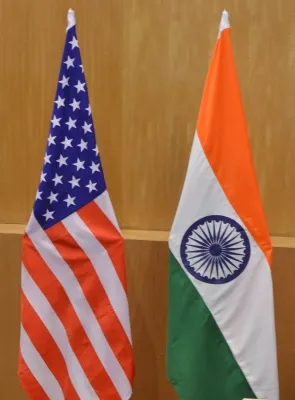
Ahmedabad/Rajkot, Feb 3 (NationPress) The newly established trade agreement between India and the United States has significantly uplifted the mood in local equity markets and rekindled hopes among exporters, especially in Gujarat, according to insights from market analysts and industry leaders on Tuesday.
This agreement emerges as both nations strive to mitigate trade tensions, streamline tariffs, and fortify economic partnerships in crucial sectors.
Jitendra Vyas, a share market expert in Ahmedabad, remarked that investors have responded positively to the news of the trade deal.
“The announcement of the trade deal between India and the United States has infused a sense of optimism in the domestic stock markets,” he shared with IANS.
He also noted that the Union Budget has bolstered market confidence, albeit with some lingering concerns.
“Investors generally view the budget favorably, with the exception of the increase in the Securities Transaction Tax on futures and options trading,” Vyas pointed out.
Vyas expects the combined effects of the budget and the trade deal to provide long-term support. “These developments are anticipated to positively influence the market over time,” he stated.
He emphasized that the textile industry might experience a significant boost due to India’s strong export position in the U.S. market.
“The textile sector is poised for growth, especially since India’s exports to the U.S. surpass those of countries like Bangladesh,” he explained.
Additionally, he observed that uncertainties in the pharmaceutical and IT sectors have diminished following the agreement.
Vyas mentioned that select large-cap stocks are already reflecting heightened investor confidence. “Shares in the Reliance and Adani groups have seen a surge in buying interest,” he noted, adding that “investments in textile, seafood, and automobile sector stocks are likely to yield substantial returns.”
Furthermore, he predicted a favorable impact on the currency. “We anticipate that the Indian rupee will strengthen as a result of this trade deal,” he added.
Export-driven industries in Saurashtra have also welcomed the relaxation of trade conditions.
Parth Ganatra, Secretary of the Rajkot Chamber of Commerce, stated that reduced U.S. tariffs would invigorate regional industries. “Exports had plummeted by nearly 35% when tariffs were at 25%. With the new tariff at 18%, we expect exports to regain their momentum,” he shared with IANS.
Ganatra noted that high tariffs had previously compelled exporters to seek alternative markets. “During that challenging period, industrialists started exporting to other nations, but with the latest U.S. relief and the addition of new markets, we anticipate a significant rise in exports,” he said.
He added that micro, small, and medium enterprises in Rajkot and the broader Saurashtra region are expected to benefit.
“Similar to trade agreements with the European Union and other nations, MSMEs from this area will see a boost, leading to increased investments in the near future,” he explained.
Saurashtra primarily exports agricultural equipment, pharmaceuticals, spices, forging parts, and machine components.
Ganatra also highlighted that lower tariffs relative to competitors like Bangladesh and China are “a promising sign” for exporters in the region.
Point of View
It is essential to recognize that the India-US trade deal represents a significant opportunity for economic growth and stability. By fostering collaboration and reducing trade barriers, both nations can enhance their bilateral ties, which could lead to long-term benefits for exporters and investors alike. This deal is a crucial step toward strengthening India’s position in the global market.
NationPress
25 Sept 2026
Frequently Asked Questions
What is the impact of the India-US trade deal on the stock market?
The trade deal has positively influenced the stock market, enhancing investor confidence and creating a favorable atmosphere for trading.
How will the textile sector benefit from this agreement?
The textile sector is expected to thrive due to India's competitive export position compared to other countries, particularly Bangladesh.
What changes occurred in U.S. tariffs?
U.S. tariffs have been reduced from 25% to 18%, which is anticipated to significantly boost exports from India.
What sectors are expected to see growth?
Sectors such as textiles, seafood, and automobiles are likely to experience growth as a result of this trade deal.
Are small enterprises expected to benefit?
Yes, micro, small, and medium enterprises in regions like Rajkot and Saurashtra are expected to gain from increased investment and reduced tariffs.