India-Vietnam parliamentary ties: Sherpa meets VIPFG chief in Hanoi
Synopsis
India's Ambassador to Vietnam held back-to-back meetings in Hanoi and Da Nang this week — one to strengthen parliamentary ties through the VIPFG, and another to advance a heritage interpretation centre at the UNESCO-listed My Son temple complex. Together, they reveal a deliberate, multi-track Indian diplomatic push in Vietnam spanning legislatures, culture, and city-level governance.
Key Takeaways
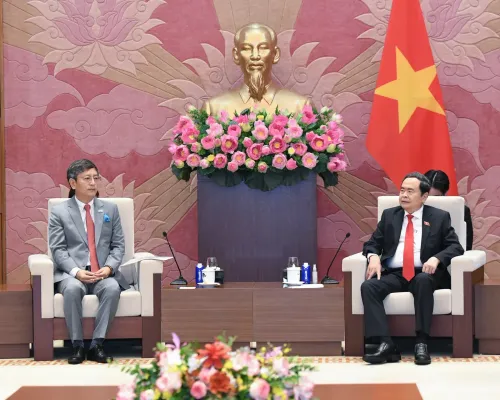
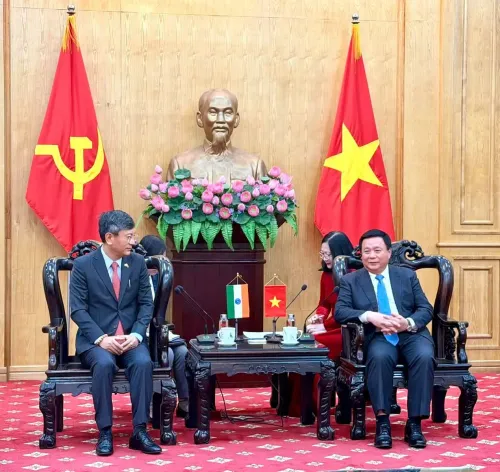
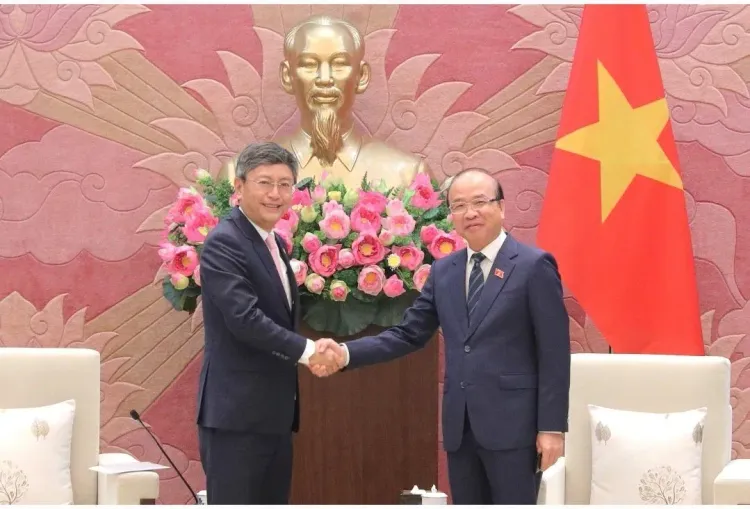
Ambassador Tshering W Sherpa met Phan Chi Hieu , Chairman of the Vietnam–India Parliamentary Friendship Group (VIPFG) , in Hanoi on 9 July .
Both sides agreed to deepen parliamentary friendship, share legislative best practices, and enhance bilateral cooperation between the two parliaments.
On 8 July , Sherpa met Da Nang Vice Chairwoman Nguyen Thi Anh Thi to discuss establishment of a Site Interpretation Center (SIC) at the UNESCO World Heritage Site at My Son .
The Indian Archaeological Survey Team is currently conducting restoration work at My Son, rooted in the civilisational Cham cultural link between India and Vietnam.
Both engagements fall under the broader India-Vietnam Enhanced Comprehensive Strategic Partnership framework.
India's Ambassador to Vietnam, Tshering W Sherpa, on Thursday, 9 July called on Phan Chi Hieu, Chairman of the Vietnam–India Parliamentary Friendship Group (VIPFG) and Chairman of the Committee for Law and Justice of the National Assembly of Vietnam, in Hanoi. The meeting focused on deepening the legislative dimension of the India-Vietnam Enhanced Comprehensive Strategic Partnership.
Key Developments from the Meeting
Ambassador Sherpa congratulated Phan Chi Hieu on his appointment as Chairman of the VIPFG and briefed him on the forward-looking trajectory of bilateral ties. According to the Embassy of India in Hanoi, the two sides agreed to deepen existing parliamentary friendship, share legislative best practices, and enhance cooperation between the two parliaments.
The Embassy noted that the two Parliamentary Friendship Groups hold an important role in further consolidating the India-Vietnam Enhanced Comprehensive Strategic Partnership — a framework that has steadily expanded across trade, defence, and cultural domains.
Da Nang Visit and My Son Heritage Site
A day earlier, on Wednesday, 8 July, Ambassador Sherpa met Nguyen Thi Anh Thi, Vice Chairwoman of the People's Committee of Da Nang, alongside other key stakeholders. The agenda centred on the next steps towards establishing a Site Interpretation Center (SIC) at the UNESCO World Heritage Site at My Son — a cluster of Hindu temples built by the ancient Cham civilisation.
The meeting also covered forthcoming collaborative activities between the Indian Embassy and Da Nang City. Notably, Ambassador Sherpa reviewed the ongoing restoration work being carried out by the Indian Archaeological Survey Team at My Son, underscoring the civilisational bond that Cham culture represents between India and Vietnam.
Why the Cham Connection Matters
The My Son site is a powerful symbol of India's cultural footprint in Southeast Asia. The Cham civilisation, which flourished across present-day central Vietnam, drew deeply from Indian religious and artistic traditions. India's active role in restoring and interpreting this heritage strengthens people-to-people ties beyond government-to-government diplomacy.
This comes amid a broader Indian push to deepen its presence in the ASEAN region, with Vietnam emerging as a key strategic and economic partner. The Embassy's engagement across Hanoi and Da Nang in a single week signals a deliberate effort to operationalise the Enhanced Comprehensive Strategic Partnership at multiple levels — legislative, cultural, and administrative.
What Comes Next
Both sides are expected to advance the SIC project at My Son in the coming months. Parliamentary exchanges under the VIPFG framework are also likely to gather pace, with legislative best-practice sharing identified as a priority area. The Embassy indicated it values the growing partnership with Da Nang City and will pursue further joint activities in the near term.
Point of View
Cultural, and sub-national. The focus on My Son is particularly strategic; heritage diplomacy gives India a soft-power anchor that trade agreements cannot replicate. What mainstream coverage often misses is that city-level partnerships like the Da Nang engagement are increasingly where the Enhanced Comprehensive Strategic Partnership is actually being operationalised, away from the headline summits. The real test will be whether the Site Interpretation Center at My Son moves from discussion to ground-breaking — and on what timeline.
NationPress
8 Oct 2026
Frequently Asked Questions
What is the Vietnam–India Parliamentary Friendship Group (VIPFG)?
The VIPFG is a bilateral parliamentary body that fosters legislative ties between Vietnam and India. It plays a formal role in strengthening the India-Vietnam Enhanced Comprehensive Strategic Partnership by enabling exchanges of legislative best practices and parliamentary dialogue.
Why did India's Ambassador meet the Da Nang People's Committee?
Ambassador Tshering W Sherpa met Da Nang Vice Chairwoman Nguyen Thi Anh Thi on 8 July to discuss establishing a Site Interpretation Center (SIC) at the UNESCO World Heritage Site at My Son. The meeting also covered upcoming joint activities between the Indian Embassy and Da Nang City.
What is the significance of the My Son heritage site for India-Vietnam relations?
My Son is a UNESCO-listed cluster of ancient Cham Hindu temples in central Vietnam, representing a deep civilisational link between India and Vietnam. India's Archaeological Survey Team is actively restoring the site, making it a tangible symbol of cultural diplomacy between the two countries.
What is the India-Vietnam Enhanced Comprehensive Strategic Partnership?
It is the highest tier of bilateral relationship between India and Vietnam, encompassing defence, trade, cultural, and people-to-people cooperation. Parliamentary friendship groups and heritage projects like My Son are among the mechanisms used to operationalise this partnership.
What are the next steps following these meetings?
Both sides are expected to advance the Site Interpretation Center project at My Son in the coming months. Parliamentary exchanges under the VIPFG are also set to intensify, with legislative best-practice sharing identified as a priority area.