How is the Indian Army Leveraging 3D Concrete Printing Technology in Forward Areas?
Synopsis
The Indian Army's Trishakti Corps has made a groundbreaking move by deploying on-site 3D concrete-printing technology in forward areas. This innovation promises to revolutionize infrastructure development along India's borders, enhancing operational efficiency and speed. Discover how this cutting-edge technology is reshaping military engineering.
Key Takeaways
Innovative technology for rapid construction.
Collaboration with IIT Hyderabad enhances capabilities.
Customizable designs improve operational efficiency.
Proven strength through live ballistic trials.
Supports tactical operations in challenging terrains.
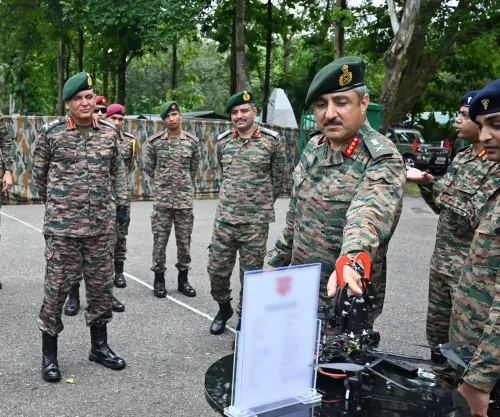
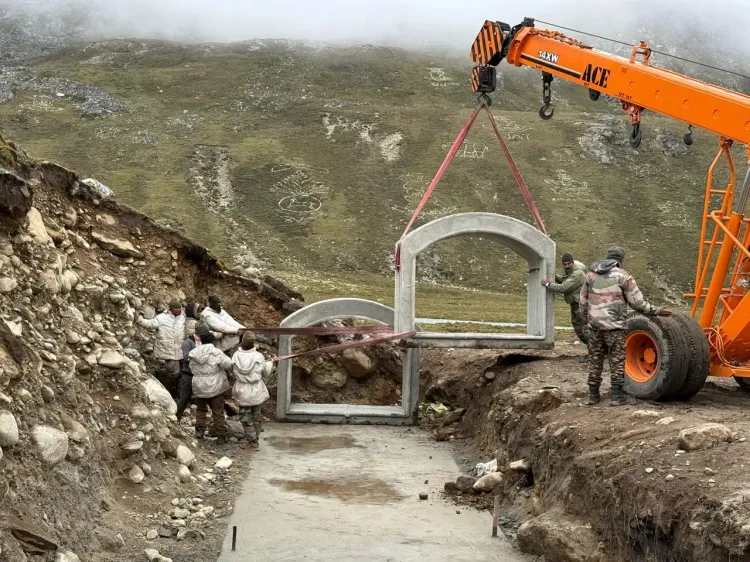
Gangtok, Dec 6 (NationPress) The Indian Army’s Trishakti Corps has implemented cutting-edge 3D concrete-printing technology at forward locations, representing a crucial advancement in the speedy and effective construction of infrastructure along India’s borders, officials reported on Saturday.
Defence spokesperson Lt Col Mahendra Rawat mentioned that the Indian Army, in partnership with the Indian Institutes of Technology (IIT), Hyderabad, has further enhanced defence infrastructure innovation through the deployment of On-Site 3D Concrete Printing Technology as part of Project PRABAL (Portable Robotic Printer for Printing Bunkers and Accessories).
This technology, already validated in previous operational zones, is now being successfully utilized by the Trishakti Corps in Sikkim and surrounding forward positions, he added.
The homegrown Robotic 3D Concrete Printer, featuring a robotic arm, circular mixer, piston pump, and generator, is entirely vehicle-portable and designed for rapid deployment in mountainous terrains.
According to Lt Col Rawat, tailored for forward area use, it facilitates swift construction of bunkers, sentry posts, and protective structures. The printed installations have successfully passed live ballistic tests, confirming their durability and protective capabilities.
The defence spokesperson emphasized that 3D concrete printing offers substantial operational benefits, such as customizable designs, improved blast and ballistic resistance, enhanced compressive strength, superior quality control, efficient use of local materials, and rapid construction within acceptable tactical timeframes.
This technology also accommodates terrain-specific designs and advanced camouflage requirements. The ongoing embrace of on-site 3D printing signifies a substantial advancement in the Army’s engineering and operational preparedness, enabling prompt, sustainable, and mission-focused infrastructure development in challenging environments, the spokesperson concluded.
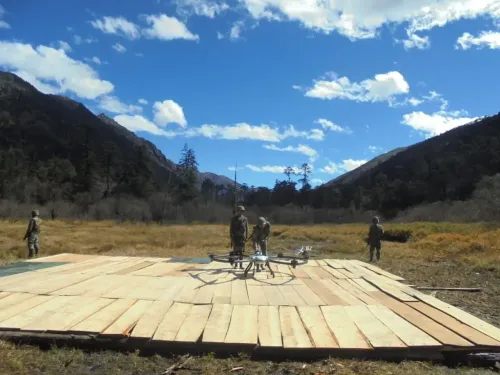
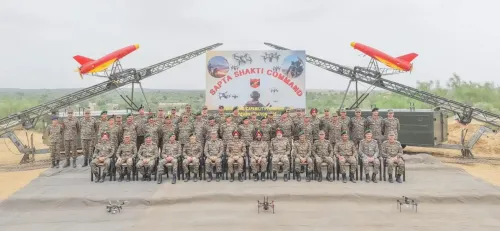
In another event, a five-day Drone Technology Bootcamp wrapped up on Friday at the Drone Training Node (DTN) in Manipur’s Chandel District, highlighting a pivotal advancement in strengthening technological capabilities among security forces in the area.
Hosted by the Assam Rifles in collaboration with the Indian Institutes of Technology (Indian School of Mines), Dhanbad, under a specialized initiative by the Ministry of Electronics and the Union Ministry of Information Technology (MeitY), the training session took place from December 1 to 5.
The Bootcamp aimed to bolster technical skills and operational awareness in unmanned aerial systems, with a total of 165 participants from the Army, Assam Rifles, BSF, CRPF, Territorial Army, and faculty from IIT Dhanbad.
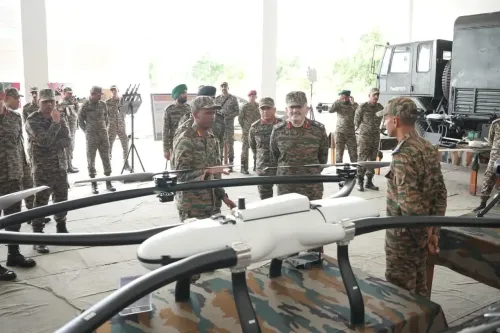
The curriculum featured components on drone electronics, flight operations, sensor integration, communication systems, and emerging trends in unmanned platforms. Participants engaged in simulator-based exercises, practical demonstrations, and lively discussions led by expert instructors from IIT (ISM) Dhanbad, with assistance from MeitY and Assam Rifles technical mentors.
Point of View
I firmly believe that the Indian Army's strategic adoption of 3D concrete printing technology is a visionary step towards enhancing national security and infrastructure resilience. This initiative not only demonstrates the Army's commitment to innovation but also reinforces India's position as a leader in defense technology. We must continue to support advancements that empower our armed forces and ensure their operational readiness in challenging terrains.
NationPress
3 Oct 2026
Frequently Asked Questions
What is the significance of the 3D concrete printing technology for the Indian Army?
The 3D concrete printing technology enables rapid and efficient construction of critical military infrastructure, enhancing operational readiness and adaptability in challenging terrains.
Who collaborated with the Indian Army on this technology?
The Indian Army collaborated with the Indian Institutes of Technology (IIT) Hyderabad under Project PRABAL to develop and deploy this innovative technology.
What structures can be built using this technology?
The technology can be used to construct bunkers, sentry posts, and various protective structures tailored for military needs.
What are the operational advantages of using 3D concrete printing?
It offers advantages such as customizable designs, enhanced strength and resistance, improved quality control, and rapid construction timelines.
How does the technology support military operations in mountainous terrains?
The Robotic 3D Concrete Printer is vehicle-portable and optimized for mobility, allowing for quick deployment and construction in mountainous regions.