Rajnath Singh reviews Trishakti Corps readiness at Sukna, flags hybrid warfare threat
Synopsis
Defence Minister Rajnath Singh's visit to Sukna was more than a morale boost — it was a signal. With a direct warning on hybrid warfare, drone surveillance, and cyber threats, Singh acknowledged that India's eastern frontier now faces challenges far beyond traditional military confrontation, even as LAC infrastructure spending accelerates.
Key Takeaways
Defence Minister Rajnath Singh reviewed the operational preparedness of Trishakti Corps at Sukna, West Bengal on 7 November 2026 .
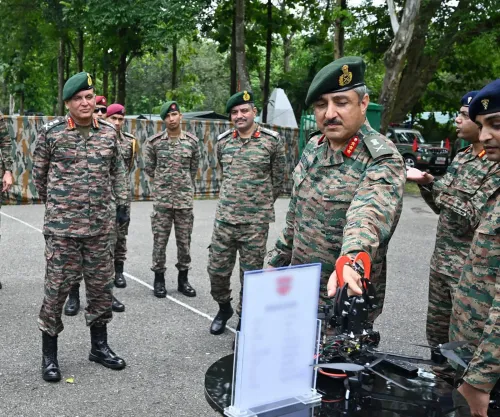
He was briefed on LAC infrastructure development and deployment of advanced military equipment and emerging technologies.
Singh flagged hybrid warfare, drone incursions, cyber-attacks , and information warfare as growing security threats.
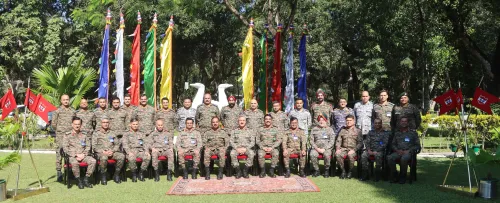
Chief of Army Staff General Dhiraj Seth , Eastern Command chief Lt Gen VMB Krishnan , and 33 Corps GOC Lt Gen Man Raj Singh Mann were present.
The minister described Sukna as a critical logistics hub and reaffirmed increased budgetary allocations for roads, tunnels , and border infrastructure .
Singh redefined the Northeast as India's 'first edge' , signalling a strategic reorientation of the region's national importance.
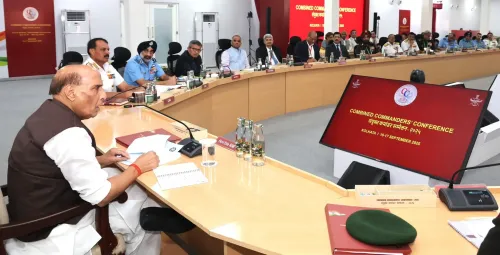
Defence Minister Rajnath Singh on Saturday, 7 November 2026, reviewed the operational preparedness of the Trishakti Corps at Sukna in West Bengal, receiving a comprehensive briefing on infrastructure development along the Line of Actual Control (LAC) and the deployment of advanced military equipment and emerging technologies. The visit, confirmed by a statement from the Defence Ministry, underscored the Centre's focus on bolstering eastern frontier security amid evolving threats.
Key Developments at Sukna
Singh was briefed on the induction of modern weaponry and cutting-edge technologies aimed at enhancing combat effectiveness in the region. He expressed satisfaction with the Corps' operational readiness and acknowledged its contributions to nation-building through infrastructure projects and community welfare programmes in border areas.
Senior military leadership was present for the review, including Chief of the Army Staff General Dhiraj Seth, General Officer Commanding-in-Chief, Eastern Command, Lt Gen VMB Krishnan, and General Officer Commanding, 33 Corps, Lt Gen Man Raj Singh Mann, along with other senior army officers.
Minister's Address to Troops on Diwali Eve
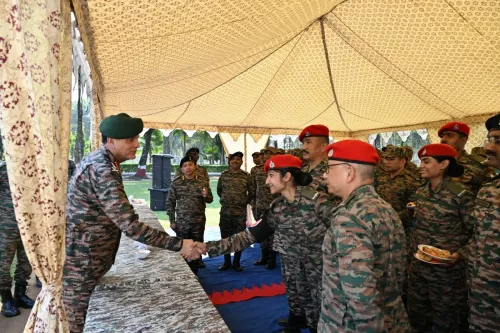
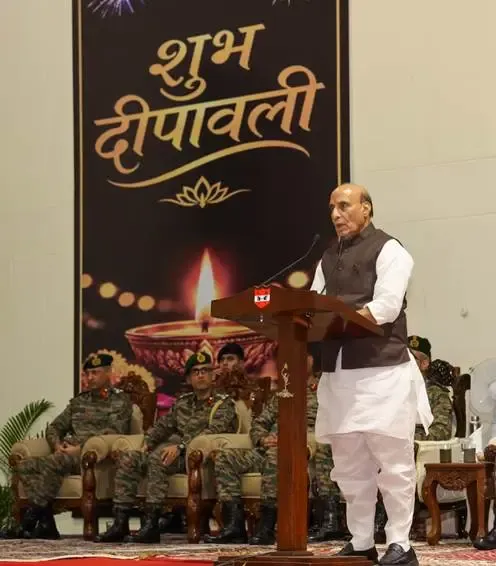
Addressing soldiers during Barakhana on the eve of Diwali, the Defence Minister commended their courage, professionalism, and unwavering dedication under challenging operational conditions. He described Sukna as a critical logistics hub for the movement of supplies, weaponry, food, medical provisions, and personnel to forward locations, calling it a 'vital link' in the security architecture of Eastern India.
Singh stressed that the region's geographical sensitivity demands round-the-clock operational readiness, and affirmed that the government under Prime Minister Narendra Modi is continuously working to strengthen supply chains for forward-deployed troops. He noted that budgetary allocations for roads, tunnels, border infrastructure, and modern equipment have been increased, with India progressing steadily towards 'Aatmanirbhar Bharat' in defence.
Hybrid Warfare and Emerging Threats
In a pointed address, Singh highlighted the rapidly changing nature of modern warfare, stating that security challenges today extend well beyond conventional gunfire or artillery exchanges along borders. He specifically flagged hybrid warfare, proxy conflicts, cyber-attacks, drone incursions, and information warfare as growing threats.
The minister warned that adversaries are increasingly resorting to spreading disinformation through social media, surveilling sensitive locations using drones, and attempting to compromise military systems through cyber intrusions. He exhorted all personnel to remain vigilant and prepared to defend national security across every domain.
Northeast as India's 'First Edge'
Reframing the geopolitical significance of the region, Singh described the North-Eastern frontier not as the 'last edge' but as the 'first edge' of India — the beginning of the nation's geographical and cultural landscape. He reaffirmed the government's commitment to boosting troop morale and urged officers to spend meaningful time with soldiers, reinforcing their confidence that the government and the nation stand firmly with them.
The visit signals continued high-level attention to the eastern theatre, particularly in the context of ongoing LAC developments and India's broader push for self-reliance in defence manufacturing.
Point of View
Drone surveillance, and cyber threats at a field-level troop address is notable — it signals that the Defence Ministry is no longer treating these as abstract doctrinal concerns but as live operational realities on the eastern front. The rebranding of the Northeast as India's 'first edge' is also a deliberate rhetorical shift, one that carries both domestic messaging and strategic signalling value. What remains to be tested is whether the increased budgetary allocations for LAC infrastructure translate into measurable improvements in troop logistics and response times — the very gaps that prior reviews have repeatedly flagged but not fully closed.
NationPress
7 Nov 2026
Frequently Asked Questions
Why did Rajnath Singh visit Sukna on 7 November 2026?
Defence Minister Rajnath Singh visited Sukna in West Bengal to review the operational preparedness of the Trishakti Corps, one of the Army's key formations responsible for the eastern frontier. He was briefed on LAC infrastructure development, advanced equipment deployment, and emerging technologies to enhance combat effectiveness.
What is the Trishakti Corps and why does it matter?
The Trishakti Corps, also known as 33 Corps, is an Indian Army formation headquartered at Sukna in West Bengal, responsible for guarding the country's northeastern borders including areas along the Line of Actual Control. Its strategic location makes it a critical component of India's eastern security architecture.
What hybrid warfare threats did Rajnath Singh highlight?
Singh warned that security threats have expanded beyond conventional warfare to include hybrid warfare, proxy conflicts, cyber-attacks, drone incursions, and information warfare. He specifically noted that adversaries are using social media for disinformation and drones to surveil sensitive military locations.
What infrastructure investments did Singh mention for the LAC?
Singh said the government has increased budgetary allocations for roads, tunnels, border infrastructure, and modern military equipment along the LAC. He linked these investments to India's broader 'Aatmanirbhar Bharat' defence self-reliance initiative.
What did Rajnath Singh mean by calling the Northeast India's 'first edge'?
Singh described the North-Eastern region as the 'first edge' rather than the 'last edge' of India, signifying that it represents the beginning of the nation's geographical and cultural landscape — a reframing intended to elevate the strategic and symbolic importance of the frontier, rather than treating it as a remote periphery.