Will Indian Railways Achieve Doubling Train Handling Capacity at 48 Major Stations by 2030?
Synopsis
As travel demands soar, Indian Railways is embarking on a transformative journey to double train handling capacity at 48 key stations by 2030. This ambitious project promises to enhance infrastructure, streamline operations, and revolutionize the travel experience for millions. Discover how these changes could reshape the future of rail travel in India!
Key Takeaways
Doubling capacity in 48 major cities by 2030.
Infrastructure upgrades including new terminals and platforms.
Focus on both suburban and non-suburban traffic.
Comprehensive planning for a balanced capacity distribution.
Progressive enhancements expected within the next five years.
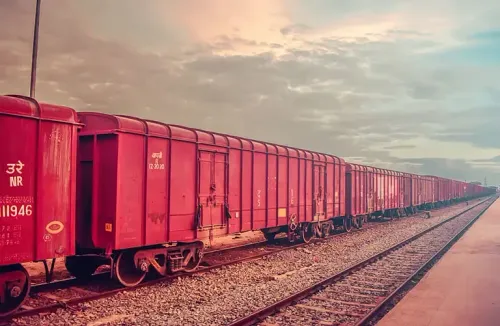
New Delhi, Dec 26 (NationPress) – Indian Railways is set to enhance its originating train capacity in 48 prominent cities across the nation by 2030, responding to the soaring travel demand, as per an official statement released on Friday.
The planned infrastructure expansion involves upgrading existing terminals with additional platforms, stabling lines, pit lines, and sufficient shunting facilities. Moreover, the identification and establishment of new terminals in urban areas will also be prioritized.
Maintenance facilities development is on the agenda, with plans for mega coaching complexes and enhancements in sectional capacity through traffic facility works, signaling upgrades, and multitracking to cater to the increased train frequency at various points, stated the report.
In considering terminal capacity enhancements, stations surrounding terminals will also be evaluated to maintain a balanced capacity. For instance, cities like Pune are looking at Hadapsar, Khadki, and Alandi for capacity improvements alongside increasing platforms and stabling lines at Pune station, the statement elaborated.
This initiative will address both suburban and non-suburban traffic, acknowledging the unique needs of each segment. A comprehensive strategy for the 48 major cities will be prepared for submission to the Planning Directorate. This plan will encompass all proposed, planned, or sanctioned works aimed at achieving the objective of doubling train handling capacity within a specified timeframe.
The selected 48 stations comprise major metropolitan areas including Delhi, Mumbai, Kolkata, Chennai, Hyderabad, and Bengaluru, as well as state capitals like Patna, Lucknow, Chandigarh, Jaipur, Bhopal, and Guwahati. Other significant cities such as Varanasi, Agra, Puri, Cochin, Coimbatore, Vadodra, Surat, Amritsar, Ludhiana, Vishakhapatnam, Tirupati, Coimbatore, Vijayawada, and Mysuru are also included.
“Though the goal is to double the capacity by 2030, it is anticipated that capacity enhancements will progressively occur over the next five years, allowing immediate benefits from these additions. This initiative is designed to meet traffic demands over the years. Actions will be categorized into immediate, short-term, and long-term,” mentioned the statement.
In a communication to the General Managers of all Zonal Railways, Railway Board Chairman and CEO Satish Kumar emphasized that the proposed plan must be detailed, with explicit timelines and defined outcomes. While focusing on specific stations, each Zonal Railway should also strategize to enhance train handling capacity throughout their divisions, ensuring improvements in terminal capacity, sectional capacity, and addressing operational constraints at stations and yards effectively.
Point of View
The initiative by Indian Railways to double train handling capacity is a crucial step towards accommodating the growing travel demands of the populace. This endeavor not only aims to enhance operational efficiency but also reflects a commitment to improving the overall travel experience for millions of citizens. Such infrastructure developments are vital for the nation’s progress and connectivity.
NationPress
19 Sept 2026
Frequently Asked Questions
What is the main goal of Indian Railways' plan?
The primary objective is to double the originating train capacity at 48 major stations across India by 2030 to meet the increasing demand for travel.
Which cities are included in the plan?
The plan encompasses major metros like Delhi, Mumbai, Kolkata, Chennai, Hyderabad, Bengaluru, and various state capitals and significant cities across the country.
What enhancements will be made to the infrastructure?
Improvements will include additional platforms, stabling lines, new terminals, and upgraded maintenance facilities to support increased train operations.
When will the capacity increase start to be realized?
While the ultimate goal is set for 2030, progressive capacity enhancements are expected to begin over the next five years.
Who is overseeing this initiative?
The Railway Board Chairman and CEO, Satish Kumar, is leading this initiative, ensuring that detailed plans with timelines are established.