BRICS sideline talks reveal India's multi-alignment strategy across Global South
Synopsis
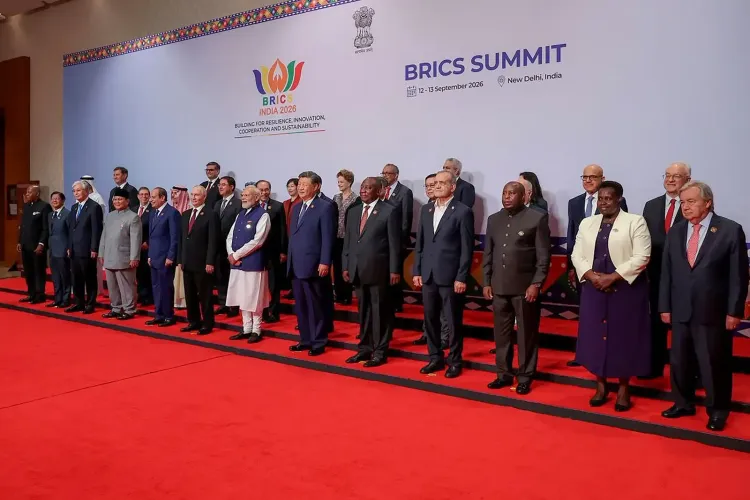
India did not just show up at the 18th BRICS Summit — it used the sidelines to build a security architecture spanning Africa and Asia. From the MAHASAGAR maritime doctrine to the AIKEYME naval exercises with 11 African nations, Modi's bilateral blitz turned a multilateral gathering into a strategic expansion of Indian influence across the Global South, country by country.
Key Takeaways
PM Narendra Modi held sideline meetings at the 18th BRICS Summit with leaders from 8 countries , including Ethiopia, South Africa, Nigeria, Malaysia, Kazakhstan, and the Philippines.
The New Delhi Declaration condemned terrorism in all forms, including a specific reference to the April 2025 Pahalgam attack , and addressed cyber-terrorism and online radicalisation.
India's MAHASAGAR doctrine extends the SAGAR framework to the broader Global South , linking naval engagement with intelligence-sharing and economic collaboration.
The inaugural AIKEYME 2025 exercise was co-hosted by India and Tanzania with 11 African nations , featuring anti-piracy and search-and-rescue drills.
India's approach is described as 'multi-alignment': maintaining a broad multilateral posture while securing bilateral strategic gains in defence, technology, and maritime security.
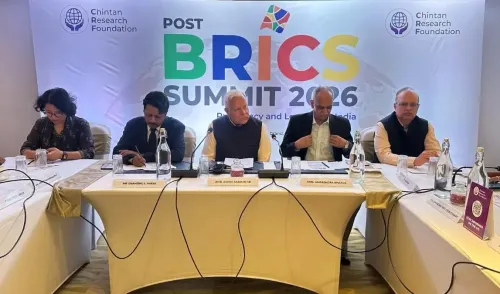
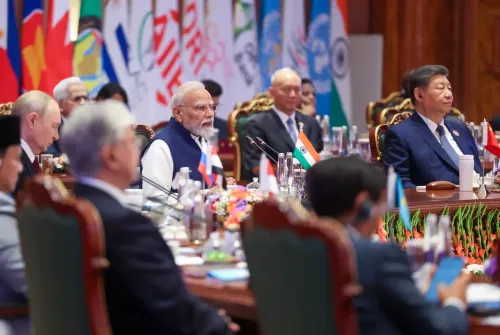
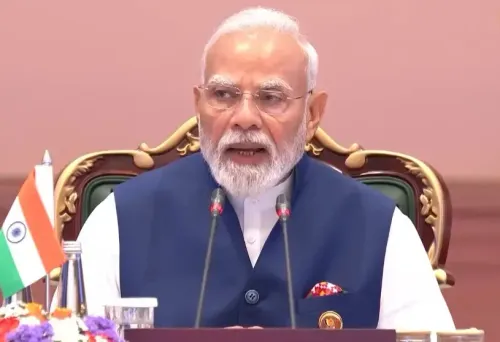
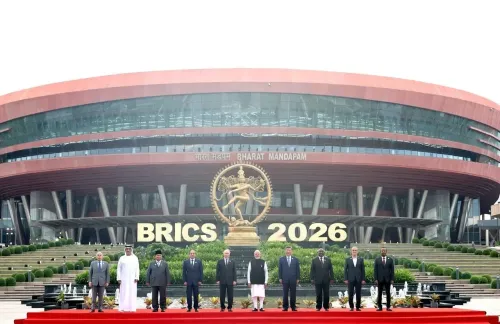
Prime Minister Narendra Modi used the 18th BRICS Summit in New Delhi to lock in a series of bilateral defence, technology, and security understandings with African and Asian partners, even as the broader multilateral gathering produced a consensus New Delhi Declaration. According to an analysis by India Narrative, the sideline meetings offer a sharp illustration of how India navigates between non-alignment and active strategic engagement — staying independent of great-power blocs while deepening ties with mid-sized nations across the Global South.
Key Bilateral Meetings and What They Delivered
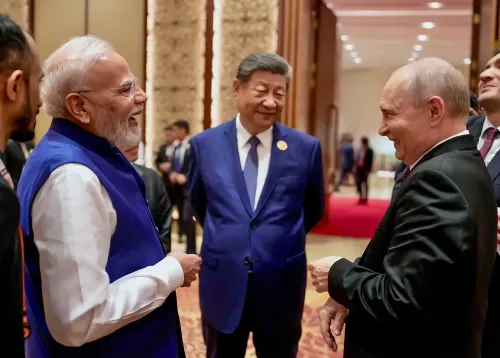
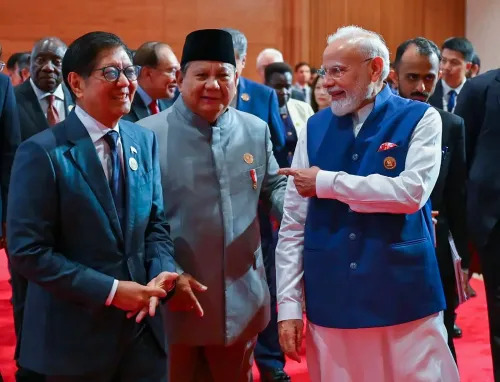
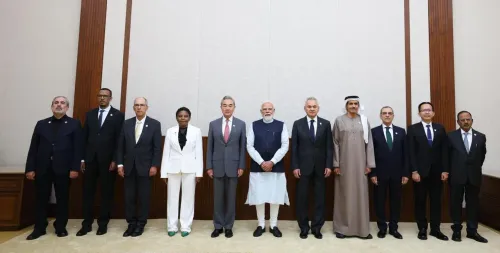
On the margins of the summit, Modi held talks with a wide range of leaders: Ethiopia's Prime Minister Abiy Ahmed Ali, South Africa's President Cyril Ramaphosa, Nigeria's Vice President Kashim Shettima, Uganda's Vice President Jessica Alupo, Burundi's President Evariste Ndayishimiye (in his capacity as African Union chair), Malaysia's Prime Minister Anwar Ibrahim, Kazakhstan's President Kassym-Jomart Tokayev, and the Philippines' President Ferdinand Marcos Jr.
Defence cooperation, technology transfer, maritime safety, and counter-terrorism featured centrally in each exchange, according to the report. The bilateral conversations, the analysis argues, allowed India to operationalise commitments that the expanded and internally diverse BRICS grouping cannot easily deliver through plenary consensus alone.
The MAHASAGAR Doctrine and Maritime Security
Maritime security emerged as an underlying pillar of India's outreach strategy. The report highlighted India's MAHASAGAR vision — Mutual and Holistic Advancement for Security and Growth Across Regions — which extends the earlier SAGAR doctrine from the Indian Ocean sphere to the broader Global South, linking naval engagement with intelligence-sharing, capacity-building, and economic collaboration.
The inaugural Africa-India Key Maritime Engagement (AIKEYME 2025), co-hosted by India and Tanzania with participation from 11 African countries, featured anti-piracy exercises, visit-board-search-and-seizure operations, helicopter manoeuvres, and search-and-rescue drills. India's Information Fusion Centre–Indian Ocean Region has also established dozens of maritime domain-awareness linkages across the region.
The analysis characterised Western Indian Ocean instability — encompassing piracy, Houthi disruptions, jihadist networks, and chokepoint risks at Bab-el-Mandeb and the Mozambique Channel — as 'an Indian energy-security and trade problem', not merely a distant African concern. Bilateral talks on the BRICS sidelines, it argued, allowed India to translate that shared vulnerability into practical offers: training, equipment, hydrography, and eventual logistics understandings.
The New Delhi Declaration: A Multilateral Gain
The New Delhi Declaration adopted at the summit marked what the report termed a multilateral gain for India. The document includes an unequivocal rejection of terrorism in all forms, a condemnation of the April 2025 Pahalgam terror attack, opposition to double standards in counter-terrorism, and a focus on cyber-terrorism, online radicalisation, and the misuse of emerging technologies.
Notably, this language was reinforced country-by-country through the sideline meetings, where defence and security discussions with Nigeria, Ethiopia, South Africa, and others were embedded within a wider pattern of intelligence-sharing, training, and capacity-building against transnational threats.
India's Multi-Alignment in Practice
The report summarised India's approach as keeping 'the multilateral tent broad and non-aligned, then harvesting bilateral strategic gains that actually move capability and influence.' India's consistent pitch to Global South partners, it noted, frames terrorism and maritime disorder as shared problems whose solutions 'should not wait for great-power permission or UN Security Council paralysis.'
This approach positions India as a net security provider across the Global South — a role that, according to the analysis, is being built incrementally through equipment supply, training programmes, operational links, and bilateral understandings that accumulate into structural influence.
Point of View
Diluted by an expanded and internally diverse membership, cannot deliver actionable security commitments. So New Delhi is using the multilateral framework as a convening platform and doing the real work in the corridors. The MAHASAGAR doctrine and AIKEYME exercises are not symbolic gestures; they are the infrastructure of a net-security-provider role India is building methodically across the Indian Ocean and beyond. The unanswered question is whether India has the institutional capacity — training pipelines, equipment stocks, logistics footprint — to sustain what is now a very wide set of bilateral commitments simultaneously.
NationPress
17 Sept 2026
Frequently Asked Questions
What were the key outcomes of India's sideline meetings at the 18th BRICS Summit?
India secured bilateral understandings on defence cooperation, technology transfer, maritime safety, and counter-terrorism with leaders from Ethiopia, South Africa, Nigeria, Uganda, Burundi, Malaysia, Kazakhstan, and the Philippines. These meetings operationalised language from the New Delhi Declaration on a country-by-country basis, going beyond what BRICS plenary consensus could deliver.
What is the MAHASAGAR doctrine and why does it matter?
MAHASAGAR — Mutual and Holistic Advancement for Security and Growth Across Regions — is India's vision that extends the earlier SAGAR doctrine from the Indian Ocean to the broader Global South. It links naval engagement, intelligence-sharing, capacity-building, and economic collaboration, positioning India as a net security provider across a wide arc of developing nations.
What is AIKEYME 2025 and which countries participated?
AIKEYME 2025, the Africa-India Key Maritime Engagement, is an inaugural naval exercise co-hosted by India and Tanzania with participation from 11 African countries. It included anti-piracy drills, visit-board-search-and-seizure operations, helicopter manoeuvres, and search-and-rescue exercises.
What did the New Delhi Declaration say about terrorism?
The New Delhi Declaration, adopted at the 18th BRICS Summit, unequivocally rejected terrorism in all forms, condemned the April 2025 Pahalgam terror attack specifically, opposed double standards in counter-terrorism, and addressed cyber-terrorism, online radicalisation, and the misuse of emerging technologies.
How does India's multi-alignment strategy differ from traditional non-alignment?
Unlike traditional non-alignment, which kept India largely at arm's length from security commitments, India's multi-alignment strategy maintains a non-aligned multilateral posture while actively pursuing bilateral strategic gains in defence, technology, and maritime security. The approach allows India to engage the Global South on practical terms without requiring great-power approval or UN Security Council consensus.