India's Carbon Credit Trading Scheme spotlighted at WTO Geneva meet
Synopsis
India used World Environment Day and the WTO's Geneva platform to reveal it has already cleared its 2030 clean energy and emissions-intensity targets — years early. With a live carbon credit trading architecture and freshly notified green hydrogen standards, New Delhi is signalling it is ready to be a rule-setter in global carbon markets, not just a rule-taker.
Key Takeaways
India showcased its Carbon Credit Trading Scheme (CCTS) at the WTO Trade and Environment Week in Geneva on 5 June 2026 .
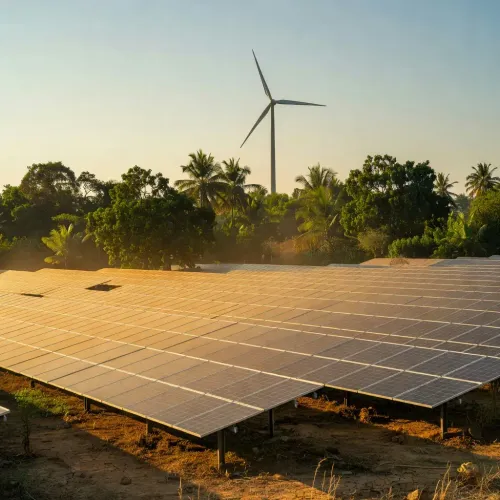
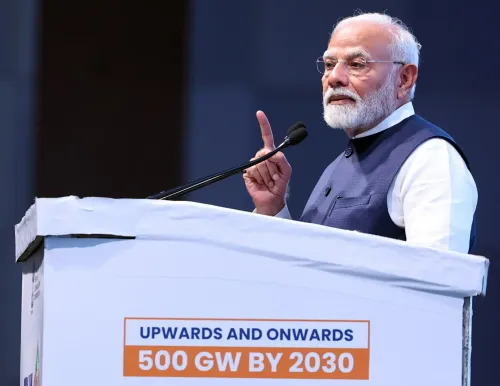
Non-fossil fuel sources reached 53.21% of installed electricity capacity as of March 2026 , beating the 50% target for 2030 nearly five years early.
India's GDP emissions intensity fell 37.38% between 2005 and 2022 , surpassing the NDC target of 33–35% ahead of schedule.
The National Green Hydrogen Mission presented emission thresholds and technical criteria for 'Green Hydrogen' classification.
India and Japan held bilateral talks on 2 June on trade-restrictive climate measures and compliance challenges for developing economies.
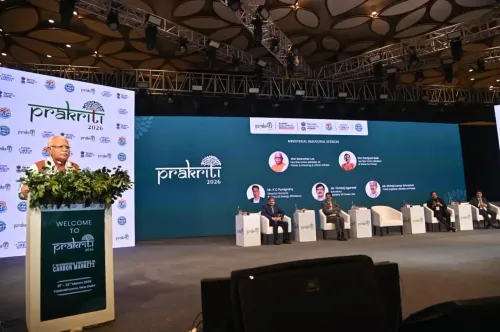
India on 5 June 2026 — World Environment Day — staged a dedicated showcase of its Carbon Credit Trading Scheme (CCTS) and renewable energy standardisation at the World Trade Organisation (WTO) Trade and Environment Week in Geneva, according to a statement from the Commerce Ministry. The event offered the international community a detailed look at how India is structuring its carbon market and accelerating its clean energy transition.
Key Developments at the Geneva Event
The session brought together senior officials and technical experts from the Ministry of Environment, Forest and Climate Change, the Bureau of Energy Efficiency (BEE), the Ministry of Power, and the Ministry of New and Renewable Energy. Presentations covered India's climate action record, carbon market architecture, and regulatory frameworks for emerging clean energy sectors.
A central theme was India's adherence to the principles of equity, Common but Differentiated Responsibilities and Respective Capabilities (CBDR-RC), and multilateral cooperation — the philosophical pillars that New Delhi consistently invokes in global climate negotiations.
India's NDC Targets: Ahead of Schedule
The showcase underlined that India has been meeting its climate commitments ahead of the deadlines set under the Paris Agreement. As of March 2026, non-fossil fuel sources accounted for 53.21 per cent of India's installed electricity generation capacity, surpassing the 50 per cent target set for 2030 — nearly five years early.
Separately, India's emissions intensity of GDP fell by 37.38 per cent between 2005 and 2022, exceeding the Nationally Determined Contribution (NDC) target of a 33–35 per cent reduction by 2030, again well ahead of schedule. These figures were presented as evidence of credible domestic follow-through, not just policy ambition.
Carbon Market Architecture and Green Hydrogen Standards
India's Indian Carbon Market, developed under the CCTS, is designed to establish a national electronic carbon credit trading platform. The framework uses market-based instruments to incentivise greenhouse gas emission reductions across sectors.
The event also highlighted progress under the National Green Hydrogen Mission, including the emission thresholds and technical criteria notified for classifying hydrogen as 'Green Hydrogen'. These standards are intended to provide transparency and investment certainty for producers, investors, and consumers while building out a robust green hydrogen ecosystem.
India-Japan Talks on Trade and Climate Measures
On the sidelines, on 2 June, delegations from India and Japan held bilateral discussions on transparency and unilateral trade-restrictive measures. The talks examined how climate-linked trade measures — such as carbon border adjustments — can create unnecessary obstacles to international trade, and the practical compliance challenges they pose for governments with limited capacities.
What This Signals
The WTO platform gave India a multilateral stage to position its domestic carbon and clean energy frameworks as models for the Global South — balancing development imperatives with climate commitments. With the CCTS still maturing and green hydrogen standards freshly notified, the Geneva showcase is as much about building investor and partner confidence as it is about diplomatic signalling. Regulatory guidelines and the operationalisation of the electronic carbon credit trading platform are expected to be watched closely in the months ahead.
Point of View
Ahead-of-schedule NDC numbers on World Environment Day at the WTO, New Delhi is pre-empting the carbon border adjustment narratives being advanced by the EU and others. The harder question is whether the CCTS — still in its architecture phase — can deliver the market depth and price signals that genuine decarbonisation requires. Announcing a carbon trading platform and operationalising one are different things. India's credibility on the international stage will ultimately rest on how quickly and transparently the domestic carbon market matures, not on the headline statistics alone.
NationPress
19 Sept 2026
Frequently Asked Questions
What is India's Carbon Credit Trading Scheme (CCTS)?
India's Carbon Credit Trading Scheme is a national framework designed to establish an electronic carbon credit trading platform that uses market-based instruments to incentivise greenhouse gas emission reductions. It was developed under the broader Indian Carbon Market architecture and was showcased at the WTO Trade and Environment Week in Geneva on 5 June 2026.
How far ahead is India on its 2030 climate targets?
As of March 2026, India's non-fossil fuel electricity capacity stood at 53.21%, beating the 50% target set for 2030 nearly five years early. India's GDP emissions intensity also fell 37.38% between 2005 and 2022, exceeding the NDC target of 33–35% well before the 2030 deadline.
What did India present on green hydrogen at the WTO event?
India presented progress under the National Green Hydrogen Mission, including officially notified emission thresholds and technical criteria for classifying hydrogen as 'Green Hydrogen'. These standards aim to provide transparency and certainty for producers, investors, and consumers.
What did India and Japan discuss at WTO Trade and Environment Week?
On 2 June, India and Japan held discussions on transparency and unilateral trade-restrictive climate measures, examining how such measures can create unnecessary obstacles to international trade and the compliance challenges they create for governments with limited capacities.
Why does India's WTO carbon credit showcase matter?
It positions India as an active rule-shaper in global carbon markets at a time when carbon border adjustment mechanisms are being introduced by major trading blocs. By presenting verified ahead-of-schedule climate data, India is building credibility for its domestic frameworks with international investors and trade partners.